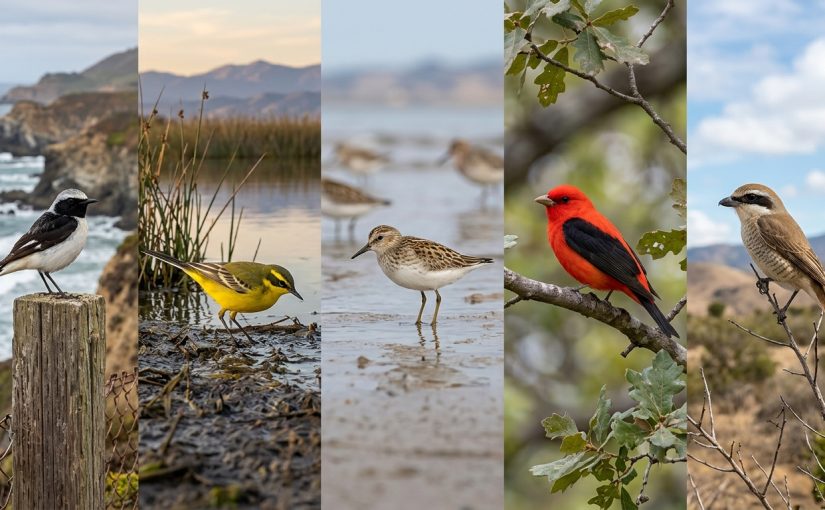
California’s birding community experienced one of the most remarkable years on record. Vagrant species that had no business appearing on the West Coast showed up in backyards, coastal parks, and desert oases throughout 2024.
These weren’t just incremental additions to state lists. We’re talking about birds that belong thousands of miles away, carried by unusual weather patterns, navigation errors, and shifting climate conditions.
California documented exceptional vagrant bird sightings in 2024, including Atlantic coast species, Asian rarities, and tropical wanderers. Unusual weather patterns, including powerful storm systems and shifting jet streams, brought species like the Painted Bunting, Red-flanked Bluetail, and Fork-tailed Flycatcher to unexpected locations. Birders capitalized on real-time reporting networks and strategic site monitoring to witness these once-in-a-lifetime appearances across coastal, desert, and urban habitats throughout the state.
What Made 2024 Different for Vagrant Birds
The year started with atmospheric river systems that pummeled the coast from January through March. These storms didn’t just bring rain. They created high-altitude wind corridors that swept birds off their normal migration routes.
By April, birders noticed an uptick in eastern species appearing at coastal migrant traps. Point Reyes, the Marin Headlands, and coastal San Diego County became hotspots for unexpected visitors.
The pattern continued through fall migration. Strong easterly winds during September and October pushed even more vagrants westward. Desert oases like Furnace Creek and the Salton Sea became magnets for displaced birds seeking water and food.
Climate shifts played a role too. Warmer ocean temperatures altered food distribution patterns. Seabirds that normally stay far offshore ventured closer to land. Pelagic species showed up in harbors and bays where they’re almost never seen.
Atlantic Coast Species That Crossed the Continent
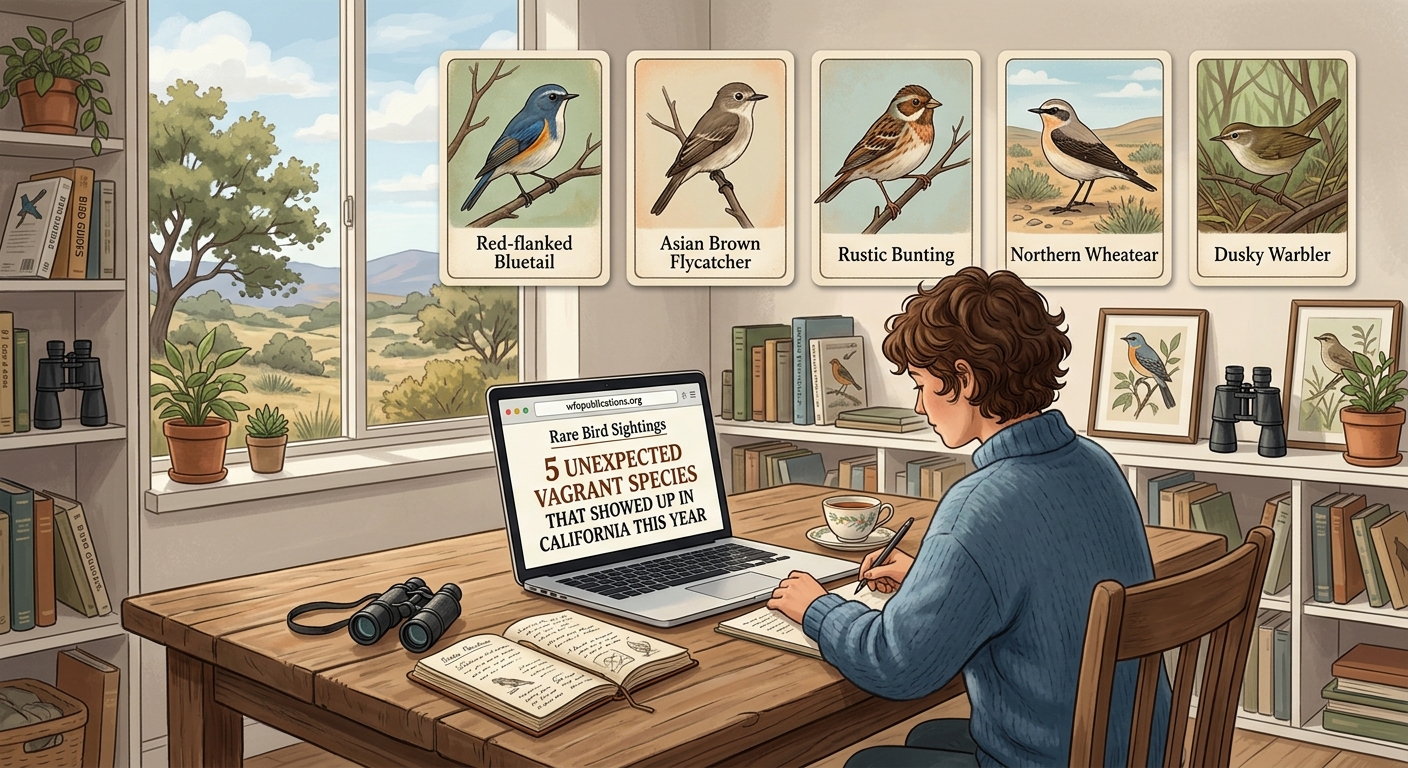
Eastern warblers made stunning appearances throughout California in 2024. A Blackburnian Warbler spent three days at Golden Gate Park in San Francisco during May. Dozens of birders lined up for views of its brilliant orange throat.
Cape May Warblers turned up in at least five counties. These birds normally spend their time in Atlantic coast maritime forests. Finding them in California redwood groves felt surreal.
The real showstopper was a male Painted Bunting that appeared in a Pasadena backyard in November. This species breeds in the southeastern United States and typically winters in Mexico and Central America. Its appearance in Southern California drew hundreds of observers over two weeks.
Other notable Atlantic vagrants included:
- Rose-breasted Grosbeak (multiple locations)
- Scarlet Tanager (San Diego County)
- Baltimore Oriole (coastal California)
- Yellow-throated Warbler (Monterey County)
Each sighting represented a significant range extension. These birds traveled 2,000 to 3,000 miles from their normal territories.
Asian Rarities That Shocked the Birding Community
A Red-flanked Bluetail appeared at Point Reyes in October. This small thrush breeds in northeastern Asia and winters in Southeast Asia. Its appearance in California represents only the fourth state record.
The bird stayed for nearly a week, allowing birders from across the western United States to make the pilgrimage. Photographers captured stunning images of its blue tail and orange flanks against California coastal scrub.
An Eyebrowed Thrush showed up at Bodega Bay in November. This species breeds in Siberia. Finding one in California requires either extreme luck or obsessive monitoring of vagrant traps during the right weather windows.
A Dusky Warbler, another Asian species, spent time at the Tijuana River Valley in December. These tiny brown birds are notoriously difficult to identify. Experienced birders needed careful study of wing formulas and call notes to confirm the identification.
| Species | Origin | California Location | Duration of Stay |
|---|---|---|---|
| Red-flanked Bluetail | Northeast Asia | Point Reyes | 6 days |
| Eyebrowed Thrush | Siberia | Bodega Bay | 3 days |
| Dusky Warbler | Central Asia | Tijuana River Valley | 8 days |
| Common Redstart | Europe/Asia | Farallon Islands | 1 day |
Tropical Wanderers From the South
A Fork-tailed Flycatcher made an appearance in Orange County during August. This elegant species breeds in South America and occasionally wanders north during post-breeding dispersal. Its incredibly long tail feathers made identification unmistakable.
The bird perched on power lines near a shopping center, hawking insects while bewildered shoppers walked past. Only the birders with binoculars understood what they were seeing.
Green Violetear hummingbirds turned up in three separate locations. These birds belong in Mexican cloud forests and Central American highlands. Their appearance in California gardens created social media frenzies each time.
A Rufous-backed Robin spent the winter in a San Diego suburb. This Mexican species occasionally wanders north, but 2024 saw multiple individuals across Southern California. They fed on ornamental berries in landscaped yards, seemingly unbothered by their geographic displacement.
How Birders Tracked These Rare Sightings
Modern technology transformed vagrant bird detection in 2024. The eBird platform allowed real-time reporting of unusual species. Birders could see alerts within minutes of initial sightings.
Here’s how the tracking system worked:
- A birder spots an unusual species and takes documentation photos
- They submit the sighting to eBird with detailed notes and images
- Regional reviewers examine the report and photos for accuracy
- Once confirmed, the sighting becomes visible to the broader community
- Birders plan trips to see the vagrant while it remains in the area
Local birding groups maintained active text chains and social media groups. When a rare bird appeared, word spread within hours. This coordination allowed hundreds of people to see birds that might have been missed entirely a decade ago.
“The combination of better optics, improved field guides, and instant communication has revolutionized vagrant detection. Birds that would have gone unnoticed 20 years ago now get documented with stunning photos and detailed field notes within hours of discovery.” — Field ornithologist studying California vagrant patterns
Weather Patterns That Brought Vagrants West
Meteorological conditions created perfect scenarios for bird displacement in 2024. Strong high-pressure systems over the Great Basin during fall migration pushed easterly winds toward the coast.
These winds coincided with peak migration periods. Birds attempting to fly south encountered headwinds that pushed them westward instead. Exhausted migrants made landfall at the first suitable habitat they encountered.
Atmospheric rivers played a different role. These moisture plumes created turbulent conditions at high altitudes. Birds caught in these systems could be carried hundreds of miles off course before finding safe landing zones.
The Pacific Decadal Oscillation entered a warm phase in 2024. This shifted storm tracks and altered wind patterns across the entire western coast. Species that normally migrate through interior routes found themselves over unfamiliar terrain.
Desert regions experienced unusual moisture patterns. Late summer monsoons created temporary wetlands in normally dry areas. These oases attracted migrants that would typically bypass California entirely.
Best Locations for Finding Vagrant Birds
Coastal migrant traps produced the highest concentration of rarities. Point Reyes National Seashore topped the list with over 30 vagrant species documented throughout the year.
The Marin Headlands offered similar productivity. Its combination of coastal scrub, cypress groves, and freshwater seeps created ideal stopover habitat for exhausted migrants.
Urban parks surprised many observers. Golden Gate Park in San Francisco and Balboa Park in San Diego both hosted multiple vagrant species. These green spaces provide food and shelter in otherwise developed landscapes.
Desert oases remained critical vagrant magnets. Furnace Creek in Death Valley, despite its harsh surroundings, attracted displaced eastern warblers and tropical species seeking water.
The Salton Sea, though ecologically troubled, continued serving as a vagrant hotspot. Its position along the Pacific Flyway and its abundant (if problematic) food resources made it irresistible to wayward birds.
Coastal promontories like Point Loma in San Diego and Bodega Head in Sonoma County funneled migrants into concentrated areas. Birders who monitored these locations during optimal weather windows saw the most vagrants.
Documentation Standards for Rare Bird Reports
California’s bird records committee maintains strict standards for accepting vagrant reports. Photographic evidence became essentially mandatory for most rare species in 2024.
Observers needed to capture diagnostic field marks in their images. Blurry photos showing general shape and color weren’t sufficient for species that require detailed feather pattern analysis.
Audio recordings gained importance for secretive species. Warblers hiding in dense vegetation could be confirmed through song analysis even when visual documentation proved difficult.
Detailed written descriptions remained valuable. Experienced observers noted behavior patterns, habitat preferences, and subtle plumage details that photos might miss.
The review process protected against misidentification. Even experienced birders make mistakes. Having multiple reviewers examine evidence before accepting records maintained the integrity of state bird lists.
Mistakes Birders Made Chasing Vagrants
The excitement of rare bird sightings led to some problematic behavior in 2024. Trespassing became an issue when vagrants appeared on private property. Overeager birders ignored boundaries in their desire for views.
Habitat disturbance occurred at several high-profile vagrant sites. Too many people trampling vegetation or playing recordings stressed both the vagrant and resident bird populations.
| Common Mistake | Why It’s Problematic | Better Approach |
|---|---|---|
| Playing recordings excessively | Stresses birds and disrupts behavior | Use recordings sparingly, stop if bird responds |
| Crowding too close | Forces birds to flee, wastes energy | Maintain respectful distance, use optics |
| Blocking access points | Prevents others from viewing | Rotate positions, share space |
| Ignoring private property | Creates legal issues, damages landowner relationships | Seek permission, respect boundaries |
Social media oversharing created problems too. Posting exact locations of vagrants on private property led to unwanted crowds. Better practices involved sharing general locations and encouraging people to contact local birding groups for details.
Some birders prioritized listing over ethics. They disturbed sensitive habitats or stressed birds to get photos for their records. The community increasingly called out this behavior as unacceptable.
What Vagrant Patterns Reveal About Climate Change
The 2024 vagrant patterns offered concerning insights into ecological shifts. Species expanding their ranges northward appeared with increasing frequency. Birds that were rare 20 years ago now show up annually.
Tropical species moving north suggested warming trends. Green Violetears and Fork-tailed Flycatchers historically appeared as extreme rarities. Their increasing frequency indicated shifting baseline conditions.
Seabird distribution changes reflected ocean temperature alterations. Species normally found far offshore came closer to land seeking food sources displaced by warming waters.
Migration timing shifts became apparent. Some species arrived earlier in spring or lingered later in fall than historical records suggested. These phenological changes could create mismatches with food availability.
The data birders collected in 2024 contributes to long-term scientific understanding. Every documented vagrant adds information about how species respond to environmental changes.
Planning Your Own Vagrant Bird Adventures
Finding vagrant birds requires strategy and persistence. Start by monitoring eBird alerts for your region. Set up filters for rare species so you receive notifications when they appear.
Learn the best vagrant traps in your area. Study maps and visit these locations regularly during peak migration periods. Familiarity with normal conditions helps you recognize when something unusual appears.
Time your visits around weather events. Check forecasts for strong easterly winds during fall migration. Visit coastal sites immediately after major storm systems pass through.
Connect with local birding communities. Join regional birding groups on social media platforms. Experienced local birders share knowledge about productive sites and recent sightings.
Improve your identification skills before vagrant season. Study field guides for species that might appear as vagrants. Learn the subtle differences between similar species.
Carry proper documentation equipment. A camera with decent zoom capability lets you capture images for later study. Even smartphone photos can document diagnostic features if taken carefully.
Practice ethical birding behavior. Respect private property, maintain appropriate distances from birds, and share information responsibly with the community.
Why 2024’s Vagrant Year Matters for Birders
This year reminded us that anything can show up anywhere. Birds don’t read field guides or respect range maps. The unexpected is always possible.
The community response to vagrant sightings showcased birding at its best. People traveled across the state to help others see rare species. Experienced birders mentored newcomers in identification techniques.
These vagrant records contribute to scientific knowledge. Each documented sighting adds data points about bird distribution, migration patterns, and responses to environmental changes.
For many birders, 2024 provided once-in-a-lifetime experiences. Seeing a Red-flanked Bluetail or Painted Bunting in California created memories that will last forever.
The year also highlighted the importance of habitat conservation. Vagrant birds need stopover sites with food and shelter. Protecting coastal scrub, desert oases, and urban green spaces ensures future vagrants have places to rest and refuel.
As climate patterns continue shifting, vagrant occurrences will likely increase. The skills and systems birders developed in 2024 will serve the community well in coming years.
Making the Most of Future Vagrant Seasons
Keep your binoculars ready and your identification skills sharp. The next incredible vagrant could appear tomorrow in your local park.
Stay connected with the birding community through eBird and regional groups. The collective eyes of hundreds of observers dramatically increase the chances of finding and documenting rare species.
Remember that every birder was a beginner once. If you’re new to vagrant chasing, don’t feel intimidated. Ask questions, learn from experienced observers, and enjoy the process of discovery.
California’s position on the Pacific Flyway, its diverse habitats, and its active birding community create perfect conditions for vagrant detection. The state will continue producing exciting records for years to come.
Get out there and see what you can find. The 2024 vagrant season proved that extraordinary birds can appear anywhere, anytime. Your next backyard visitor might be a species that belongs on another continent.