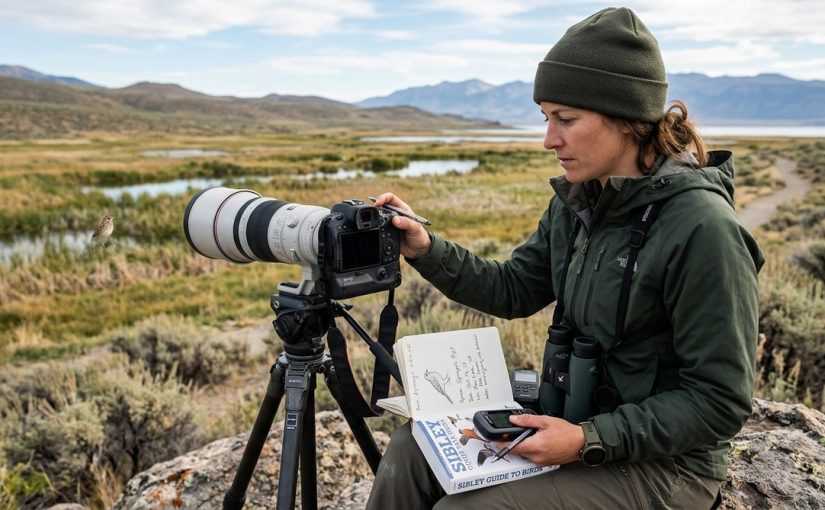
You spotted something unusual at your local park this morning. A bird that doesn’t belong. Maybe the colors were off, or the behavior seemed strange, or the location made zero sense for the species. Your heart raced. You fumbled for your phone. Now you’re wondering what to do next.
Reporting a rare bird sighting requires detailed documentation including photos, written field notes, exact location data, and time stamps. Submit your observation through eBird or regional rare bird committees with complete species identification details, habitat context, and behavioral observations. Proper documentation helps validate records and contributes to ornithological research and conservation efforts.
What Makes a Bird Sighting Worth Reporting
Not every bird you see needs formal documentation. Common species in their normal range during typical seasons are valuable data points, but they don’t require the same level of scrutiny.
A sighting becomes reportable when it involves a species outside its known range, appearing during an unusual season, or showing up in unexpected habitat. First state records, county firsts, or species rarely seen in your region all qualify.
Vagrant birds that have wandered far from their typical migration routes matter to science. They help researchers understand climate patterns, habitat changes, and population shifts.
Some examples that warrant careful reporting:
- A tropical species appearing in temperate zones
- Seabirds spotted far inland
- Western species showing up on the East Coast
- Birds arriving months before or after normal migration windows
- Species previously undocumented in your state or province
Local birding communities and rare bird alert systems depend on accurate reports. Your observation might help other birders find the same individual, or it could represent a significant range expansion.
Gathering Evidence in the Field
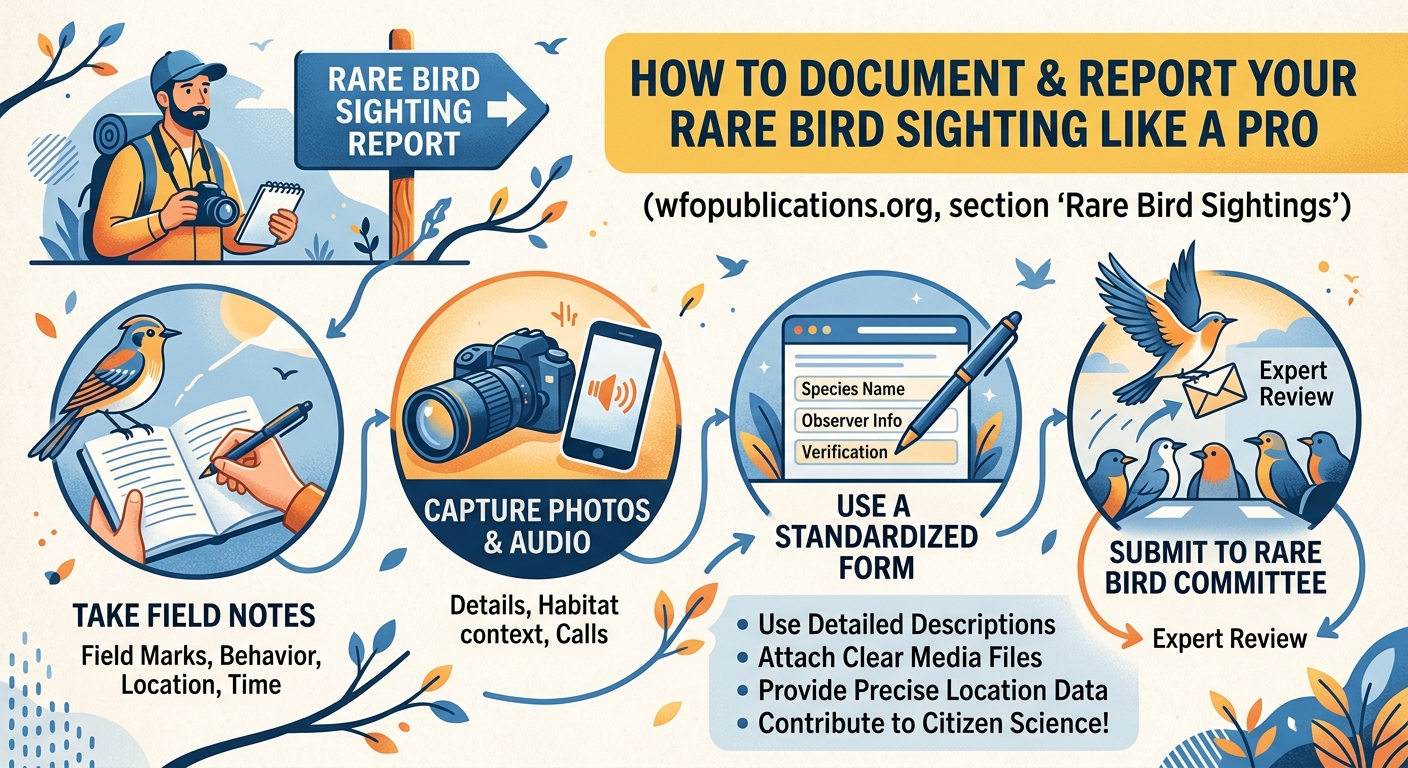
The moment you suspect you’re seeing something unusual, switch into documentation mode.
Photos are your strongest evidence. Take as many as possible from multiple angles. Capture the whole bird, then zoom in on diagnostic features. Get shots showing the head, wings, tail, and underparts if the bird cooperates.
Don’t worry about perfect composition. Ornithologists care more about seeing field marks clearly than artistic merit. A slightly blurry photo showing a distinctive wing pattern beats a beautiful shot that doesn’t show identifying features.
Video can capture behavior and vocalizations that still images miss. Record the bird’s movements, feeding habits, and interactions with other species. Audio recordings of calls and songs provide additional verification.
If photography isn’t possible, detailed written notes become critical. Describe what you see immediately, before memory fades or biases creep in.
Writing Field Notes That Matter
Your written description should paint a complete picture of the bird and the circumstances.
Start with the basics:
- Date and exact time of observation
- Specific location with GPS coordinates if possible
- Weather conditions and lighting
- Distance to the bird and viewing conditions
- Optical equipment used
Then describe the bird systematically from head to tail. Note size relative to familiar species. Was it sparrow-sized, robin-sized, or crow-sized?
Document colors precisely. “Brown” doesn’t help much, but “warm rusty brown on the back with pale buffy underparts” does. Mention any streaking, barring, spots, or other patterns.
Pay attention to structure. Bill shape and length matter. Tail length and shape provide clues. Wing length relative to the tail helps separate similar species.
Behavior often clinches identification. How did the bird move? Did it hop or walk? How did it feed? What habitat was it using?
“The best field notes describe what you actually saw, not what the field guide says you should have seen. Document the bird in front of you, even if some details don’t match expectations.” — Regional bird records committee reviewer
Taking Photos That Validate Your Claim
| Photo Element | Why It Matters | Common Mistake |
|---|---|---|
| Multiple angles | Shows different field marks | Only photographing one side |
| Habitat context | Confirms location and behavior | Cropping out all surroundings |
| Size reference | Helps confirm identification | No nearby objects for scale |
| Diagnostic features | Proves species identity | Missing key field marks |
| Metadata intact | Verifies time and location | Editing files and removing EXIF data |
Keep your camera or phone’s location services enabled. The embedded GPS data proves where you were. Time stamps verify when the sighting occurred.
Shoot in the highest quality your device allows. You can always compress images later, but you can’t add detail that wasn’t captured.
If the bird is distant, take some wider shots showing the surrounding area. This helps reviewers understand the habitat and context.
Choosing Where to Submit Your Report
eBird serves as the primary database for bird observations across North America and increasingly worldwide. Every rare sighting should go into eBird first.
When you enter an unusual species, eBird flags it automatically. Local reviewers receive notifications and may contact you for additional details.
Regional rare bird committees maintain official state and provincial records. These groups have formal review processes and publish annual reports. Your documentation package should meet their specific requirements.
Some states and provinces have dedicated rare bird alert systems or listservs. Posting there helps local birders respond to see the bird themselves if it’s still present.
Social media and birding apps can spread the word fast, but they don’t replace formal documentation. Share your excitement online, but make sure you’ve submitted proper reports too.
Submitting Through eBird Properly
Create your eBird checklist as you normally would, but expect extra scrutiny for rare species.
Enter the exact location using the map interface. Pin the precise spot where you observed the bird. Generic locations like “City Park” aren’t specific enough for rare records.
In the species comments section, paste your detailed field notes. Include everything you documented: appearance, behavior, habitat, and circumstances.
Upload your best photos directly to the checklist. eBird allows multiple images per species. Include shots showing different angles and key field marks.
If you have audio or video, upload those as well. Vocalizations can confirm identification when visual features are ambiguous.
The local reviewer will examine your submission. They might approve it immediately if your documentation is solid. Sometimes they’ll contact you with questions or request additional details.
Don’t take reviewer questions personally. They’re protecting data quality, not doubting your skills. Answer thoroughly and provide any additional information they need.
What Reviewers Look For
Records committees and eBird reviewers follow similar evaluation criteria. They need to rule out similar species and confirm the identification beyond reasonable doubt.
Your documentation should address potential confusion species. If you reported a rare gull, explain why it wasn’t a more common species with similar plumage.
Reviewers check whether the date and location make sense. A tropical species in winter raises more questions than the same bird during fall migration.
They examine photo quality and angles. Can they see the field marks that separate your bird from look-alikes?
Written descriptions get compared to photos. Inconsistencies raise red flags. If your notes say the bird had a white eye-ring but photos show none, reviewers will ask for clarification.
Previous records in the area matter. A species with several recent sightings nearby faces less scrutiny than a first state record.
Handling Rejected or Unconfirmed Reports
Sometimes reviewers can’t confirm a sighting. The documentation might be insufficient, or the identification might remain uncertain.
This doesn’t mean you’re a bad birder. It means the evidence didn’t meet the threshold for a rare bird record.
You can strengthen your case by providing additional information if you have it. Maybe you took more photos you forgot to upload. Perhaps you have better written notes from the field.
If the bird was genuinely rare and your documentation solid, consider submitting to the state or provincial records committee directly. They might accept evidence that eBird reviewers found borderline.
Learn from the experience either way. What could you have documented better? Which photos would have helped clinch the identification?
Building Your Documentation Skills
Practice describing common birds in detail. Write complete field notes for familiar species. This builds the habit so you’re ready when something rare appears.
Study similar species before you need to. Know the difference between confusing gulls, sparrows, or flycatchers in advance. Field guides and online resources help you learn what to look for.
Join local bird clubs and go on guided walks. Experienced birders can show you what details matter and how to observe systematically.
Review accepted rare bird reports in your region. State ornithological societies often publish detailed accounts. These show what level of documentation committees expect.
Participate in eBird’s portal reviews if your region allows it. Seeing how reviewers evaluate submissions teaches you what makes documentation convincing.
Common Documentation Mistakes to Avoid
Assuming identification without eliminating similar species leads to rejected reports. Always consider and rule out alternatives.
Waiting too long to write notes lets memory distort details. Document everything while the bird is still in view or immediately after.
Editing photos too heavily can remove valuable metadata. Crop and adjust exposure if needed, but keep original files with EXIF data intact.
Submitting vague location information makes verification harder. “Near the lake” doesn’t help. Pin the exact spot.
Failing to mention viewing conditions and distance creates doubt. Were you 500 feet away in fog? That context matters.
- Relying solely on memory instead of contemporaneous notes
- Not photographing habitat and surrounding area
- Deleting photos that seem redundant but show different angles
- Assuming reviewers will know local geography and landmarks
- Getting defensive when reviewers ask legitimate questions
Why Your Report Matters
Rare bird records contribute to scientific understanding of distribution, migration, and population changes. Your careful documentation becomes part of the permanent ornithological record.
Climate change is shifting bird ranges. Your observation might document a species expanding into new territory or changing migration timing.
Conservation decisions rely on accurate distribution data. Where birds occur and when they’re present influences habitat protection and management.
Other birders benefit from your reports too. Rare bird alerts help people see species they might otherwise miss. Your photos and notes help them learn identification skills.
State and provincial bird lists depend on well-documented records. First records for a region require exceptional evidence, and your contribution could make history.
Making Your Next Rare Sighting Count
You’re better prepared now than you were before that unusual bird showed up. You know what to photograph, what to write down, and where to submit your findings.
Keep your camera or phone charged and ready. Practice your observation skills on common birds. Study the rare birds that might show up in your area.
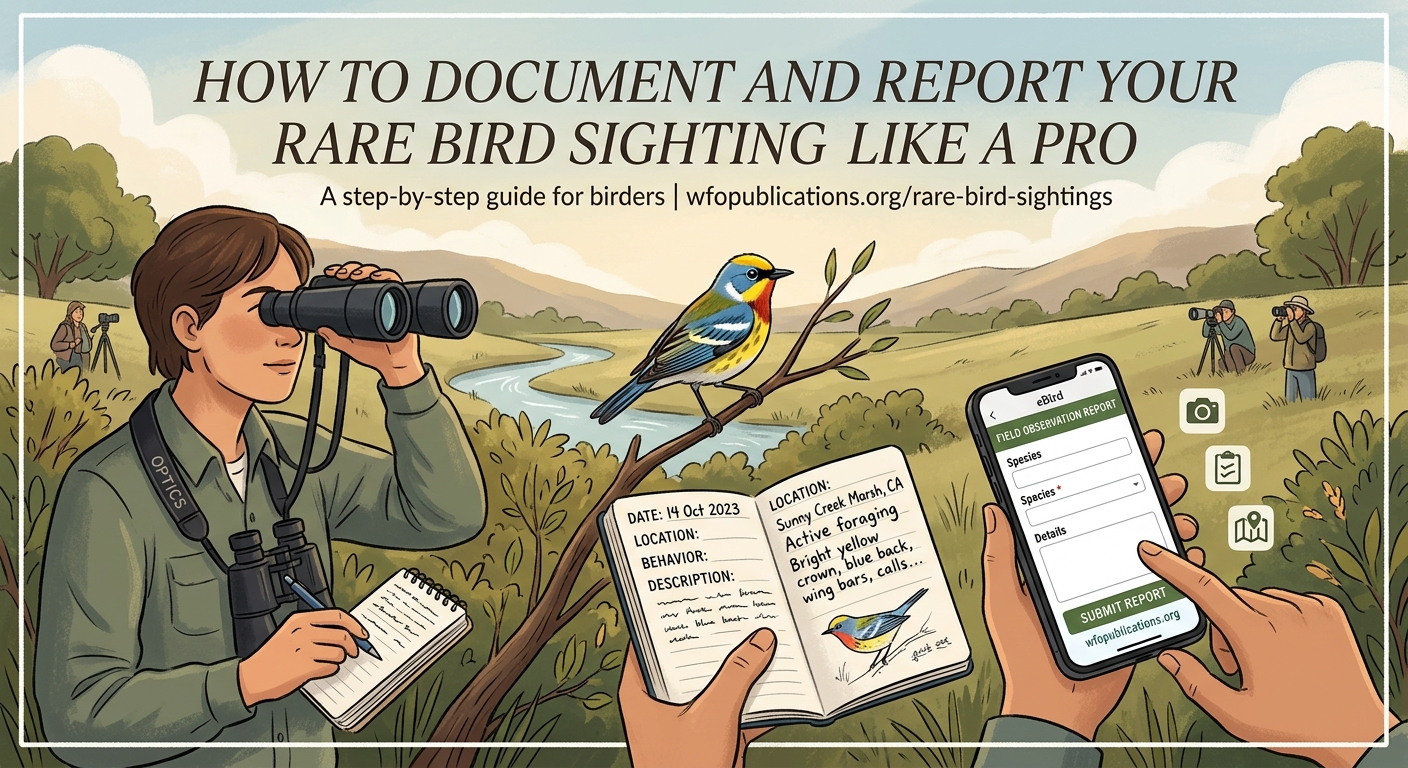
When that next vagrant appears or that out-of-season migrant drops into your yard, you’ll document it properly. Your photos will show the right field marks. Your notes will answer reviewer questions before they ask. Your report will add valuable data to our collective understanding of bird distribution and behavior.
The birding community needs careful observers who take documentation seriously. Every well-reported rare sighting advances ornithology and helps other birders. Your next unusual find could be the observation that matters.