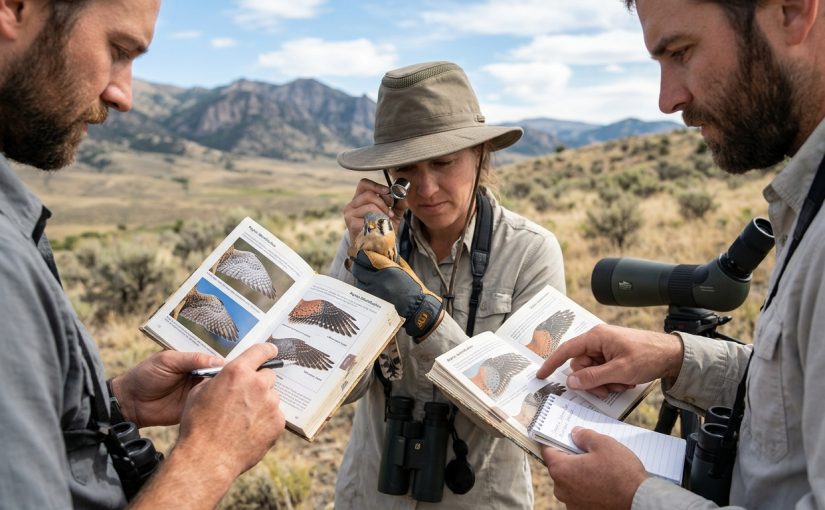
Standing in the field with binoculars trained on a warbler, you face a challenge that separates casual observers from serious ornithologists. That bird flitting through the willows could be a hatch year female, an adult male in basic plumage, or something in between. Getting it right matters for banding data, population studies, and conservation decisions that depend on accurate demographic information.
Aging and sexing birds requires systematic observation of plumage characteristics, molt patterns, bare part coloration, and behavioral cues. Success depends on understanding species-specific timing of [molt cycles](https://en.wikipedia.org/wiki/Moulting), recognizing subtle feather wear patterns, and combining multiple field marks rather than relying on single characteristics. Practice with known individuals builds the pattern recognition essential for accurate field determinations.
Understanding the Molt Calendar
Birds replace their feathers on predictable schedules. This biological rhythm gives you the foundation for aging birds accurately.
Most passerines undergo a complete prebasic molt after breeding. Juveniles grow their first set of real feathers, then many species perform a partial preformative molt that replaces some body feathers but retains juvenile flight feathers. This creates a contrast you can see in the field.
Adult birds typically show uniform feather generation across their plumage. Hatch year birds often display a mix of fresher body feathers and more worn wing feathers. The difference becomes obvious when you know where to look.
Timing matters enormously. A bird photographed in July with heavily worn primaries tells a different story than one seen in October with the same wear pattern. Learn the molt schedules for your target species. Some warblers complete their prebasic molt before migration. Others wait until they reach wintering grounds.
Primary Field Marks for Aging
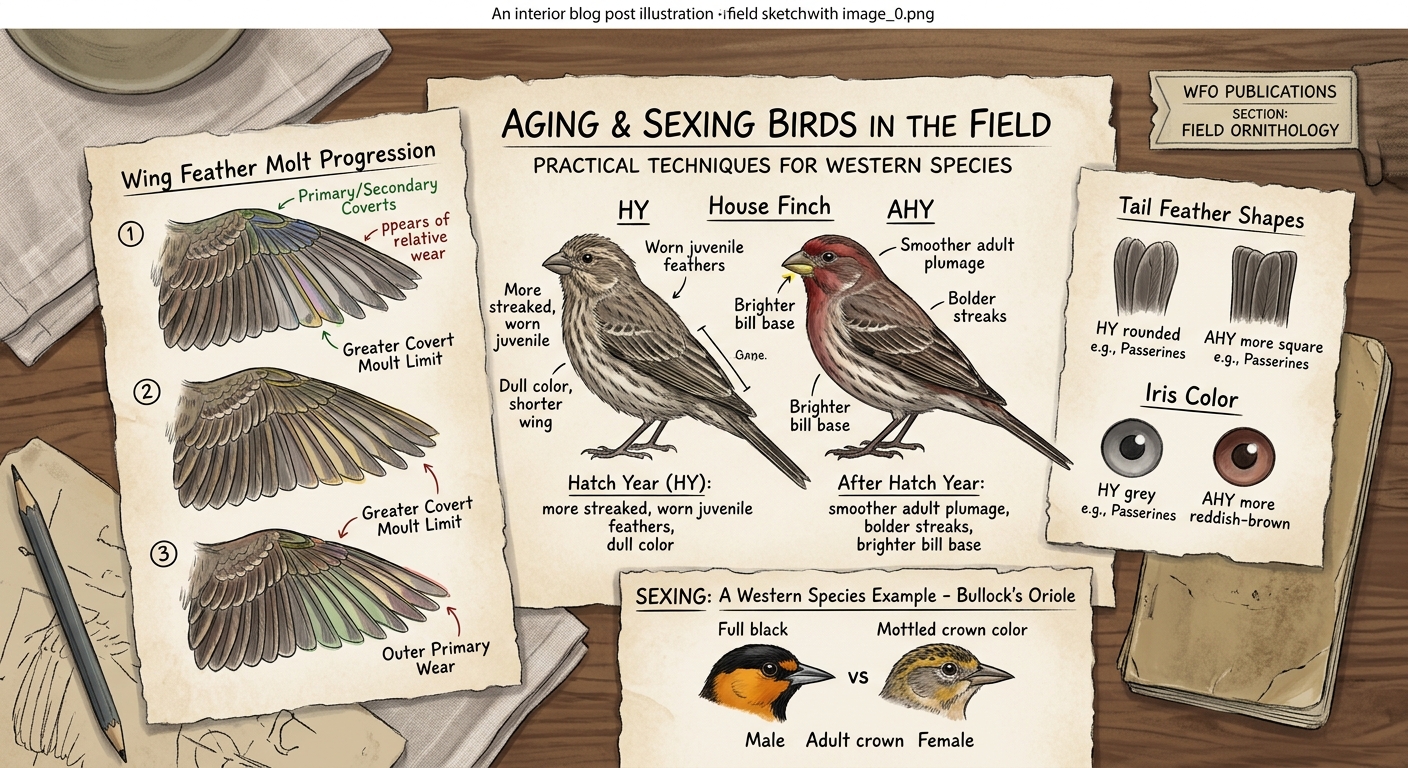
Certain anatomical features reliably indicate age across many species. These marks form your first line of assessment.
Skull pneumatization works brilliantly for passerines during fall banding. Hatch year birds show incomplete ossification visible through the thin skin on top of the skull. The “window” appears as pink or translucent patches between bone ridges. By late winter, most skulls complete pneumatization and this mark disappears.
Flight feather shape and wear provide year-round clues. Juveniles often show narrower, more tapered primaries and rectrices compared to adults. The feather tips may appear more pointed. Wear patterns differ too because juvenile feathers endure months of use before the first prebasic molt.
Mouth and gape color help with nestlings and recently fledged birds. Many species show bright yellow or orange gape flanges that fade as birds mature. This mark has limited utility after the first few weeks of independence.
Iris color changes predictably in some species. Gulls provide classic examples, with dark eyes in juveniles transitioning to pale yellow in adults over several years. Raptors show similar patterns, though the timeline varies by species.
Sex Determination Through Plumage
Sexual dimorphism varies wildly across bird families. Your approach must adapt to each species.
Dichromatic Species
Males and females wear obviously different plumages in many birds. Ducks, tanagers, and most orioles make sex determination straightforward during breeding season. The challenge arrives when these species wear basic plumage or when you encounter immature birds.
Hatch year males of dichromatic species often show intermediate plumage. They may display patches of adult male coloration mixed with female-type feathers. These birds create identification puzzles that require careful observation of multiple features.
Female plumage typically remains consistent across age classes. A female Bullock’s Oriole looks similar whether she hatched this year or five years ago. Males progress through distinct stages, gaining brightness and pattern definition with each molt cycle.
Monochromatic Species
Species where both sexes appear similar demand subtler observations. Small differences in size, proportions, or behavior become your tools.
Many flycatchers, sparrows, and vireos fall into this category. Males may average slightly larger or show marginally brighter plumage tones. These differences exist on a spectrum with substantial overlap. Individual variation can exceed sexual variation.
Behavioral cues gain importance here. Singing indicates males in most species, though female song occurs more commonly than once believed. Nest building, incubation patterns, and territorial behavior all provide context clues when plumage fails you.
Molt Limits and Feather Contrast
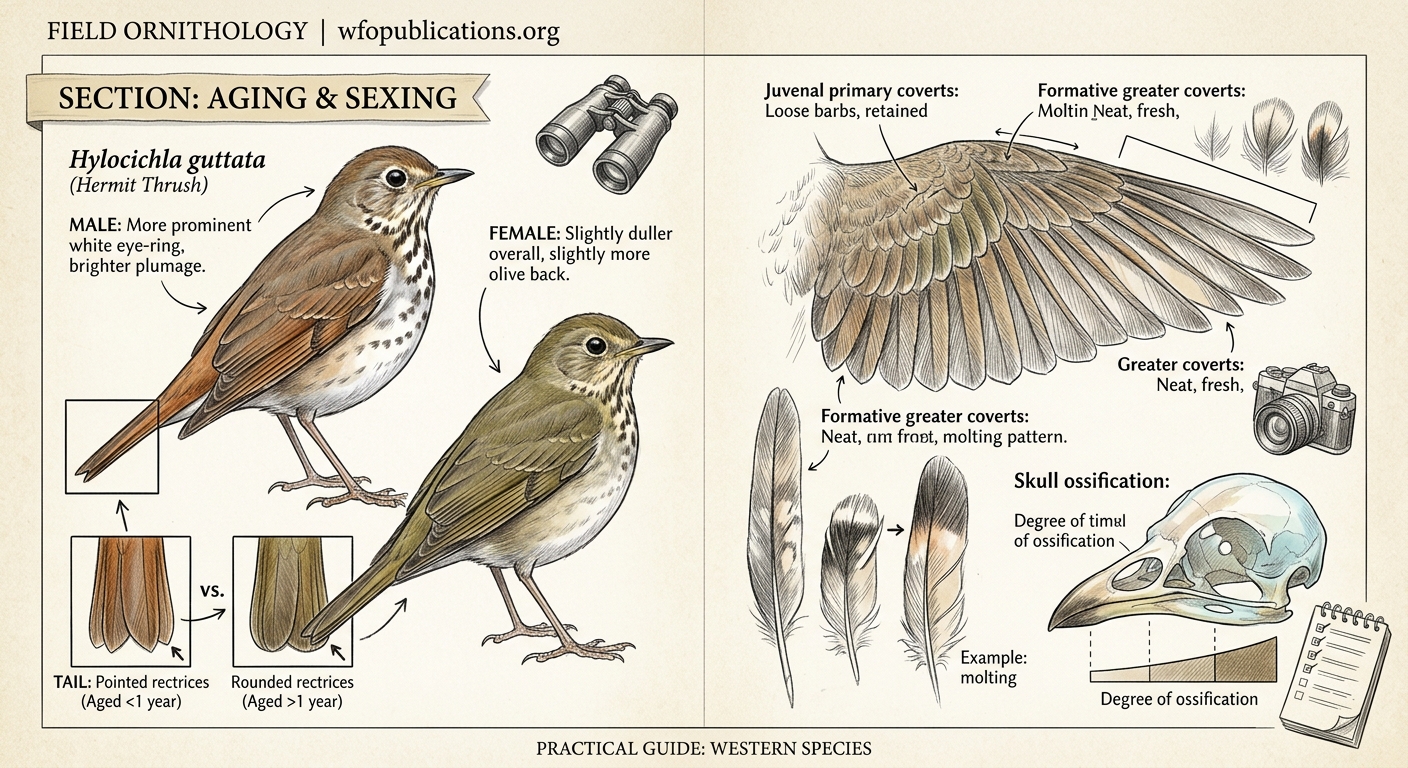
The concept of molt limits revolutionized field aging techniques. This method works across countless species once you understand the principle.
- Locate the boundary between feather generations on the wing
- Identify which feathers appear fresher or differently colored
- Determine which molt strategy explains the pattern you observe
- Apply species-specific knowledge about typical molt extents
Hatch year birds that undergo partial preformative molts create visible contrasts. Their replaced greater coverts look fresh and richly colored. The retained juvenile primaries and primary coverts appear browner and more worn. The boundary between these feather tracts shows as a clear line.
Adult birds completing full prebasic molts show no such contrast. All wing feathers match in color, wear, and quality. This uniformity confirms adult status.
| Feature | Hatch Year | After Hatch Year | Adult |
|---|---|---|---|
| Wing feather uniformity | Mixed generations present | Usually uniform | Always uniform |
| Greater covert color | Often contrasts with primaries | Matches flight feathers | Matches flight feathers |
| Primary wear | Moderate to heavy by fall | Light to moderate | Light after molt |
| Skull ossification | Incomplete until late fall | Complete | Complete |
Bare Part Examination
Legs, bills, and orbital rings change color as birds mature. These features complement plumage assessment.
Gulls demonstrate this principle dramatically. A first cycle gull shows pink legs and a dark bill. Second cycle birds develop paler legs and limited adult bill pattern. Third cycle individuals approach adult bare part coloration. The progression takes years and provides reliable aging criteria.
Shorebirds display seasonal bare part color changes tied to breeding condition. Bright orange or red legs during spring indicate breeding adults. Duller coloration suggests non-breeding plumage, which could indicate either out-of-season adults or immature birds.
Bill color shifts happen in many species. Starlings transition from dark juvenile bills to yellow adult bills. Crows show subtle gape color differences between young and old birds. Even small changes matter when you train yourself to notice them.
Behavioral Indicators
How a bird acts provides supporting evidence for age and sex determinations.
Juveniles often show less wariness than adults. They make mistakes, land in odd places, and sometimes approach observers more closely. This naivety reflects inexperience, not stupidity. Young birds are still learning which situations pose real danger.
Foraging efficiency improves with age. Adults capture prey more successfully and waste less energy on unproductive attempts. Watching a bird hunt can reveal its experience level.
Vocalizations develop over time in many species. Song complexity, delivery rate, and repertoire size often increase as males mature. Some species require multiple seasons to perfect their full song. Others learn quickly but refine details throughout their lives.
Social dominance hierarchies sometimes correlate with age. Older birds may claim better feeding positions or defend resources more successfully. These patterns vary by species and context.
Common Mistakes and How to Avoid Them
Field determinations go wrong in predictable ways. Recognizing these pitfalls improves your accuracy.
Relying on single characters causes frequent errors. A bright bird is not automatically male. A dull bird is not necessarily female or immature. Always combine multiple features before reaching conclusions.
Ignoring seasonal timing leads to misidentifications. Plumage that indicates hatch year status in September may be impossible to age by March. Molt schedules and feather wear change the available evidence throughout the year.
Applying one species’ pattern to another creates problems. Just because Western Tanagers show obvious sexual dimorphism does not mean all tanagers do. Each species evolved its own strategy. Learn them individually.
Overlooking variation happens when you expect all individuals to match field guide illustrations. Real birds show wear, staining, individual variation, and occasional aberrant plumage. Allow for natural diversity.
“The best field ornithologists build mental libraries of variation through thousands of observations. They know what normal looks like across seasons and age classes. That foundation lets them spot the unusual and correctly interpret ambiguous birds.” – Peter Pyle, ornithological researcher
Practical Steps for Field Assessment
Apply a systematic approach to each bird you attempt to age or sex.
- Note the date and location to establish seasonal context
- Observe overall plumage brightness and pattern
- Examine wing feathers for molt limits and wear patterns
- Check bare parts for color and any age-related changes
- Watch behavior for clues about experience level
- Combine all observations before making a determination
- Photograph diagnostic features when possible for later review
- Record uncertainty honestly in your notes
Photography has transformed field aging and sexing work. Capturing images of wing spread, undertail coverts, and head patterns lets you examine details impossible to see clearly through binoculars. Build a reference collection of known-age birds to sharpen your eye.
Practice with birds in the hand accelerates learning. Banding stations offer opportunities to handle individuals and examine features up close. The patterns you learn through tactile examination translate back to field observations.
Species-Specific Resources
General principles only carry you so far. Detailed species accounts provide the specific criteria that matter.
The aging and sexing birds in the field guide covers western North American species with photographs and detailed descriptions of diagnostic features. These references compile decades of banding data and field observations into practical identification criteria.
Regional variation affects many species. West Coast populations may show different molt timing or plumage characteristics than Great Basin or Rocky Mountain birds. Consult resources specific to your study area.
Rare species and vagrants present special challenges. Limited data exists for some birds, particularly regarding immature plumages or out-of-range molt timing. Approach these situations with appropriate caution and document thoroughly.
Building Your Skills Over Time
Competence at aging and sexing birds develops through sustained effort. No one masters these techniques overnight.
Start with common, sexually dimorphic species where the answers are obvious. Yellow Warblers, American Goldfinches, and Red-winged Blackbirds provide excellent practice subjects. Build confidence with straightforward identifications before tackling difficult species.
Progress to monochromatic species once you understand molt patterns and timing. Sparrows offer endless opportunities for practice. Their abundance means you can observe many individuals and start recognizing subtle patterns.
Challenge yourself with gulls or raptors that take years to reach adult plumage. These birds teach patience and attention to detail. The complex progression of plumages demands careful observation and systematic note-taking.
Keep detailed records of your observations. Note which features you used to make each determination and how confident you felt. Review your notes periodically to identify patterns in your decision-making and areas needing improvement.
When Certainty Remains Out of Reach
Some birds defy definitive aging or sexing in the field. Accept this reality rather than forcing uncertain conclusions.
Worn plumage obscures diagnostic features. A bird in heavy molt may lack the feathers you need to see. Poor lighting or brief views limit what you can observe. Environmental factors sometimes make accurate determination impossible.
Record these birds as unknown age or unknown sex. Your data remains valuable even without complete demographic information. Honest uncertainty serves science better than confident guesses.
Photographic documentation helps in ambiguous cases. Share images with experienced observers or post them to identification forums. Collective expertise often resolves difficult birds that stump individual observers.
Making Field Determinations Count
The techniques you develop serve purposes beyond personal satisfaction. Accurate aging and sexing data drives conservation and research.
Breeding bird surveys benefit from sex ratio information. Skewed ratios may indicate habitat quality issues or population stresses. Your observations contribute to larger pattern recognition.
Migration monitoring stations track age ratios to assess reproductive success. Years with low proportions of hatch year birds signal poor breeding seasons. This early warning system helps managers respond to population changes.
Banding operations rely on accurate aging to calculate survival rates and population models. Every bird you age correctly strengthens the dataset that informs management decisions.
Citizen science projects increasingly incorporate age and sex data. Your skills let you contribute higher quality observations that researchers can use with confidence.
Sharpening Your Eye for Detail
Field ornithology rewards those who notice small differences and patterns. The warbler that looks plain at first glance reveals its story through careful observation.
Train yourself to see feather edges, not just overall color. The thin pale fringe on a greater covert matters. The shape of a primary tip tells you something. These details separate competent observers from experts.
Compare birds directly when possible. Two goldfinches feeding together may show age or sex differences invisible when viewing individuals separately. Context and comparison sharpen discrimination.
Study specimens when opportunities arise. Museum collections let you examine plumage details impossible to see on living birds. The investment of time with study skins pays dividends in field identification skills.
Return to the same locations across seasons. Watching how individual birds change through molt cycles builds intuition about timing and progression. That knowledge becomes automatic with repetition.
Your ability to determine bird age and sex accurately opens doors to deeper understanding. Each correctly identified individual adds to your mental library of variation and possibility. The field becomes richer as your skills grow, revealing stories written in feathers, behavior, and the rhythms of avian life cycles.