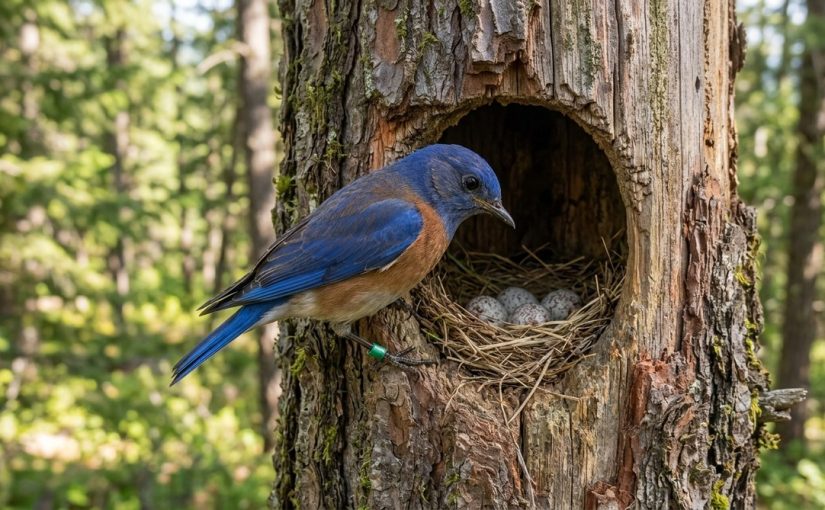
You’re standing in a ponderosa pine forest at dawn, peering into a woodpecker cavity 15 feet up. Inside, you can hear faint peeps. The question isn’t whether birds are nesting. It’s whether you’re collecting data that will actually matter for conservation. Without a standardized cavity nesting bird monitoring protocol, your observations might not align with regional datasets, making them less useful for long-term population studies.
Effective cavity nesting bird monitoring requires standardized protocols that ensure data consistency across sites and seasons. This guide covers site selection, timing, inspection frequency, documentation methods, and safety considerations for monitoring western cavity-nesting species. Following established protocols makes your observations valuable for regional conservation efforts and scientific research while minimizing disturbance to nesting birds.
Why standardized monitoring matters for cavity nesters
Cavity-nesting birds face unique conservation challenges. They depend on existing holes in trees, snags, or nest boxes rather than building nests from scratch. Species like Western Bluebirds, Mountain Chickadees, and Hairy Woodpeckers compete for limited cavity resources.
Random observations don’t reveal population trends. Standardized protocols let researchers compare data across years and regions. When a citizen scientist in Oregon uses the same methods as a biologist in Arizona, their combined datasets become powerful.
The North American Breeding Bird Survey relies on consistent methodology. Your nest monitoring should too.
Selecting sites worth monitoring
Not every cavity deserves weekly visits. Strategic site selection saves time and produces better data.
Natural cavities in snags work well if you can safely access them. Look for cavities between 5 and 25 feet high. Lower cavities face more predation. Higher ones become difficult to monitor without specialized equipment.
Nest boxes offer easier monitoring. Mount them at consistent heights, typically 5 to 6 feet for bluebirds and 12 to 15 feet for kestrels. Space boxes at least 100 yards apart to reduce territorial conflicts.
Document these site characteristics at the start:
- GPS coordinates with at least six decimal places
- Cavity height from ground level
- Tree species or nest box material
- Surrounding habitat type (open woodland, riparian corridor, grassland edge)
- Distance to nearest water source
- Presence of potential predators (squirrels, snakes, larger cavity nesters)
This baseline data helps explain breeding success variations later.
Timing your monitoring season
Western cavity nesters don’t all breed simultaneously. Timing matters enormously.
Most species begin nest building between March and May, depending on elevation and latitude. Mountain populations start later. Coastal populations start earlier.
Here’s a general timeline for common western species:
| Species | Egg Laying Starts | Incubation Days | Nestling Period | Total Monitoring Window |
|---|---|---|---|---|
| Western Bluebird | Late March | 13-14 | 18-21 | March through July |
| Mountain Chickadee | Early May | 11-14 | 18-21 | May through July |
| Oak Titmouse | April | 14-16 | 16-21 | April through July |
| Hairy Woodpecker | Late April | 11-15 | 28-30 | April through August |
| American Kestrel | Mid-April | 29-31 | 28-32 | April through August |
Some species attempt second broods. Bluebirds frequently nest twice in favorable years. Keep monitoring through August if you see signs of renesting.
Establishing your inspection schedule
Consistency beats frequency. Weekly checks work better than random visits whenever you feel like it.
Visit the same day each week if possible. Tuesday monitoring creates Tuesday data points. This regularity helps identify exact laying dates and hatching windows.
Avoid checking nests during extreme weather. Heavy rain, high winds, or unusual heat stress birds. Your presence adds to that stress. Wait for calmer conditions.
Early morning visits between 7 and 10 a.m. work best. Adults are often away foraging. You’ll cause less disruption.
Never check nests during these critical periods:
- The day eggs are expected to hatch (days 11-16 for most small cavity nesters)
- Within three days of anticipated fledging (premature fledging wastes weeks of parental investment)
- During the first two days after discovering fresh eggs (early disturbance can trigger abandonment)
Conducting safe cavity inspections
Safety applies to both you and the birds.
Approach cavities calmly. Sudden movements trigger alarm calls that alert predators. Walk slowly. Stop if adults show extreme distress.
For nest boxes, tap gently three times before opening. This warns any occupant. Wait five seconds. Open slowly.
For natural cavities, use a mirror pole or inspection camera. Reaching into dark holes risks bites from defensive adults or surprise encounters with wasps.
Record these observations during each visit:
- Number of eggs (describe color and size)
- Number of nestlings (estimate age by feather development)
- Number of dead nestlings or unhatched eggs
- Nest condition (clean, soiled, infested with parasites)
- Adult behavior (calm, agitated, absent)
- Signs of predation (damaged eggs, missing nestlings, disturbed nest material)
Keep inspections under 90 seconds. Longer visits increase abandonment risk and predator attraction.
“The best nest monitors are invisible. They gather essential data without leaving a scent trail, without changing adult behavior, and without making the cavity more noticeable to predators. If checking a nest makes you feel intrusive, you’re probably doing it right. That discomfort keeps you careful.” — Field protocol from the Western Bluebird Recovery Project
Documentation that actually helps science
Raw counts mean little without context. Proper documentation transforms observations into research-grade data.
Use standardized data sheets. Create columns for date, time, observer name, site ID, species, nest contents, and notes. Digital forms work well but bring paper backups. Phones die in the field.
Photograph nest contents when possible. Images provide verification for unusual observations. They also help train new monitors. Take photos from directly above to avoid disturbing nest structure. Never remove eggs or nestlings for better angles.
Date every observation precisely. “Early May” doesn’t help researchers calculate incubation periods. May 7 does.
Similar precision matters when documenting and reporting rare bird sightings, where exact dates and locations prove crucial for acceptance by regional review committees.
Common monitoring mistakes and fixes
Even experienced observers make errors. Recognizing them early prevents bad data.
| Mistake | Why It Happens | The Fix |
|---|---|---|
| Checking nests too frequently | Enthusiasm and curiosity | Stick to weekly schedule; resist temptation |
| Opening boxes during rain | Trying to maintain schedule | Delay visit 24 hours; wet nests chill eggs |
| Handling nestlings | Wanting to count or band them | Use mirror or camera; handling stresses adults |
| Approaching during incubation breaks | Adult happens to be away | If adult doesn’t return in 10 minutes, leave immediately |
| Recording vague notes | Rushing through inspections | Use pre-printed codes; write details same day |
The most damaging mistake? Continuing to monitor a nest that clearly stresses the adults. If birds repeatedly dive-bomb you, vocalize intensely, or abandon the nest area when you approach, stop visiting. Some individuals tolerate monitoring poorly. Their reproductive success matters more than your data.
Handling parasites and competitors
Western cavity nesters face threats beyond predators. Blowfly larvae, mites, and invasive species complicate monitoring.
Blowfly infestations appear as small, dark larvae in nest material. Light infestations rarely harm nestlings. Heavy infestations can kill entire broods. Some protocols recommend removing heavily infested nests after fledging to break the parasite cycle.
House Sparrows and European Starlings aggressively take over cavities. Both species are non-native and lack legal protection in North America. Many monitoring programs remove their nests to prioritize native species. Check local regulations before taking action.
Wasps occasionally build inside unused portions of nest boxes. Close the box carefully and mark it for later removal. Never attempt wasp removal during active bird nesting.
Adapting protocols for different cavity types
Natural cavities and nest boxes require slightly different approaches.
Natural cavities often sit higher and have irregular openings. Inspection cameras on extendable poles work better than ladders for safety. Mount the camera, extend the pole, record video, then review footage on the ground. This method minimizes time near the cavity.
Nest boxes allow direct viewing but tempt over-checking. The ease of opening a hinged door makes weekly visits feel insufficient. Resist that urge. Boxes don’t need more frequent monitoring than natural sites.
Some researchers monitor roosting boxes during winter. This reveals which individuals survive migration or year-round residency. Winter checks cause minimal disturbance since no breeding occurs.
Submitting data to regional databases
Your observations gain value when shared with conservation networks.
NestWatch, operated by the Cornell Lab of Ornithology, accepts standardized nest monitoring data from across North America. Their online portal guides data entry and flags inconsistencies.
Regional bluebird societies, Audubon chapters, and state wildlife agencies often maintain their own databases. Contributing to multiple platforms increases data utility.
Before submitting, verify your species identifications. Misidentified nests corrupt datasets. When uncertain, submit photos along with observations. Experts can confirm or correct identifications.
Some monitoring programs track unusual species appearances. If you document a cavity nester outside its normal range, detailed records become especially valuable. Just as unexpected vagrant species generate excitement among birders, out-of-range cavity nesters interest researchers studying range expansions and climate impacts.
Safety considerations for field monitors
Monitoring remote cavities presents real risks.
Always tell someone your monitoring route and expected return time. Carry a charged phone. Bring water, even for short trips.
Ladder use causes most monitoring injuries. Secure ladders on level ground. Have a partner stabilize the base. Never lean sideways to reach a cavity. Move the ladder instead.
Watch for wildlife beyond birds. Rattlesnakes sun themselves near snags. Bees nest in cavities. Poison oak grows along many western trails. Learn to identify hazards in your monitoring area.
Hantavirus risk exists when cleaning out old nests, especially in enclosed nest boxes. Wear an N95 mask when removing nesting material. Spray debris with disinfectant before handling. Never sweep or blow out boxes, which aerosolizes droppings.
Training new monitors effectively
Experienced observers should mentor newcomers rather than sending them out alone.
Spend the first three visits together. Demonstrate approach techniques, inspection methods, and data recording. Let the trainee practice while you observe and correct mistakes.
Provide reference materials showing nestling development stages. Aging nestlings accurately takes practice. Photos of 3-day-old, 7-day-old, and 12-day-old chickadees help calibrate observations.
Review data sheets together after field sessions. Discuss unclear notes and establish consistent terminology. “Mostly feathered” means different things to different people. “Pin feathers covering 75% of body” provides clarity.
New monitors often want to help struggling nests by removing parasites, fixing damaged cavities, or supplementing food. Explain why hands-off observation produces better science. Intervention changes natural outcomes and introduces variables that complicate data interpretation.
Making your monitoring count for conservation
Data collection serves larger purposes. Understanding those purposes improves your work.
Cavity availability limits populations of many western species. Your monitoring reveals which habitat types produce successful nests. Land managers use this information to prioritize snag retention and nest box placement.
Climate change shifts breeding phenology. Long-term datasets show whether egg-laying dates advance as springs warm. Your consistent annual monitoring contributes to these analyses.
Pesticide impacts appear in reproductive success rates. Nests near agricultural areas might show lower hatching rates or higher nestling mortality. Your geographic coverage helps identify problem zones.
Population declines often show up in nest monitoring data before bird counts detect them. Fewer occupied cavities, smaller clutches, or reduced fledging success signal trouble early.
Building skills that last seasons
Your first monitoring season teaches basic protocols. Subsequent seasons develop expertise.
You’ll learn to predict laying dates by watching courtship behavior. You’ll recognize individual adults by subtle plumage variations. You’ll estimate nestling ages without opening cavities based on adult feeding rates.
Keep personal notes beyond required data fields. Observations that seem irrelevant often matter later. That note about oak caterpillar abundance in May might explain why 2024 showed exceptional bluebird productivity.
Photography skills improve with practice. Early-season photos might show blurry eggs. By June, you’ll capture sharp images of 10-day-old nestlings without disturbing them.
Connect with other monitors in your region. Share observations, discuss challenges, and celebrate successes. Monitoring can feel isolating when you’re alone at dawn checking boxes. A community of fellow observers provides support and knowledge exchange.
Protocols that protect what you’re studying
The best cavity nesting bird monitoring protocol balances data needs with bird welfare. Every inspection carries small risks. Justify those risks by collecting information that advances conservation.
Start your first season with manageable goals. Five well-monitored sites beat twenty poorly tracked ones. Master the fundamentals before expanding.
Remember that you’re documenting wild birds navigating survival challenges. Your role is observer, not manager. Sometimes nests fail. Predators find them. Weather destroys them. Parasites overwhelm them. These outcomes, while disappointing, provide essential data about natural selection and population dynamics.
The chickadees and bluebirds you monitor this spring connect you to continental conservation efforts. Your careful observations, combined with thousands of other monitors following the same protocols, reveal patterns no single researcher could detect. That’s the power of standardized methodology. That’s why your weekend mornings checking nest boxes genuinely matter for science.