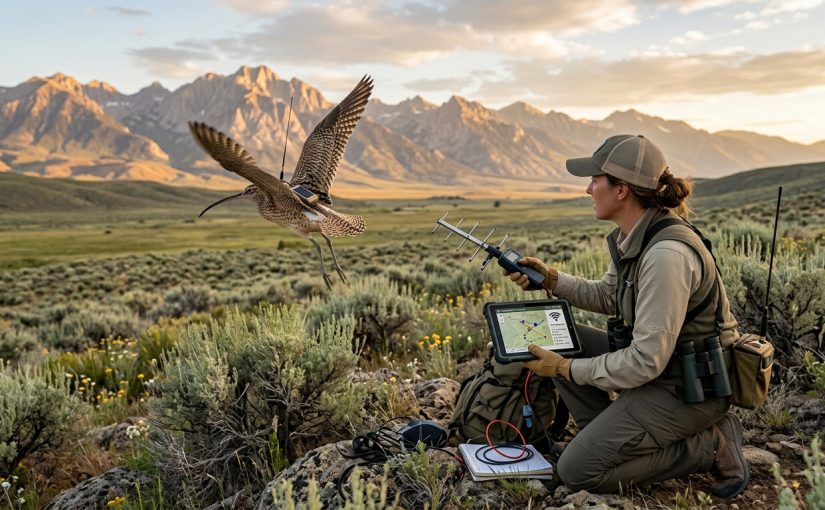
Tracking a rare warbler through dense forest or following a raptor across mountain ranges requires more than binoculars and hope. Modern bird GPS tracking telemetry has transformed how ornithologists study movement patterns, habitat use, and migration routes. These technologies let researchers gather data that would be impossible to collect through observation alone.
Bird GPS tracking telemetry combines satellite positioning and radio frequency technology to monitor avian movements. Researchers must balance tag weight against bird size, choose between real-time and archival data collection, and understand battery limitations. Success depends on matching the tracking method to species behavior, study duration, and research questions while maintaining ethical standards for wild bird welfare.
Understanding GPS and Radio Telemetry Technologies
GPS tracking uses satellite signals to pinpoint a bird’s location with accuracy ranging from 5 to 30 meters. The tag receives signals from multiple satellites, calculates position through triangulation, and stores or transmits that data.
Radio telemetry works differently. A transmitter on the bird sends out radio signals at specific frequencies. Researchers use directional antennas and receivers to detect these signals and estimate the bird’s location through signal strength and direction.
Each technology has distinct advantages. GPS provides precise coordinates without requiring researchers to be nearby. Radio telemetry works in dense canopy where satellite signals fail, costs less, and allows lighter tags.
Battery life drives most equipment decisions. A GPS unit that logs positions every hour might last six months. Increase the fix rate to every ten minutes and battery life drops to six weeks. Radio transmitters can operate for years because they only broadcast a simple signal.
Choosing the Right Equipment for Your Species
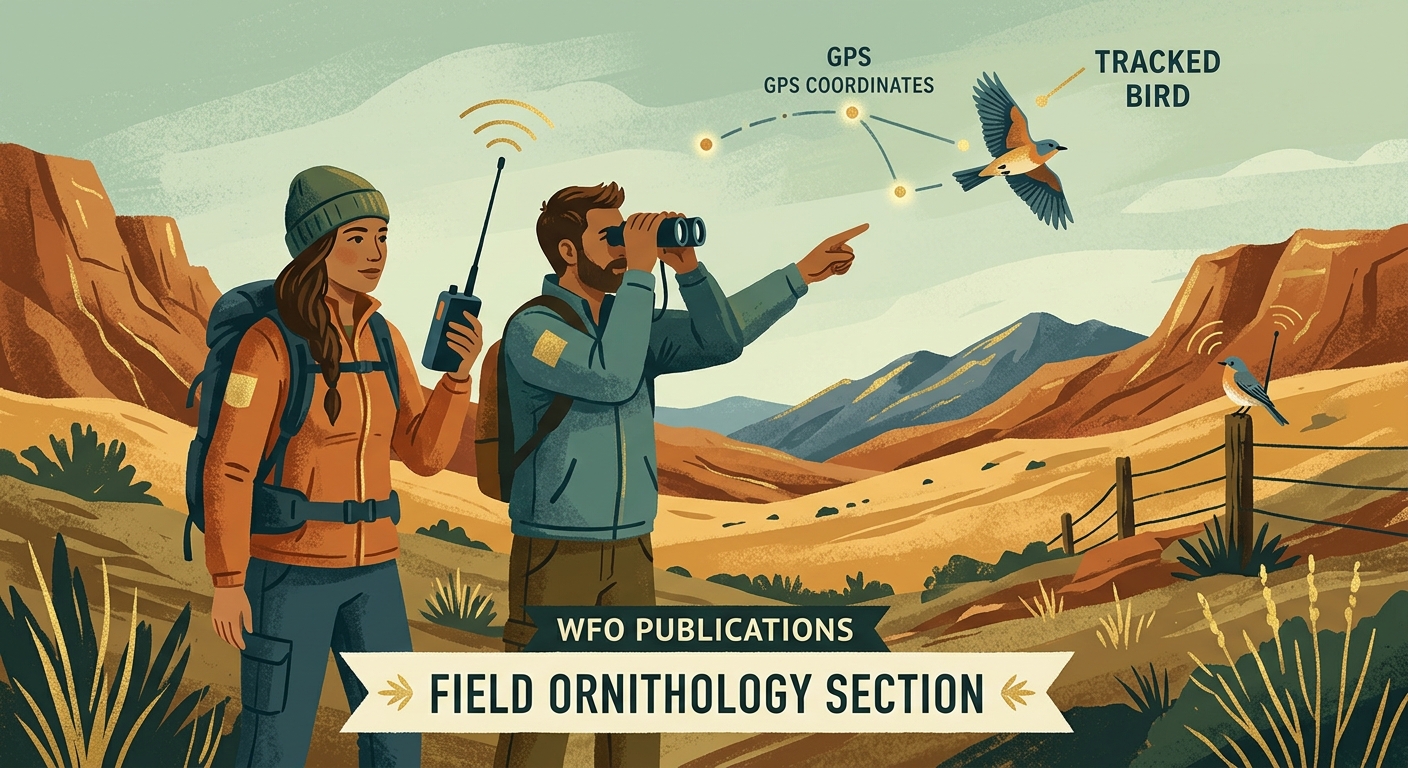
Tag weight matters more than any other factor. The standard rule is that tags should not exceed 3% of a bird’s body mass. A 30-gram songbird can carry a 0.9-gram tag. A 1,200-gram hawk can handle a 36-gram unit.
This weight restriction determines what technology you can use:
- Birds under 50 grams typically require radio telemetry with lightweight VHF transmitters
- Species between 50 and 150 grams can carry small GPS loggers that store data onboard
- Birds over 150 grams may support GPS-GSM tags that transmit data via cellular networks
- Large raptors and waterbirds can carry solar-powered satellite transmitters with multi-year lifespans
Attachment method affects both the bird and data quality. Leg-loop harnesses work well for waterfowl and raptors but can interfere with perching in songbirds. Backpack-style harnesses suit passerines but require careful fitting to avoid feather damage. Glue-on tags work for short-term studies but fall off during molt.
“The best tracking study is the one where the bird behaves normally. If your tag changes how the bird moves, feeds, or breeds, your data tells you about tagged birds, not about the species.” – Dr. Sarah Chen, Avian Ecologist
Comparing Tracking Methods for Field Studies
Different research questions require different tools. Here’s how the main technologies stack up:
| Technology | Position Accuracy | Data Retrieval | Battery Life | Best For |
|---|---|---|---|---|
| VHF Radio | 50-500m | Manual tracking | 1-3 years | Small birds, dense habitat |
| GPS Logger | 5-30m | Recapture needed | 3-12 months | Migratory routes, site fidelity |
| GPS-GSM | 5-30m | Automatic via cell | 1-6 months | Real-time monitoring, accessible areas |
| GPS-Satellite | 10-50m | Automatic global | 1-5 years | Long-distance migration, remote regions |
VHF radio telemetry remains the workhorse for many studies. Tags weigh as little as 0.3 grams. Researchers can track dozens of birds simultaneously by scanning different frequencies. The downside is labor. You need to be in the field with an antenna, following signals through brush and over ridges.
GPS loggers provide detailed movement data but require recapturing the bird. This works well for species with high site fidelity. Seabirds returning to nest colonies, raptors using the same winter territory, or residents that stay within a study area can all be recaptured with reasonable effort.
GPS-GSM tags send data through cell networks. You get near real-time positions without fieldwork. The catch is coverage. These tags go silent in wilderness areas without cell service and drain batteries faster when searching for signal.
Satellite transmitters offer global coverage and long deployments. They’re ideal for species that cross continents or oceans. The units are heavier and more expensive, limiting use to larger birds and well-funded projects.
Setting Up a Tracking Study
Planning determines success. Follow these steps before ordering equipment:
- Calculate the 3% body mass threshold for your species and identify compatible technologies
- Determine fix rate and study duration to estimate battery requirements
- Choose between archival data collection and real-time transmission based on recapture probability
- Test attachment methods on museum specimens or captive birds to refine your technique
- Obtain permits for capture, tagging, and data collection from relevant wildlife agencies
- Develop protocols for tag failure, including how to handle birds with non-functional units
Budget extends beyond tag purchase. A $300 GPS logger seems affordable until you add in capture equipment, permits, field time, and potential recapture efforts. Satellite transmitters cost $2,000 to $4,000 each, plus annual data fees of $500 to $1,000 per tag.
Sample size needs careful thought. Tagging three birds tells you about those individuals. Tagging thirty provides population-level insights. But thirty tags at $3,000 each plus data fees quickly exceeds most graduate student budgets.
Common Mistakes and How to Avoid Them
Researchers new to telemetry often encounter predictable problems. Learning from others’ experience saves time and improves data quality.
Overestimating battery life. Manufacturers test units under ideal conditions. Real-world performance falls short. Cold temperatures, frequent fix attempts in poor satellite visibility, and transmission overhead all drain batteries faster than spec sheets suggest. Plan for 60-70% of advertised battery life.
Underestimating tag impact. A tag that meets the 3% rule can still affect behavior if poorly attached. Watch tagged birds for several hours post-release. Do they preen normally? Fly with typical agility? Return to foraging within expected timeframes? If not, refine your attachment method.
Ignoring habitat effects on signal. GPS accuracy degrades under dense canopy. Radio signals bounce off cliff faces creating false bearings. Test your equipment in the actual study habitat before deploying tags on rare or difficult-to-catch species.
Failing to plan for data gaps. Tags malfunction. Birds die. Transmitters fall off during molt. Build redundancy into your study design. If you need data from ten birds for statistical power, tag fifteen.
Neglecting data management. A GPS tag collecting hourly positions for six months generates 4,300 data points per bird. Multiply by twenty birds and you have 86,000 positions to clean, validate, and analyze. Set up your database and analysis workflow before data starts arriving.
Interpreting Movement Data
Raw coordinates need context. A GPS point tells you where a bird was at a specific moment. Understanding what that location means requires additional layers.
Overlay positions on habitat maps. Does the bird prefer riparian corridors? Avoid agricultural fields? Concentrate activity near water sources? These patterns reveal habitat selection.
Calculate movement metrics. Daily displacement shows how far a bird travels. Minimum convex polygons or kernel density estimates define home range size. Turning angles and step lengths indicate foraging versus directed flight.
Temporal patterns matter. Nocturnal migrants show different movement during day versus night. Breeding birds restrict movements to territories while non-breeding individuals range widely. Seasonal shifts in range size often correlate with food availability or weather.
Compare tracked movements to expectations. If your species is thought to migrate through the Great Basin but tags show a coastal route, you’ve made a discovery. If home ranges are ten times larger than previous estimates, habitat quality in your study area may be poor.
Ethical Considerations in Avian Tracking
Tracking devices affect the animals we study. Responsible research minimizes harm while maximizing scientific value.
The 3% rule provides a starting point, not a guarantee of safety. Smaller percentages are better when possible. Some researchers use 2% for long-distance migrants that need peak flight performance.
Attachment duration should match study needs. Don’t deploy a three-year transmitter for a question answerable in six months. Breakaway attachments that release after a set period reduce long-term impacts.
Capture stress compounds tag effects. Minimize handling time. Use experienced bird banders. Have all equipment prepared before catching birds. Release immediately if a bird shows excessive stress.
Monitor tagged birds for adverse effects. If multiple individuals show reduced survival, breeding success, or body condition compared to controls, stop tagging and reassess your methods.
Share data responsibly. Precise locations of rare or threatened species can enable poaching or disturbance. Generalize locations in publications and restrict access to raw data.
Integrating Telemetry with Other Field Methods
Tracking data gains power when combined with complementary approaches.
Pair GPS locations with habitat surveys. Visit sites where birds concentrate and document vegetation structure, food availability, and microclimate. This grounds movement patterns in ecological mechanism.
Collect blood or feather samples during tagging. Stable isotope analysis reveals diet and geographic origin. Genetic data identifies population structure. Stress hormones indicate physiological condition.
Use accelerometers alongside GPS. These sensors detect wing beats, head movements, and body orientation. The data distinguishes flying, foraging, and resting, adding behavioral context to locations.
Combine individual tracking with population surveys. Telemetry shows where birds go. Surveys reveal how many use each area and whether tracked individuals represent typical behavior.
Deploy automated radio telemetry stations. These fixed receivers log signals from VHF tags continuously, filling gaps between manual tracking sessions and detecting mortality through lack of movement.
Advancing Your Research with Better Data
Technology improves constantly. Tags get lighter, batteries last longer, and sensors add new data streams. Staying current helps you design better studies.
Solar panels extend deployment duration dramatically. A GPS-GSM tag with solar charging can operate indefinitely on large birds, tracking full annual cycles and multi-year site fidelity.
Miniaturized accelerometers now fit in sub-gram packages. Researchers can measure wingbeat frequency in songbirds, quantifying flight costs and identifying foraging modes.
Altitude sensors add a vertical dimension. Raptors using thermals, migrants selecting flight altitudes, and seabirds diving for fish all show three-dimensional habitat use.
Two-way communication allows remote tag programming. Researchers can adjust fix rates based on bird behavior, increasing resolution during interesting movements and conserving battery during stationary periods.
Automated data processing reduces the time from tag deployment to analysis. Cloud-based platforms ingest GPS data, filter errors, calculate movement metrics, and generate visualizations without manual spreadsheet work.
Making Tracking Work for Conservation
The best telemetry studies inform management decisions and species recovery.
Identify migration bottlenecks where birds concentrate and face high mortality. Protect these sites and mortality drops across the population.
Document habitat use during non-breeding periods. Many species decline because of degradation in wintering areas or stopover sites thousands of miles from breeding grounds.
Quantify responses to disturbance. Do birds avoid wind farms? Abandon nests near recreation areas? Change foraging behavior after prescribed fires? Tracking provides objective evidence.
Test management effectiveness. Did that habitat restoration project actually increase use by target species? Do protected areas encompass the full home ranges of residents? Telemetry answers these questions.
Engage the public with tracking data. Maps showing migration routes or real-time positions build support for conservation. People connect with individual birds and care about protecting the places they use.
Building Skills for Successful Field Telemetry
Tracking studies require diverse expertise. Develop these skills for better research outcomes.
Practice bird capture techniques before your study begins. Volunteer with banding stations. Take workshops on mist netting, trapping, and handling. Competence reduces stress for both you and the birds.
Learn basic electronics. Understanding how tags work helps you troubleshoot problems. You’ll recognize when a tag is malfunctioning versus when a bird has moved into poor coverage.
Master GIS software. You’ll spend more time analyzing location data than collecting it. Proficiency in spatial analysis tools makes this work efficient and rigorous.
Study statistics appropriate for movement data. Auto-correlation, habitat selection functions, and state-space models all require specialized knowledge. Take courses or work with quantitative collaborators.
Join the telemetry community. Conferences, email lists, and online forums connect researchers facing similar challenges. Shared experiences prevent repeated mistakes and accelerate learning.
Tracking Technology Serves Field Biology
Bird GPS tracking telemetry transforms questions into data. Where do birds go when they leave the breeding grounds? How large a territory do they need? Which habitats support the highest survival?
These technologies work best when researchers match tools to questions, respect animal welfare, and combine tracking with complementary methods. A well-designed telemetry study produces insights impossible to gain through observation alone.
Start small if you’re new to tracking. Deploy a few tags on a common species to learn the workflow. Build expertise with capture, attachment, data management, and analysis. Then scale up to rarer species and more complex questions.
The birds you track will surprise you. They’ll use habitats you didn’t expect, travel farther than predicted, and behave in ways that challenge assumptions. That’s the beauty of letting the birds tell their own stories through the data they carry.