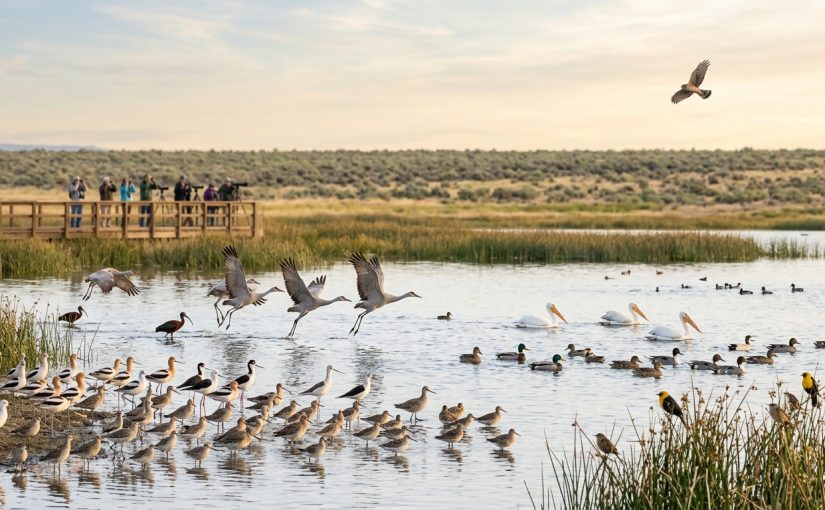
Malheur National Wildlife Refuge sprawls across 187,000 acres of high desert wetlands in southeastern Oregon, drawing birders and wildlife photographers from around the world. Timing your visit right means the difference between scanning empty marshes and witnessing thousands of sandhill cranes spiraling overhead at dawn.
Spring migration from mid-March through May offers peak diversity at Malheur National Wildlife Refuge, with over 200 bird species passing through. Fall brings concentrated waterfowl numbers from September to November. Summer provides nesting activity and warm weather, while winter offers solitude and resident species viewing. Each season delivers distinct wildlife experiences shaped by elevation, water levels, and migration patterns.
Spring Migration Brings Maximum Species Diversity
Spring at Malheur runs from mid-March through the end of May, and this window delivers the highest species count of any season. Waterfowl begin arriving in early March as ice melts from the marshes. Snow geese, tundra swans, and northern pintails appear first, followed by waves of shorebirds and songbirds through April.
The refuge sits along the Pacific Flyway, making it a critical stopover for birds traveling from wintering grounds in California and Mexico to breeding territories in Alaska and Canada. Peak diversity typically occurs in late April when early arrivals overlap with late migrants.
Greater sandhill cranes stage dramatic courtship displays throughout April. You’ll hear their rattling calls echoing across Blitzen Valley before sunrise. Yellow-headed blackbirds claim territories in the cattail marshes, their raspy songs filling the air by mid-April.
Shorebird numbers peak in late April and early May. Long-billed dowitchers, western sandpipers, and Wilson’s phalaropes gather in shallow ponds by the thousands. American avocets perform their elegant feeding sweeps through ankle-deep water.
Weather during spring varies dramatically. Morning temperatures in March often hover near freezing, climbing to the 60s by afternoon. April brings unpredictable conditions with sunny days interrupted by sudden snow squalls. May offers the most stable weather, with daytime highs in the 70s and minimal precipitation.
Road conditions improve as spring progresses. Center Patrol Road, the main birding route, can be muddy and impassable after storms in March. By May, most refuge roads become accessible to standard vehicles.
Summer Nesting Season Offers Unique Opportunities
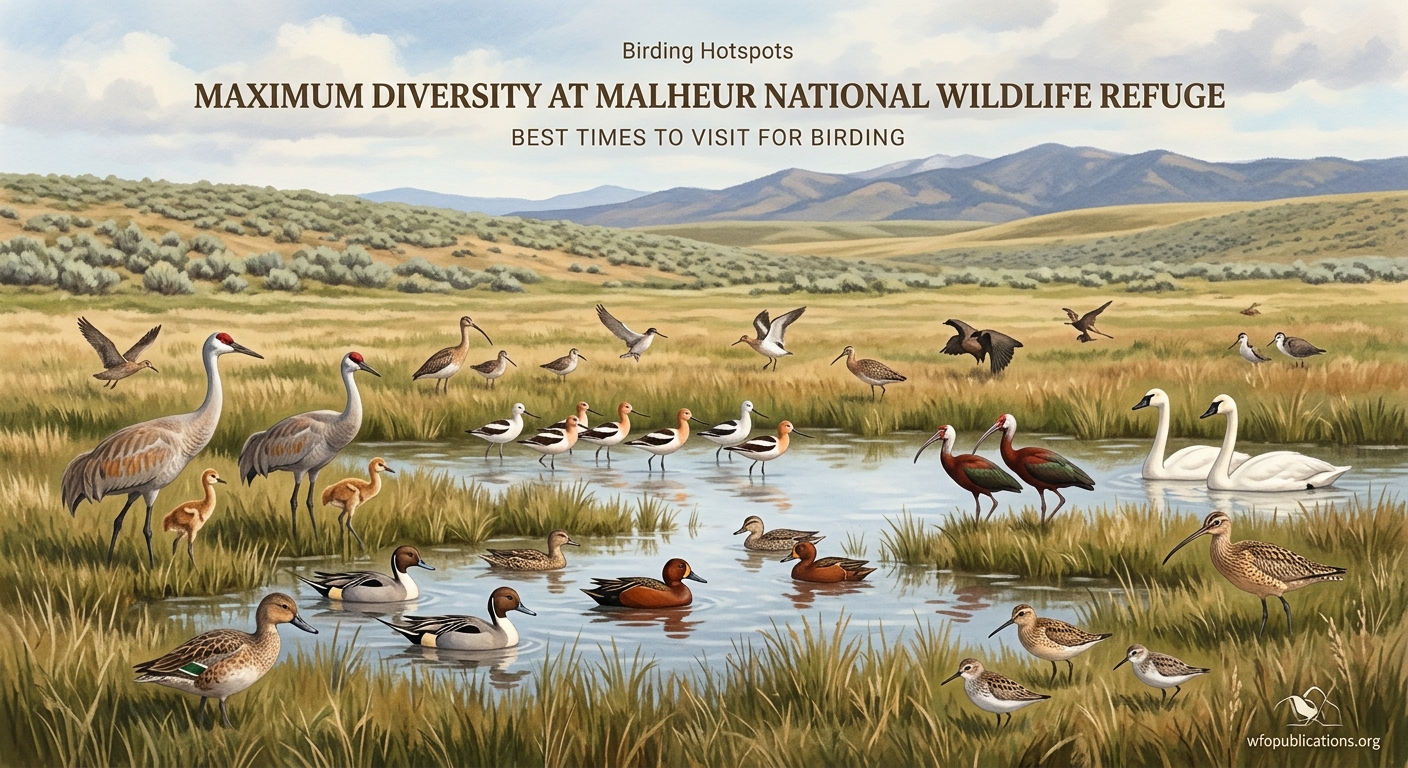
June through August transforms Malheur into a breeding ground for waterbirds. White-faced ibis colonies form in the marshes, with adults shuttling food to demanding chicks. Western and Clark’s grebes perform their spectacular water-walking displays on Mack Lake.
Temperatures climb significantly during summer. Daytime highs regularly exceed 90 degrees in July and August, with intense sun exposure across open wetlands. Early morning hours from 5:30 to 9:00 AM provide the most comfortable conditions for photography and observation.
Mosquitoes emerge in force by late June, persisting through August. Bring effective repellent and consider lightweight long sleeves for marsh edges where they concentrate.
Water levels drop through summer as irrigation demands increase and evaporation accelerates. This concentration effect pushes birds into remaining wet areas, sometimes creating excellent viewing opportunities at accessible ponds. However, drought years can reduce habitat quality significantly by late summer.
Nesting activity peaks in June and early July. American white pelicans raise chicks on islands in Mack and Harney lakes. Caspian terns and California gulls nest in mixed colonies. Long-billed curlews lead fuzzy chicks through sagebrush meadows adjacent to wetlands.
Wildflowers bloom across the uplands in June. Mule’s ear sunflowers carpet hillsides in yellow, while lupines add purple accents. This floral display attracts butterflies and provides photographic variety beyond birds.
Fall Concentrations Peak in September and October
Autumn migration at Malheur differs fundamentally from spring. Rather than a diverse parade of species passing through, fall brings massive concentrations of fewer species preparing for winter.
Waterfowl numbers build through September and peak in October. Northern pintails, mallards, and green-winged teal gather by the tens of thousands. Cackling geese arrive from Alaska, their high-pitched calls distinct from the deeper honks of Canada geese.
Sandhill cranes return in September, staging for their journey south. Flocks of several thousand birds feed in grain fields and roost in shallow marshes. Their morning and evening flights create unforgettable spectacles as long lines of cranes cross golden light.
Shorebird migration occurs earlier in fall than most birders expect. Peak numbers pass through from mid-July through August, with diversity declining sharply by September. Plan accordingly if shorebirds are your primary target.
Weather patterns in fall bring crisp mornings and warm afternoons. September temperatures range from the 30s at dawn to the 70s by midday. October introduces the first hard freezes, with ice forming on ponds overnight.
Fall colors emerge in late September as willows and cottonwoods turn yellow along the Blitzen River. This adds visual interest for photographers beyond wildlife subjects.
Hunting season opens in October, affecting some refuge areas. Check current regulations and closures before planning your route. Most prime birding locations remain accessible, but be aware of increased human activity in certain zones.
Winter Solitude and Resident Species

December through February sees the fewest visitors but offers rewards for hardy birders. Snow blankets the refuge intermittently, with temperatures dropping below zero on the coldest nights. Daytime highs struggle to reach freezing during cold snaps.
Resident species become the focus during winter. Rough-legged hawks arrive from the Arctic, perching on fence posts across open country. Prairie falcons hunt from cliff faces in the surrounding rimrock. Golden eagles soar over sagebrush flats.
Waterfowl numbers decline as ponds freeze, but open water at springs and outflows concentrates remaining ducks. Common goldeneyes, buffleheads, and common mergansers occupy these ice-free zones.
Bald eagles gather where fish remain accessible. A dozen or more eagles may roost together in large cottonwoods along the Blitzen River.
Winter finch irruptions bring periodic excitement. Gray-crowned rosy-finches appear in flocks during some years, feeding on weed seeds in snow-free patches. Cassin’s finches and red crossbills move through juniper woodlands unpredictably.
Road access becomes limited in winter. Deep snow closes Center Patrol Road and other routes. The headquarters area and Buena Vista Pond remain accessible most winters, providing limited but productive birding.
Dress in layers for winter visits. Temperatures can vary 40 degrees between dawn and midday. Wind chill factors significantly into comfort levels across exposed wetlands.
Planning Your Visit Around Water Levels
Water availability drives wildlife distribution at Malheur more than any other factor. Snowpack in the Steens Mountain watershed determines how much water flows into the refuge during spring and summer.
High water years flood marshes extensively, creating ideal habitat for nesting waterbirds. Shorebird numbers increase when shallow mudflats expand. Grebes and other diving ducks find abundant food in deeper ponds.
Low water years concentrate birds into smaller areas but can also reduce overall numbers as some species bypass the refuge entirely. Check recent trip reports and refuge updates before finalizing travel plans during drought periods.
The refuge manages water through a complex system of canals, dikes, and control structures. Spring flooding typically inundates the Double-O area and Blitzen Valley. Summer drawdowns expose mudflats that attract shorebirds.
| Season | Water Level Pattern | Bird Distribution | Access Conditions |
|---|---|---|---|
| Spring | Rising from snowmelt | Dispersed across expanding wetlands | Muddy roads improving through season |
| Summer | Declining through evaporation | Concentrated in remaining ponds | Good road access, low water limits habitat |
| Fall | Stable or slightly rising | Gathered in managed wetlands | Excellent access on dry roads |
| Winter | Minimal, mostly frozen | Restricted to open water refugia | Limited access due to snow |
Photographic Considerations Across Seasons
Light quality varies dramatically with season and time of day. Spring and fall offer the best overall lighting, with sun angles favoring both morning and afternoon sessions. Summer’s high sun creates harsh midday conditions but delivers warm light during extended golden hours.
Spring storms produce dramatic skies that enhance landscape images. Clearing weather after frontal passages creates particularly striking conditions with dark clouds contrasting against sunlit birds.
Backgrounds change seasonally. Spring greens last only a few weeks before summer heat dries vegetation to brown and gold. Fall brings richer earth tones. Winter snow provides clean, high-key backgrounds when available.
Bird behavior affects photographic opportunities. Nesting activity in summer allows closer approaches to some species as they focus on feeding young. Migration periods bring higher diversity but more skittish subjects passing through unfamiliar territory.
Equipment considerations shift with seasons. Summer heat can cause lens fogging when moving from air-conditioned vehicles to hot exteriors. Winter cold drains batteries rapidly and requires hand warmers to maintain dexterity.
Dust becomes a significant issue during dry periods, particularly in summer and fall. Protect camera gear when driving gravel roads and changing lenses in windy conditions.
“The best time to visit Malheur is whenever you can get there, but if you’re chasing species diversity, plan for late April. If you want concentrated waterfowl numbers and dramatic crane flights, October is unbeatable. Each season rewards different priorities.” — Refuge volunteer with 20+ years of observation
Practical Steps for Timing Your Trip
-
Check recent eBird reports for Malheur National Wildlife Refuge to see current species lists and activity levels. Reports from the past two weeks provide the most relevant information.
-
Monitor the refuge website for water level updates and road condition reports. These typically post weekly during migration seasons.
-
Book accommodations in Burns or Frenchglen well ahead for April and May visits. These small towns have limited lodging that fills quickly during peak migration.
-
Plan for multi-day visits if possible. Weather variability means a single day might produce poor conditions while the next day offers spectacular birding.
-
Prepare backup plans for different weather scenarios. Have indoor activities or alternative locations ready if storms close roads or reduce visibility.
Essential Seasonal Gear Recommendations
Spring visitors need layered clothing for temperature swings of 40 degrees or more between dawn and afternoon. Waterproof boots handle muddy conditions along marsh edges. Rain gear protects against sudden squalls.
Summer requires sun protection as the primary concern. Wide-brimmed hats, sunscreen, and polarized sunglasses reduce exposure across shadeless wetlands. Carry more water than you think necessary. The high desert climate causes rapid dehydration.
Fall clothing mirrors spring with added warmth for colder mornings. Gloves and a warm hat make early crane flights more enjoyable when temperatures drop into the 20s.
Winter demands serious cold weather gear. Insulated boots rated to negative temperatures, heavy parkas, and face protection allow extended observation periods. Hand and toe warmers extend comfort during stationary watching.
Optics perform differently across seasons. Mirage from heat waves degrades image quality through spotting scopes on hot summer afternoons. Frost accumulation on lenses requires careful handling during winter mornings.
Species Highlights by Month
March brings the first waves of waterfowl and early shorebirds. Tundra swans peak mid-month. Northern harriers begin courtship flights over marshes.
April delivers peak diversity with 150+ species possible. Rare migrants appear regularly. Check recent alerts for vagrant warblers, sparrows, and other unexpected species.
May sees the last major shorebird push and peak songbird migration. Warbler diversity peaks in the first two weeks. Late May brings the first nesting activity for many species.
June focuses on breeding behavior. Grebe displays continue through mid-month. Ibis colonies become active. Curlew chicks appear in upland meadows.
July marks peak summer heat and declining water levels. Shorebird migration begins surprisingly early with returning adults. Young waterbirds fledge from nests.
August continues shorebird passage. Waterfowl undergo wing molt, becoming flightless temporarily and concentrating in secure wetlands. Afternoon thunderstorms provide occasional relief from heat.
September initiates fall waterfowl buildup. Sandhill cranes arrive from northern breeding grounds. Raptors begin moving south along the flyway.
October peaks for waterfowl numbers and crane concentrations. Duck diversity reaches its fall maximum. First winter storms can arrive by month’s end.
November sees declining numbers as ice forms and birds continue south. Hardy species remain through early winter. Bald eagles gather at remaining open water.
December through February focus on resident species and winter visitors. Rough-legged hawks hunt over snow-covered fields. Rosy-finches appear during irruption years.
Combining Malheur with Regional Birding
Steens Mountain, rising directly south of the refuge, offers alpine birding opportunities from late June through September. Black rosy-finches nest on the summit cliffs. The elevation gradient provides habitat variety within an hour’s drive.
Hart Mountain National Antelope Refuge lies 60 miles west, featuring different species in similar high desert habitat. Sage grouse, pronghorn, and bighorn sheep add mammal diversity to a regional trip.
Summer Lake Wildlife Area, two hours northwest, provides an alternative wetland complex. It can be productive when Malheur experiences low water conditions.
Travel time between sites requires planning. Distances are substantial and services are sparse. Fuel up in Burns before heading to remote areas.
Making the Most of Every Season
The best time to visit Malheur National Wildlife Refuge depends entirely on what you hope to see and photograph. Spring migration offers unmatched diversity but unpredictable weather. Summer provides nesting behavior and comfortable conditions despite heat. Fall concentrates waterfowl into spectacular gatherings. Winter rewards solitude seekers with resident species and occasional rarities.
Water levels matter more than calendar dates. A wet year in July can outperform a drought year in April for sheer numbers of birds. Stay flexible and monitor conditions as your trip approaches.
Most importantly, any visit to this remarkable refuge delivers memorable wildlife experiences. The remote location filters out casual visitors, leaving serious birders and photographers to enjoy one of North America’s premier wetland complexes. Plan according to your priorities, prepare for the season’s challenges, and give yourself enough time to appreciate whatever Malheur offers during your visit.