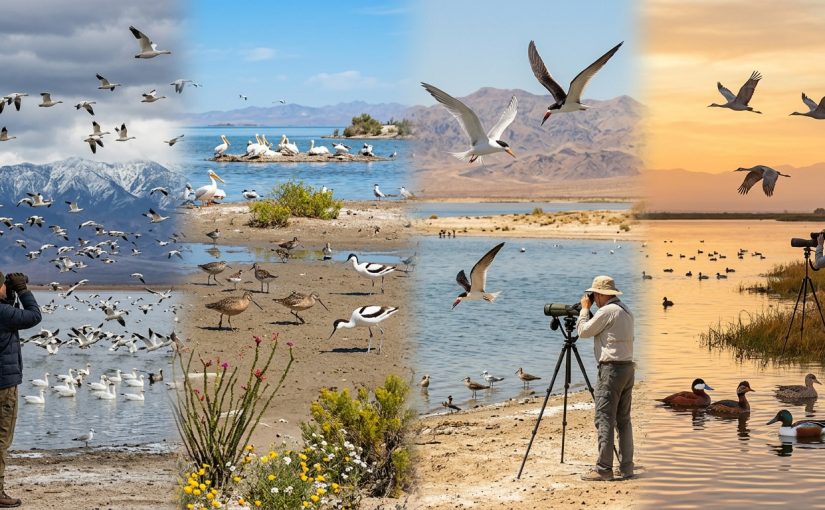
The Salton Sea sits like a mirage in the Southern California desert, but for birders, it’s anything but an illusion. This saline lake hosts over 400 documented bird species, making it one of North America’s most productive birding destinations. Whether you’re chasing rare vagrants or building your life list with common migrants, this inland sea delivers sightings that rival coastal hotspots.
Birding Salton Sea rewards patient observers with diverse species across all seasons. Peak migration periods in spring and fall bring shorebirds, waterfowl, and rare vagrants. Winter offers excellent waterfowl viewing, while summer attracts breeding species adapted to extreme heat. Success requires early morning visits, multiple hotspots, and preparation for harsh desert conditions including heat and deteriorating air quality.
Why Birders Flock to This Desert Oasis
The Salton Sea formed accidentally in 1905 when Colorado River irrigation canals breached, flooding the Salton Sink. What started as an engineering disaster became an ecological phenomenon. The lake now serves as critical habitat along the Pacific Flyway, providing rest stops for millions of migrating birds.
The sea’s hypersaline water supports fewer fish species than freshwater lakes, but its shoreline mudflats attract massive concentrations of shorebirds. Agricultural runoff creates nutrient-rich conditions that fuel algae blooms, which in turn support invertebrates that feed countless waterbirds.
Location matters here. The Salton Sea sits at 227 feet below sea level, creating unique microclimates. Cool mornings give way to scorching afternoons. Winter temperatures remain mild compared to mountain regions just miles away.
Best Times for Birding Throughout the Year
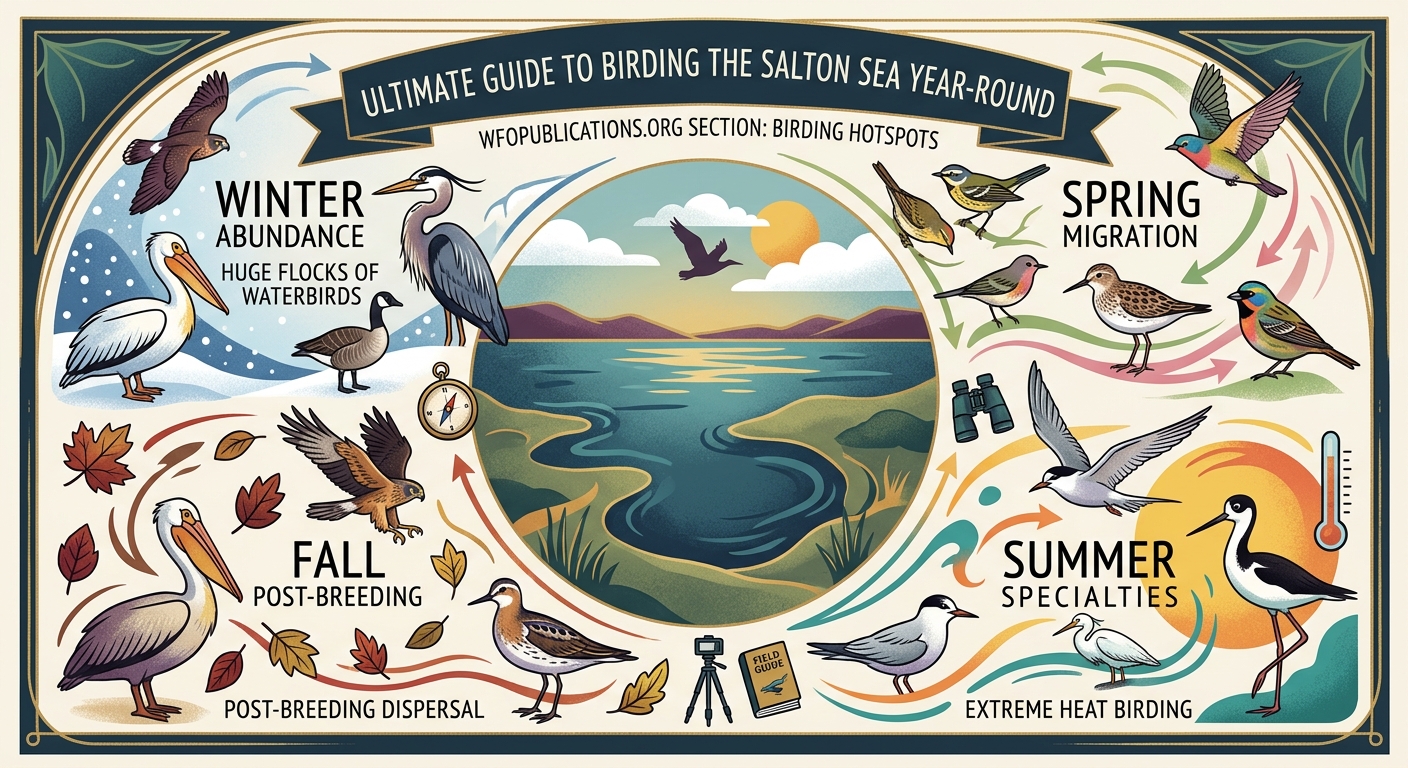
Timing your visit makes the difference between a good day and an extraordinary one. Each season brings distinct species and viewing opportunities.
Spring Migration (March through May)
Shorebird diversity peaks during these months. Scan mudflats for:
- Western Sandpiper
- Long-billed Dowitcher
- American Avocet
- Black-necked Stilt
- Wilson’s Phalarope
Eared Grebes arrive by the thousands, sometimes forming rafts visible from shore. Yellow-footed Gulls begin appearing from the Gulf of California, one of the few reliable spots to see this species in the United States.
Summer Breeding Season (June through August)
Heat drives most birders away, but dedicated observers find rewards. Gull-billed Terns nest on islands. Black Skimmers skim the surface at dawn. Burrowing Owls occupy canal banks and agricultural fields.
Temperatures regularly exceed 110°F. Start before sunrise and finish by 10 AM.
Fall Migration (September through November)
This period rivals spring for diversity. Shorebirds return in waves. Passerine migrants use riparian corridors as highways. Rare vagrants show up with increasing frequency as weather patterns shift.
Check tamarisk thickets for warblers, vireos, and flycatchers. Scan power lines for raptors including Peregrine Falcon and Prairie Falcon.
Winter Waterfowl Season (December through February)
Duck and goose numbers swell. Species include:
- Northern Pintail
- Green-winged Teal
- Ruddy Duck
- Ross’s Goose
- Snow Goose
Bald Eagles patrol the shoreline. Mountain Plover inhabit nearby agricultural fields. Burrowing Owls become easier to spot as vegetation dies back.
Top Hotspots Around the Sea
The Salton Sea covers roughly 343 square miles with varied habitat around its perimeter. Focus your efforts on these proven locations.
Sonny Bono Salton Sea National Wildlife Refuge
Located on the southern end, this refuge protects critical wetland habitat. The Rock Hill Trail provides elevated views over ponds and marshes. Scan for rails, bitterns, and diving ducks.
The observation platform near the visitor center offers scope views of distant mudflats. Arrive at dawn when birds are most active.
Wister Unit
This managed wetland north of Niland attracts waterfowl and shorebirds in impressive numbers. Levee roads allow vehicle-based birding, perfect for hot days.
Check cattail edges for Yuma Clapper Rails. Scan open water for grebes and diving ducks.
Red Hill Marina
Though the marina itself has deteriorated, the surrounding area remains productive. Gulls congregate on exposed pilings. Terns fish offshore. Shorebirds work the mudflats at low water.
Park carefully and watch for soft ground near the shoreline.
Salton Sea State Recreation Area
The campground and beach areas on the northeast shore provide access to different habitat types. Palm groves attract migrant passerines. Open beach areas host plovers and sandpipers.
The boat launch area concentrates waterfowl during winter months.
Obsidian Butte
This volcanic dome on the southeastern shore creates unique habitat. Desert species mix with water-dependent birds. Scan the surrounding desert scrub for Verdin, Black-tailed Gnatcatcher, and LeConte’s Thrasher.
Planning Your Birding Trip
Success at the Salton Sea requires more preparation than a typical coastal birding trip. Desert conditions and limited services demand careful planning.
Essential Gear Checklist
- Bring more water than you think necessary. One gallon per person minimum for a half-day trip.
- Pack sunscreen with SPF 50 or higher. Reapply every two hours.
- Carry a spotting scope. Many birds stay far from shore on mudflats and open water.
- Wear a wide-brimmed hat and lightweight, light-colored clothing.
- Include electrolyte replacement drinks or tablets.
Navigation and Access
Cell phone coverage remains spotty around much of the sea. Download offline maps before you arrive. Paper maps provide backup navigation.
Most roads around the sea are paved, but many access points require driving on dirt roads. Check road conditions after rain events.
Gas stations cluster in Brawley, El Centro, and Indio. Fill up before heading to remote areas.
Health and Safety Considerations
The Salton Sea faces serious environmental challenges. Exposed lakebed releases dust containing harmful particles. Air quality can deteriorate rapidly, especially on windy days.
Check air quality indexes before your visit. Avoid strenuous activity when particulate levels spike. People with respiratory conditions should take extra precautions.
The water itself contains high levels of salinity and pollutants. Avoid contact. Don’t let pets swim.
“The Salton Sea teaches patience. Birds concentrate at specific times and locations. Learn the patterns, respect the heat, and you’ll be rewarded with sightings found nowhere else in North America.” — Field ornithologist with 30 years of Salton Sea surveys
Target Species and Where to Find Them
Certain species draw birders from around the world. Knowing where and when to look increases your success rate.
| Species | Best Season | Prime Location | Viewing Tips |
|---|---|---|---|
| Yellow-footed Gull | May to September | Red Hill Marina | Scan gull flocks for yellow legs |
| Gull-billed Tern | June to August | Wister Unit | Check island nesting sites |
| Mountain Plover | December to February | Agricultural fields near Niland | Scan plowed fields at dawn |
| Burrowing Owl | Year-round | Canal banks, Sonny Bono NWR | Look for burrows in earthen banks |
| Wood Stork | August to October | Wister Unit, Sonny Bono NWR | Soaring birds over wetlands |
Rare Bird Alerts
The Salton Sea produces vagrant records regularly. Eastern warblers, tropical seabirds, and out-of-range shorebirds appear with surprising frequency.
Join local birding groups and rare bird alert services. When a rarity gets reported, act fast. Vagrants often move on within hours or days.
Check eBird hotspot lists before your visit. Recent sightings indicate current bird activity and help prioritize locations.
Photography Opportunities
Photographers find exceptional subjects around the Salton Sea, but challenging conditions test equipment and patience.
Early morning light provides the best conditions. Golden hour illuminates birds against dramatic desert backdrops. Heat shimmer becomes problematic by mid-morning, reducing image quality for distant subjects.
Bring lens cleaning supplies. Dust infiltrates everything. Protect camera bodies when changing lenses.
Shoreline reflections create artistic compositions. Position yourself with the sun behind you for optimal lighting on bird subjects.
Respect nesting birds. Maintain safe distances and never flush birds from nests for photographs.
Conservation Context
Understanding the Salton Sea’s ecological crisis adds depth to any birding visit. The sea is shrinking. As water levels drop, salinity increases beyond tolerance levels for most fish. Without fish, piscivorous birds lose their food source.
Exposed lakebed creates toxic dust storms. Habitat loss threatens species that depend on this oasis.
Conservation efforts continue, but solutions remain complex and expensive. Birders contribute by documenting species presence through eBird reports and supporting organizations working on restoration projects.
Your observations matter. Citizen science data helps researchers track population trends and advocate for habitat protection.
Common Mistakes to Avoid
New visitors often make predictable errors that reduce their birding success.
Arriving Too Late
Desert heat builds rapidly. By 10 AM in summer, bird activity drops dramatically. Most species retreat to shade or become less active.
Set your alarm early. Best birding happens between sunrise and two hours after.
Skipping Optics
Binoculars alone won’t cut it here. Many birds stay hundreds of yards offshore or on distant mudflats. A spotting scope transforms your ability to identify distant waterfowl, shorebirds, and gulls.
Ignoring Water Needs
Dehydration sneaks up on desert visitors. Dry air wicks moisture away faster than you notice. Drink before you feel thirsty.
Overlooking Agricultural Areas
Birders fixate on the shoreline and miss productive farmland habitat. Fields, canals, and irrigation ditches host different species including Mountain Plover, Long-billed Curlew, and various raptors.
Underestimating Distances
The Salton Sea spans 35 miles from north to south. Driving between hotspots takes longer than maps suggest. Plan realistic itineraries that account for travel time.
Seasonal Birding Strategies
Adapt your approach based on the time of year you visit.
Spring Strategy
Focus on mudflats during morning low water periods. Shorebirds concentrate on exposed substrate. Check freshwater inflows where rivers and canals enter the sea.
Scan gull flocks methodically. Yellow-footed Gulls mix with Ring-billed and California Gulls.
Summer Strategy
Start before dawn. Finish by mid-morning. Return for evening sessions if you can tolerate the heat.
Target breeding species at specific sites. Gull-billed Terns nest on islands visible from shore at Wister Unit.
Fall Strategy
Check every riparian corridor and tamarisk stand. Migrant passerines use these green corridors as rest stops.
Scan overhead regularly. Raptors migrate through in good numbers.
Winter Strategy
Focus on waterfowl concentrations. Wister Unit and Sonny Bono NWR host the highest densities.
Check agricultural fields for plovers and longspurs. Scan power lines and fence posts for raptors.
Field Identification Tips
The Salton Sea presents identification challenges unique to this region.
Gull Identification
Multiple gull species overlap here. Yellow-footed Gulls resemble Western Gulls but show brighter yellow legs and darker mantles. Study leg color, mantle shade, and orbital ring color.
Grebe Confusion
Eared Grebes occur in massive numbers. Clark’s and Western Grebes also appear. Study head patterns, bill color, and neck markings carefully.
Shorebird Sorting
Mudflats host mixed flocks. Focus on size, bill shape, and leg color to separate species. Dowitchers, sandpipers, and plovers all feed together.
Take field notes. Photograph difficult birds for later study.
Making the Most of Your Visit
Combine birding with cultural and geological interests. The Salton Sea region offers more than birds.
Salvation Mountain, a folk art installation north of Niland, provides a colorful break. The nearby town of Bombay Beach offers surreal abandoned buildings and art installations.
Hot springs dot the southeastern shore. Geothermal activity creates unique geological features worth exploring.
Support local businesses when possible. Small communities around the sea benefit from visitor spending.
Your Salton Sea Birding Adventure Awaits
This desert oasis challenges and rewards in equal measure. Heat, dust, and deteriorating conditions test your commitment, but the birds make every hardship worthwhile. Few places in North America concentrate such diversity in such a small area.
Start planning your trip around migration peaks. Pack twice as much water as seems reasonable. Wake up before the sun. Your life list will thank you for the effort.
The Salton Sea won’t wait forever. Ecological changes continue reshaping this landscape. Visit while this remarkable birding destination still thrives.