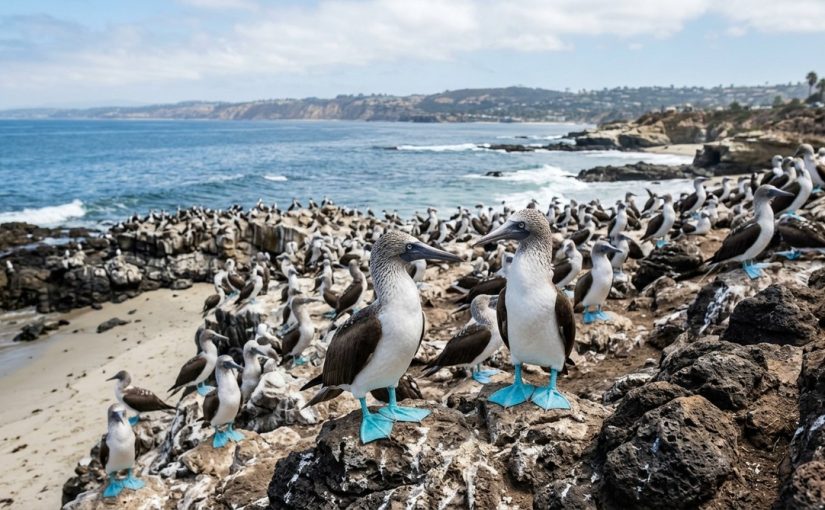
A bright blue foot stepping onto a pier in San Diego. A crowd of birders huddling near a jetty in Orange County. An alert pinging on your phone: “Blue-Footed Booby – Los Angeles Harbor.” This is the scene across Southern California in 2026. The bird that usually stays in the Gulf of California and the Galapagos has turned into a coastal celebrity. People are driving hours to see it. And the invasion shows no signs of slowing down.
A warming Pacific Ocean and shifting prey distributions are pushing blue-footed boobies northward in unprecedented numbers. Southern California has become a temporary hotspot for this tropical seabird. Birders should respect nesting attempts, keep distance, and report sightings to eBird. This event offers a rare chance to observe a species far outside its normal range.
What Makes a Blue-Footed Booby So Distinctive?
The name says it all. Those feet are a brilliant turquoise blue, a color that males show off during courtship. The rest of the bird is a clean white and brown. They have long, pointed wings and a stout, grayish bill. In flight, they look like streamlined missiles. When they dive for fish, they hit the water at high speed.
Adults are about the size of a large duck, with a wingspan that can reach five feet. Their eyes are yellow, set in a face that seems to be wearing a mask. The contrast between the bright blue feet and the rest of the plumage is unmistakable. Even from a distance, a birder can pick out that foot color if the bird is standing on a rock or a buoy.
Juveniles are less flashy. They have grayish feet and a brownish head. But they still show the general booby shape and behavior. Learning to separate them from other booby species, like the brown booby, is part of the fun.
Why Are They Invading Southern California in 2026?
The main driver is the ocean. Sea surface temperatures off the California coast have been running above average for several months. Warm water pushes the tropical fish and squid that boobies eat closer to shore and farther north. When the food moves, the birds follow.
Marine heatwaves, often called “blobs,” have become more frequent. The 2025‑2026 El Niño event further warmed the eastern Pacific. Blue‑footed boobies normally breed on islands in the Gulf of California. With abundant food in a warm coastal zone, young birds and even some adults have strayed far north of their usual range. Southern California offers a buffet of anchovies, sardines, and small mackerel right now.
Winds also played a role. Strong northwesterly winds earlier this spring pushed birds toward the coast. Once they arrived, they found suitable roosting spots on piers, jetties, and offshore rocks. Some have even tried to nest on the Channel Islands. This is not a one‑time freak event. It fits a pattern of tropical seabirds expanding northward during warm ocean periods. You can read more about the broader phenomenon in our article on storm‑driven seabirds and when Pacific pelagics appear inland.
How to Spot One: Field Marks and Behavior
A blue‑footed booby is not a shy bird. It often sits on exposed perches, preening or sleeping. Look for these clues:
- Foot color: Bright blue in adults, grayish in juveniles.
- Head and neck: White with a brown cap on the crown.
- Upperparts: Brown with white mottling on the back.
- Underparts: White, often with a clean line at the neck.
- Bill: Long, pointed, grayish‑blue.
- Behavior: Plunge‑diving from 30 to 80 feet. They also hover before diving.
They often associate with brown pelicans and gulls. If you see a bird that looks like a pelican but smaller and with a white belly, look closer. The blue feet are the giveaway.
Where to Look in Southern California
The invasion has been widespread. Top locations in 2026 include:
- Los Angeles Harbor – The breakwater near San Pedro has hosted multiple birds.
- Huntington Beach Pier – A reliable spot for both juveniles and adults.
- La Jolla Cove – Birds have been seen resting on sea caves.
- Newport Bay – The tidal jetties near the entrance are good.
- Channel Islands National Park – Anacapa and Santa Cruz islands have reports of loafing birds.
- San Diego Bay – The docks near the convention center and the Silver Strand.
These birds are mobile. Check eBird or rare bird alert services before you go. We recommend rare bird alerts to find out which apps and resources actually work best for real‑time updates.
How to Report Your Sighting the Right Way
If you are lucky enough to see one, please document it. Scientists need data to understand this movement. Follow these steps:
- Take photos or video from a safe distance. Do not flush the bird.
- Note the exact location, date, and time. GPS coordinates are ideal.
- Estimate the number of birds and their ages if possible.
- Submit your sighting to eBird. Include your photos and notes.
- If you see a band or any sign of injury, contact a local wildlife rescue.
Proper reporting helps researchers track the invasion. For a complete guide on what to include, see our article on how to document and report your rare bird sighting like a pro.
What This Invasion Tells Us About the Ocean
Blue‑footed boobies are not just pretty visitors. They are indicators of ocean change. When they appear, it means surface waters are warm and prey is abundant near shore. But it also signals stress in the ecosystem. Tropical species moving north can disrupt local food webs. They compete with native seabirds like the Brandt’s cormorant and the brown pelican.
Marine biologists are watching closely. If the warm water persists, we may see this species attempt to breed in Southern California. That would be a first for the state. It would also raise questions about long‑term habitat shifts.
Etiquette for Birders Chasing This Rarity
Everyone wants a good look. But these birds are already stressed from being out of range. Follow these simple rules:
- Keep at least 50 feet away. Use a long lens or spotting scope.
- Do not block the bird’s path to the water.
- Avoid loud noises or sudden movements.
- Do not use playback or fake calls.
- Respect private property and park rules.
- If you see a group of birders crowding, kindly remind them of best practices.
Good behavior ensures the birds stay and that others can enjoy them too.
Common Mistakes When Identifying Boobies
Even experienced birders can mix up species. Here is a quick comparison table:
| Feature | Blue‑footed Booby | Brown Booby | Peruvian Booby (rare) |
|---|---|---|---|
| Adult foot color | Bright blue | Yellow‑green | Grayish‑blue |
| Head pattern | White with brown cap | All brown head and neck | White with brown streak |
| Underparts | White | Dark brown | White with brown mottling |
| Bill color | Grayish‑blue | Yellowish | Dark blue‑gray |
| Tail | Brown with white edges | All dark | Brown with white edges |
Study these differences before you head out. A misidentified booby is a missed opportunity.
Advice from a Marine Ornithologist
I spoke with Dr. Sara Chen, a seabird researcher at Scripps Institution of Oceanography. She has been tracking the invasion since last fall.
“Blue‑footed boobies are tough birds. They can travel hundreds of miles in a day. But they need to rest and feed. The Southern California coast is offering both right now. What surprises me is the number of juveniles. That suggests a successful breeding season down south, followed by a northward dispersal. We should expect more of these events as the climate warms.”
Her advice for birders: “Enjoy the moment, but be mindful. These birds are not here to be entertainment. They are living creatures trying to survive. Every observation you log helps us understand how the ocean is changing.”
Enjoy the Invasion While It Lasts
This is a special time for Southern California birding. The blue‑footed booby invasion of 2026 will be talked about for years. It combines rare beauty, scientific significance, and a sense of wonder. Whether you see one on a pier, from a kayak, or through a spotting scope, take a moment to appreciate what it means. A tropical bird has traveled far to share its blue feet with you.
Pack your binoculars, check the alerts, and head to the coast. The boobies are waiting.