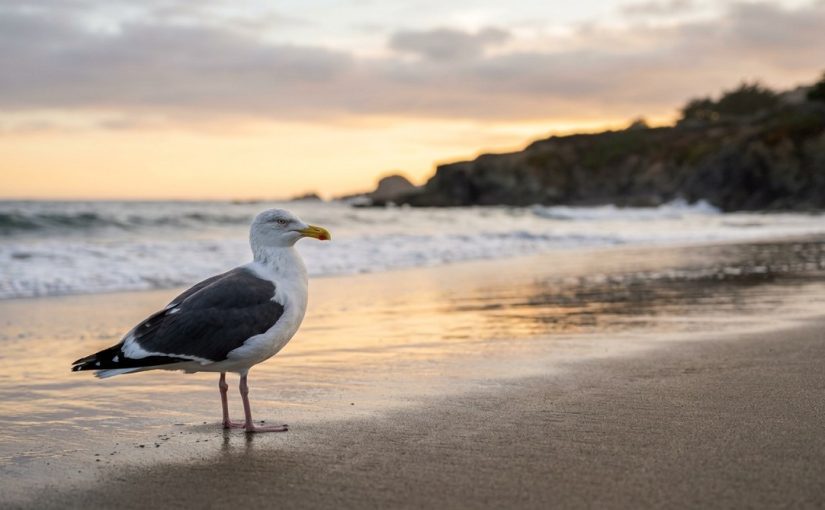
You are standing on a windy beach in northern California. Your binoculars sweep over a resting flock of gulls. Most are Western Gulls, some Glaucous-winged, maybe a few Herrings. But one bird stands out. Its back looks darker, almost slate gray. The legs are a dull pinkish, not the bright yellow of a Western Gull. The head is clean white with a smudgy look near the eye. Could this be the rare visitor from Siberia? The slaty-backed gull.
This species has been turning up more often on West Coast beaches in recent years. Birders from Washington to California now eagerly scan every large gull for that distinctive dark mantle. But telling a slaty-backed gull from its lookalikes takes practice. You need to know exactly which features to focus on. This guide will help you confidently identify a slaty-backed gull on your next beach outing.
A slaty-backed gull stands out on West Coast beaches by its dark slate gray upperparts, pale pinkish legs, and a head that looks white with a soft, brownish wash around the eye in winter. It has a relatively heavy bill with a distinct red spot on the lower mandible. In flight, look for extensive white tips on the wing primaries. The main confusion comes from Western Gulls, Glaucous-winged Gulls, and hybrids. Focus on mantle shade, leg color, and primary pattern to separate them with confidence.
Why This Siberian Visitor Shows Up on Our Shores
The slaty-backed gull (Larus schistisagus) is a large gull that breeds along the coasts of northeastern Asia, especially in Russia and Japan. Each winter, some individuals wander south and east across the Pacific. A small but regular number reach the West Coast of North America. Since the early 2000s, sightings have become more reliable, particularly from November through March. Birders now anticipate them at known gull roosts from British Columbia to central California.
Understanding why they appear here helps you know when to look. Winter storms and food availability can push them toward our shores. If you live near a major river mouth, a jetty, or a large coastal landfill, you have a better chance. Check rare bird alerts: which apps and resources actually work best to stay on top of fresh sightings.
The Key Field Marks That Set Slaty-Backed Gulls Apart
You need to examine several features together. No single mark seals the identification. Here is what to look for.
Mantle Color and Pattern
The mantle (the back and upper wing coverts) is the most noticeable trait. A slaty-backed gull has a very dark gray mantle. It appears almost charcoal, darker than a Western Gull’s medium gray and much darker than a Glaucous-winged’s pale gray. In direct sunlight, the slate hue can look almost blackish. Compare the bird to nearby gulls of known species. If the bird’s back is distinctly darker than the Western Gulls around it, you are onto something.
Head and Underparts
In winter, the head is mostly white with a variable amount of fine brown streaking. The streaking is often concentrated around the hindneck and the ear coverts, giving a “dirty” look. The underparts are white, sometimes with light mottling on the breast. A clean white head in winter is unusual for a slaty-backed; most show some smudging.
Wingtips and Primary Projection
When the bird is standing, look at the wingtips extending beyond the tail. On a slaty-backed gull, the wingtips show a row of white spots (called mirrors) on the outermost primaries. The white spots are larger than on a similar sized Western Gull. On the folded wing, you should see a neat white edge along the trailing edge of the wing. In flight, the underside of the primaries is dark gray with broad white tips. This white margin is a crucial difference from the Western Gull, which has much less white.
Legs and Bill
Legs are a dull pinkish or flesh colored. They never show the bright yellow or orange of a Western Gull. The bill is heavy and fairly long. It has a prominent red spot on the lower mandible near the tip. In winter, the bill may have a dark band or be mostly yellow with the red spot. The gape (the corner of the mouth) is noticeably large, giving the face a slightly “grinning” expression.
Slaty-backed Gull vs. Western Gull: The Critical Differences
These two species cause the most confusion because Western Gulls are everywhere on the West Coast. The table below lays out the main differences.
| Feature | Slaty-backed Gull | Western Gull |
|---|---|---|
| Mantle color | Very dark slate gray | Medium gray (like a Herring Gull) |
| Leg color | Pale pinkish flesh | Bright yellow to orange |
| Head pattern in winter | White with brown streaks on nape | Clean white head, sometimes little streaking |
| White primary tips | Broad white mirrors on outer primaries | Smaller white tips, often reduced |
| Bill shape | Heavy, thick, with large gape | Stout but with less pronounced gape |
| Underwing pattern | Dark undersides with broad white tips | Paler undersides with smaller white tips |
Use this table when you are in the field. Focus on leg color and the amount of white on the wingtips. Those two marks are the most reliable.
Slaty-backed Gull vs. Glaucous-winged Gull: Subtle but Important
Glaucous-winged Gulls are also common on northern West Coast beaches. They have a very pale gray mantle, almost white in some individuals. A slaty-backed gull looks nearly black beside them. The leg color of a Glaucous-winged is pinkish, similar to the slaty-backed, so you cannot rely on legs alone. Instead, look at the wingtips. Glaucous-winged Gulls have gray wingtips with no black, while slaty-backed gulls have black wingtips with white mirrors. That difference is stark.
Also check the head shape. Slaty-backed gulls have a flatter crown and a larger bill. Glaucous-winged Gulls have a more rounded head and a smaller, more delicate bill.
How to Confirm Your Sightings: A Step-by-Step Approach
When you think you have a slaty-backed gull, follow this process to be sure.
-
Scan the whole flock first. Look for the darkest mantled gull among the large gulls. If you see a bird that is noticeably darker than all the Western Gulls, note its location and compare with others.
-
Check the leg color. If the legs are bright yellow, it is not a slaty-backed. If they are pale pinkish, move to the next step. Remember that lighting can affect color perception. Shade or direct sun can change how pink or yellow appears.
-
Observe the head pattern. Look for streaking on the hindneck and around the eye. A completely clean white head in winter is more typical of a Western Gull. A smudgy head points toward slaty-backed.
-
Examine the folded wingtips. Does the bird show broad white tips on the primaries? Use your binoculars to count the white mirrors. A slaty-backed gull usually has white mirrors on the three outermost primaries (p9, p10). Western Gulls have smaller mirrors, often only on p10.
-
Look at the bill. A heavy bill with a noticeable red spot and a wide gape is characteristic. If the bill looks small or the red spot is indistinct, consider a hybrid.
-
Photograph the bird. Take multiple shots from different angles, especially of the wing pattern and legs. Later you can compare with reference images or submit to experts. Use a camera with a long lens or digiscope setup.
-
Check the age. Adult slaty-backed gulls (fourth year or older) have the full dark mantle and clean pattern. Younger birds are harder and require careful study of plumage progression. Refer to juvenile gull plumage progression: a three year visual timeline for guidance.
-
Consult a field guide or app. Bring a good guide with range maps and multiple photos. Also use the eBird app to view recent sightings and photos from the area.
Common Mistakes Birders Make When Identifying Large Gulls
Even experienced birders fall into traps. Here are the pitfalls to avoid.
-
Relying only on mantle color without checking leg color. A dark-backed Western Gull hybrid can have a mantle close to slaty-backed. Leg color is the tiebreaker.
-
Ignoring hybrids. Western Gulls interbreed with Glaucous-winged Gulls along the Pacific coast. These hybrids can show intermediate leg colors (pale yellow) and mantle shades. If the bird does not match all field marks cleanly, consider a hybrid.
-
Forgetting that juveniles and immatures look very different. First winter slaty-backed gulls are brownish and lack the dark mantle. Do not try to identify a juvenile as a slaty-backed unless you have very strong evidence. Focus on adults.
-
Trusting a single photograph taken in poor light. Overcast skies can make a Western Gull look darker. Direct sun can make a slaty-backed look paler. Get multiple shots in different light.
-
Not checking the underwing pattern in flight. This is a reliable mark but requires the bird to fly. If you can, wait for it to take off.
Expert Advice from West Coast Gull Specialists
I spoke with Dr. Carolyn Mead, a marine ornithologist who studies gull movements along the Oregon coast. She has confirmed dozens of slaty-backed gull records.
“The single best piece of advice I give to birders is to start with the leg color. It sounds simple, but so many people get distracted by the back color and then miss the legs. If you see a large gull with dark gray upperparts and pale pinkish legs, you have a strong candidate. Then check the white wingtips. I have seen too many misidentifications because someone assumed a dark Western Gull was a slaty-backed. Always confirm the legs.”
Good advice. Keep that order: legs first, then mantle, then wingtips.
Recording and Reporting Your Rare Gull Sighting
Once you have a solid identification, share it. Your sighting helps scientists track the movements of this Siberian visitor. Submit to eBird with detailed notes and photos. Also alert your local rare bird committee to validate the record.
You can find out more about how to document and report your rare bird sighting like a pro. That guide covers everything from writing descriptions to getting your record accepted.
Why Reporting Matters: Contributing to Ornithology
Each slaty-backed gull record adds to our understanding of vagrancy patterns in large gulls. Researchers use these data to study climate change, food availability, and range expansions. By reporting carefully, you become part of a citizen science network that drives real ornithological research. It is not just about the thrill of the find. It is about building knowledge.
If you want to go deeper into why certain birds show up far from home, check out what makes a bird rare in western North America. It explains the factors that turn a slaty-backed gull into a regular visitor.
Your Next Steps After Spotting a Potential Slaty-Backed Gull
You have the tools now. Next time you head to a beach in Washington, Oregon, or California, scan those gull flocks with fresh eyes. Start with leg color. Then confirm the dark mantle. Check the white wingtips. Take photos. Tell your birding friends. And submit your sighting.
The slaty-backed gull is one of the most exciting rare birds you can find on the West Coast. With patience and practice, you will see one. And when you do, you will know exactly how to identify it.
Happy birding. And do not forget to share your findings with the community. Every report makes the next birder’s job easier.