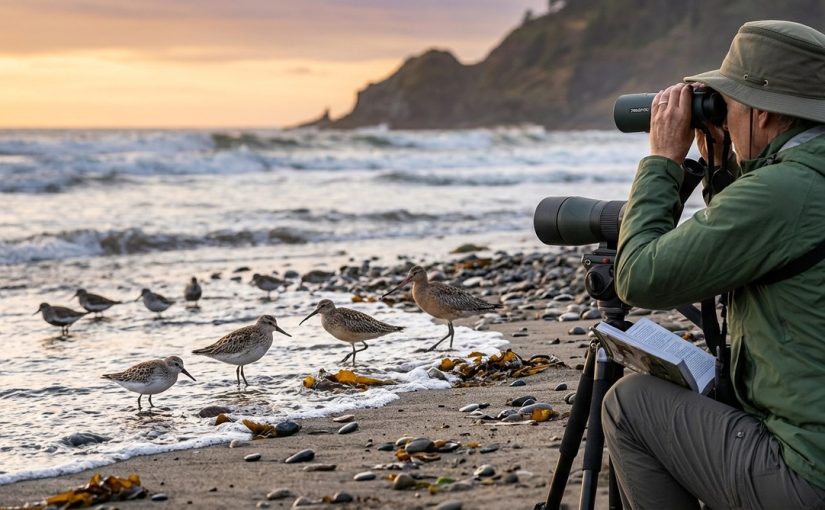
The sun burns off the morning fog and you catch a glimpse of a bird that doesn't match any page in your field guide. It is smaller than a Sanderling, but its bill has a subtle droop. The leg color looks wrong for a Western Sandpiper. Your heart races. That is the moment Pacific Coast shorebird identification transforms from a casual hobby into a detective puzzle. Whether you are scanning the mudflats of Grays Harbor, the jetties of Monterey Bay, or the outer beaches of the Olympic Peninsula, knowing how to separate a common species from a genuine vagrant takes practice, patience, and a few proven methods. This guide will help you sharpen your skills for 2026.
Spotting a rare shorebird on the Pacific Coast requires more than luck. Focus on structure, plumage, behavior, and seasonality. Use a step-by-step approach, avoid common pitfalls like confusing peeps, and lean on citizen science tools. By applying the five identification pillars, you will confidently identify vagrants such as Sharp-tailed Sandpipers and Wandering Tattlers this year.
Why Pacific Coast Shorebird ID Demands Extra Attention
The Pacific Flyway funnels millions of shorebirds along a narrow coastal corridor. Most birds follow predictable routes. But each year, storms, weather anomalies, and navigation errors push species far outside their normal range. A Red Knot that should be wintering in South America ends up on a San Diego beach. A Sharp-tailed Sandpiper from Siberia appears in an Oregon estuary. These are the moments that make shorebirding unforgettable.
The challenge is that many rare shorebirds look nearly identical to common ones, especially during non-breeding or juvenile plumage. A Least Sandpiper and a Semipalmated Sandpiper can be separated by leg color and bill shape, but a juvenile Red Knot can fool even experienced birders. To master Pacific Coast shorebird identification, you need a systematic method.
The Five Pillars of Identification
Birders often rely on a single field mark and call it done. That is a recipe for misidentification. Instead, use these five pillars every time you study a shorebird.
-
Size and shape. Compare the bird to a known reference. For example, a Dunlin is roughly the size of a large sandpiper, while a Western Sandpiper is smaller. Notice the bill length, curve, and thickness. A downturned bill is typical for godwits and curlews. A straight, fine bill suggests a sandpiper like the Semipalmated.
-
Plumage patterns. Look at the head, back, and breast. Does it have a distinct supercilium? Is the belly white or barred? During breeding season, many species show rich chestnut and black patterns. In fall and winter, most shorebirds wear muted browns and grays. Pay attention to the wing bar in flight.
-
Behaviors. Feeding style matters. Does it probe deeply or pick at the surface? Does it run in short bursts like a Sanderling or walk steadily like a Willet? Some species bob their tails or stand on one foot. Note if the bird is solitary or in a flock.
-
Vocalizations. Learn the common calls. A Short-billed Dowitcher utters a mellow "tu-tu-tu," while a Long-billed Dowitcher gives a sharp "keek." Even within peeps, calls are distinct. Recordings help, but field experience is best.
-
Range and timing. A Marbled Godwit is expected on the Pacific Coast year-round, but a Hudsonian Godwit would be a major rarity. Study eBird bar charts for your location. Some species only appear during southbound migration (July-October). Others are winter visitors (November-March). Knowing the calendar eliminates half the candidates before you even raise your binoculars.
Common ID Mistakes and How to Fix Them
Even veteran birders make errors. The table below compares frequent mistakes with the correct approach.
| Mistake | Why It Happens | Correct Technique |
|---|---|---|
| Calling every small sandpiper a "peep" and moving on | Overwhelmed by similarity | Focus on bill shape, leg color, and wing projection beyond tail. A Semipalmated Sandpiper has a blunt, straight bill; a Western has a slightly longer, droopy tip. |
| Forgetting to check leg color in different light | Mud or shadows obscure legs | Wait for a clean view or use a scope. Least Sandpipers have yellow-green legs; Semipalmateds have black legs. |
| Confusing dowitchers in flight | The white wedge on the back is similar | Listen for call. Short-billed Dowitcher gives a mellow "tu-tu-tu"; Long-billed says "keek." Note primary projection past the tail. |
| Assuming a large sandpiper is a Willett | Size alone is not enough | Check bill shape and wing pattern. A Willet has a straight, stout bill and bold black-and-white wing bars. A Whimbrel has a decurved bill. A Marbled Godwit has a pink-orange bill base. |
| Overlooking molt limits | Juveniles, basic, and alternate plumages look different | Use molt guides. Most shorebirds replace body feathers in late summer. A worn juvenile can look like a basic adult. Note feather wear and shape. |
Essential Gear for Shorebird Identification
You do not need an expensive setup, but a few tools make a difference.
- A spotting scope with 20-60x zoom. Many shorebirds feed at low tide far from shore. A good tripod helps.
- A field guide that covers Pacific Coast species. The Sibley Guide to Birds or the National Geographic guide work well.
- A notebook or waterproof app for jotting notes. Sketch the bird if possible.
- A camera with a long lens. Photos let you analyze marks back home.
- eBird on your phone. Use it to check recent sightings and range maps. Also consider Rare Bird Alerts: Which Apps and Resources Actually Work Best to get real-time notifications.
- A recording app for calls. The Merlin Bird ID app can help, but practice listening on your own.
"I tell every new birder to stop looking at the checklist and start looking at the bird. Size, shape, structure. Everything else comes after that. On the Pacific Coast, the biggest mistake people make is rushing. Rare shorebirds often hide in plain sight." -- Dr. Susan Haig, shorebird ecologist and author of Shorebirds of the Pacific Flyway
How to Spot Rare Vagrants
Rare shorebirds do not follow the rules. That is what makes them fun. A Sharp-tailed Sandpiper might join a flock of Dunlin. A Red-necked Stint could appear on a rocky jetty. A Common Ringed Plover, normally European, has been found on Alaskan islands and could reach California.
To increase your odds, target high-quality habitats during migration windows. Check tide charts and arrive at low tide. Look for birds that behave differently. A lone shorebird that does not associate with others is often a sign. Check its bill and leg color carefully. If something feels off, it probably is.
For a deeper understanding of why certain birds appear far from home, read What Makes a Bird 'Rare' in Western North America?. And if you think you have found a vagrant, learn How to Document and Report Your Rare Bird Sighting Like a Pro.
Small Sandpipers: The Sandpiper Puzzle
No group causes more confusion than the "peeps." These are small Calidris sandpipers: Western, Semipalmated, Least, Baird's, White-rumped, and the rare Red-necked Stint. In 2026, vagrant Siberian species like the Little Stint and Temminck's Stint are always possible during fall storms.
Focus on bill and leg color first. Western Sandpipers have a longer, slightly drooped bill and black legs. Least Sandpipers have yellowish legs and a fine, straight bill. Semipalmated Sandpipers have a blunt, straight bill and dark legs. Baird's Sandpipers look longer-winged, with a buffy chest and a fine straight bill. White-rumped Sandpipers are rare on the West Coast, but they show a white rump in flight and have a long primary projection.
If you need a dedicated guide, check out What's That Peep? A Beginner's Guide to Small Sandpipers of the Pacific Coast. It walks through each species in detail.
Large Shorebirds: Godwits, Curlews, and Dowitchers
The larger shorebirds are easier to size up but still trap birders. The Marbled Godwit and Whimbrel are common. But a Bar-tailed Godwit (very rare) looks similar to a Hudsonian Godwit. Focus on the bill: Bar-tailed is slightly upturned and has a pink base; Hudsonian is straight and dark. Long-billed Curlew has an absurdly long decurved bill; Whimbrel's bill is shorter and has a distinct kink.
Dowitchers can be separated by call and primary projection. Short-billed Dowitchers have a mellow call and shorter primary projection. Long-billed have a sharp call and longer primaries. In breeding plumage, Short-billed shows more rufous on the belly; Long-billed has a barred belly.
Tattlers, Turnstones, and Knots
Wandering Tattlers are a Pacific Coast specialty. They have a gray body, a pale supercilium, and orange legs. They bob constantly. They are often found on rocky shores. Turnstones (Ruddy and Black) have bold black-and-orange patterns in summer. Red Knots are chunky, with a short bill and grayish body. In breeding plumage, they turn brick-red. They are rare but increasing in some areas.
Phalaropes: The Swimmers
Phalaropes are unique shorebirds that swim in spirals to stir up food. Red-necked Phalarope is common offshore; Red Phalarope is less common but can be seen after storms. Wilson's Phalarope is more inland. All three spin on the water surface. In non-breeding plumage, Red and Red-necked look similar: gray above, white below, with a dark eye patch. Red Phalarope has a thicker bill and a more robust body.
Your Next Shorebird Adventure Awaits
Summer 2026 is almost here. Shorebirds are already moving north to their Arctic breeding grounds. By fall, the southbound migration will bring waves of birds to every estuary from the Salish Sea to San Francisco Bay. The best way to improve your Pacific Coast shorebird identification is to get outside often. Visit the same location at different times of the year. Learn the common species so well that a rarity jumps out.
Remember: every birder once struggled with peeps. Every rare bird sighting started with a moment of uncertainty. Trust your process, take notes, and share what you find. The Pacific Coast is one of the most exciting shorebird regions on Earth, and 2026 promises to be a year full of surprises. Grab your binoculars, check the tide, and head out. Your next memorable sighting is waiting.