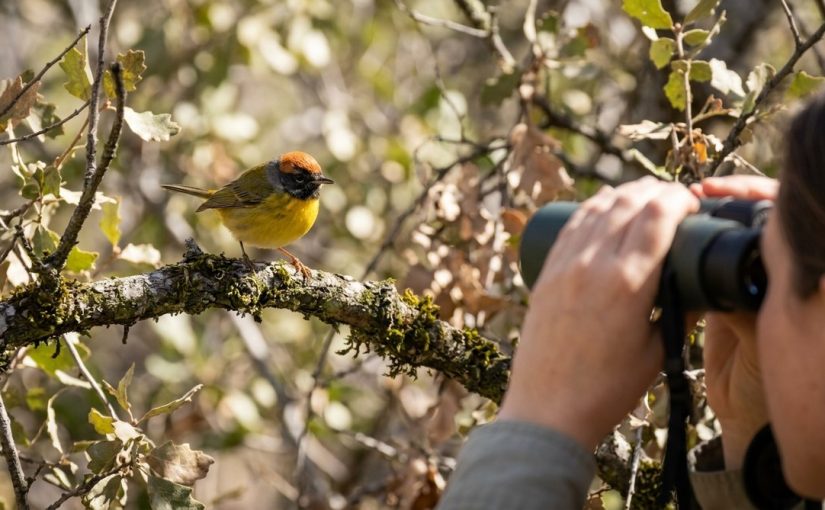
A flash of rufous and yellow in a sycamore canyon. That is what birders across Arizona are chasing this year. The Rufous-capped Warbler, a species usually confined to Mexico and Central America, has pushed north in numbers not seen in decades. By early 2026, reports flooded eBird from the Huachucas, the Chiricahuas, and even unexpected urban parks in Tucson. This is not a stray. This is an irruption. And if you have not yet joined the hunt, now is the time to plan your trip.
The 2026 Rufous-capped Warbler irruption into Arizona is a rare event driven by drought and food scarcity in its core range. Most sightings cluster in southern Arizona’s Sky Islands, especially Madera Canyon and Cave Creek. Best viewing runs from March through May. Use eBird alerts and pack a camera. This may be your only chance to see this species north of the border.
What Is Driving the 2026 Rufous-capped Warbler Irruption?
Irruptions happen when conditions push a species beyond its normal range. For the Rufous-capped Warbler, the trigger this year appears to be a combination of drought in western Mexico and an explosion of insect prey in Arizona’s canyons. When the warbler’s usual wintering grounds in Sinaloa and Durango dried up, hungry birds moved north. They followed riparian corridors into the Madrean Sky Islands, where oak woodlands and sycamore groves offered food and shelter.
Ornithologists at the University of Arizona have noted that this is the largest incursion since a smaller event in 1995. Climate models suggest similar irruptions may become more common as the Sierra Madre Occidental warms. For now, 2026 is the year to act.
Where to Find Rufous-capped Warblers in Arizona
Your best bets are the same Sky Islands that attract so many birders from around the world. This region [why southern Arizona’s sky islands attract birders from around the world] routinely hosts vagrants. For the Rufous-capped Warbler, focus on mid elevation canyons with flowing water.
- Madera Canyon (Santa Rita Mountains) – The most reliable spot in 2026. Check the picnic area and the trail to Josephine Saddle.
- Cave Creek Canyon (Chiricahua Mountains) – Near the Southwestern Research Station. Listen for the chip notes in the sycamores.
- Miller Canyon (Huachuca Mountains) – The upper reach has had multiple confirmed sightings this spring.
- Patagonia State Park – A lower elevation option with a well maintained nature trail.
- Tucson’s urban wash systems – Reports have come from Sabino Canyon and even Reid Park. Do not overlook city greenways.
These locations vary in elevation and habitat. Use the morning hours when the warbler is most vocal. By midday it often becomes secretive, but patient birders still manage good looks.
How to Identify a Rufous-capped Warbler
The name gives away the most obvious field mark: a rich rufous crown. But several similar warblers occur in the same areas. The table below shows key differences to help you avoid a misidentification.
| Field Mark | Rufous-capped Warbler | Nashville Warbler | Virginia’s Warbler |
|---|---|---|---|
| Crown color | Bright rufous | Gray with a faint rusty patch | Gray, no rufous |
| Throat & chest | Yellow, unstreaked | Yellow, unstreaked | Yellow, unstreaked |
| Eye ring | Bold white eye ring | Complete white eye ring | Partial white eye ring |
| Tail pattern | White outer tail feathers (often flashed) | No white in tail | White under tail coverts only |
| Habitat | Sycamore oak canyons | Open woodlands, brushy slopes | Dry scrub, pinyon juniper |
The Rufous-capped warbler also has a distinctive call: a sharp “tchip” that carries well. If you hear that, follow it. Once you see the rufous cap and white eye ring, the identification is solid.
When to Go: Timing the Invasion
Peak abundance runs from mid March through late May. After that, most birds will begin moving back south. A few may linger, but your odds drop sharply after June. Follow this numbered checklist for a successful trip.
- Set up eBird rare bird alerts for Santa Cruz and Cochise counties. Turn on push notifications. The best sightings are often reported within hours.
- Check [rare bird alerts which apps and resources actually work best] to decide which app fits your workflow. eBird is the standard, but Arizona’s listserv (AZBIRD) is also valuable.
- Book lodging early. Madera Canyon’s bed and breakfasts fill up fast during irruptions. Consider staying in Tucson or Sierra Vista and driving out each morning.
- Scout the previous day’s reports before you leave. If a warbler was seen at a specific trail junction, go there first.
- Arrive at your chosen canyon by first light. Warbler activity is highest in the two hours after sunrise.
- Walk slowly, stop often, and pish gently. Many birders have had success by imitating the warbler’s call.
- Document everything. Take photos, record audio, and note the location. Even if you are positive of the ID, a solid record helps researchers.
“In 2026 we are seeing Rufous-capped Warblers in places where they were never recorded before. It is a researcher’s dream and a birder’s gold rush. If you can, get out there and submit your observations.” – Dr. Maria Espinoza, University of Arizona Bird Lab
Reporting Your Sighting
Every observation matters. The Rufous-capped Warbler is not a fully established breeder in the United States. To confirm the irruption’s scale, researchers rely on citizen science data. When you find one, submit a checklist to eBird with photos or a recording. For tips on writing an airtight description, read this guide on [how to document and report your rare bird sighting like a pro]. Include details like behavior, duration of view, and weather. If the bird is banded, note the color combination.
It is also worth checking the local bird club’s rare bird committee guidelines. Arizona has a strong review process for any Rufous-capped Warbler record. Your report may become part of the official state record.
Gear and Field Strategy
An irruption like this demands preparation. The canyons are steep, the sun is intense, and the warbler can be elusive. I recommend [chasing rarities essential gear every serious birder needs] as a full resource. For this specific trip, prioritize the following.
- Binoculars with good close focus (8x or 10x). The warbler often forages in thick foliage.
- A camera with a fast autofocus. The bird is active and rarely sits still.
- Sun protection: hat, sunscreen, long sleeves. The Arizona sun is brutal even in spring.
- Plenty of water. Canyons like Miller and Cave Creek have limited drinking water.
- A field guide with the warbler plates. Sibley or National Geographic both work.
One more tip: learn the warbler’s song before you go. Listening to recordings on the Cornell Lab’s website will save you time in the field.
What This Irruption Means for Future Years
Will the Rufous-capped Warbler become a regular breeder in Arizona? That is the million dollar question. Some researchers believe that if the 2026 irruption leads to successful nesting, a small population might establish itself in the Santa Rita or Huachuca Mountains. Others point out that past irruptions fizzled out when the next drought hit.
Either way, 2026 is a pivotal year. The data collected by birders right now will inform conservation decisions for the next decade. Every checklist you submit adds to the picture. This is not just a fun chase; it is a chance to contribute to real science.
Your Role in Tracking the Invasion
The Rufous-capped Warbler invasion of 2026 is unfolding in real time. You can follow the latest updates on the main tracking page at wfopublications.org/tracking-the-2026-rufous-capped-warbler-invasion-in-arizona. We update the map every few days with new reports.
Finally, a word of encouragement. This might be the most exciting warbler irruption in Arizona history. The birds are here now, and they are not waiting. Grab your binoculars, check your eBird alerts, and head for the canyons. The reward is a sight you will remember for years: a rufous-capped gem in a sycamore tree, defying every expectation of where it belongs.