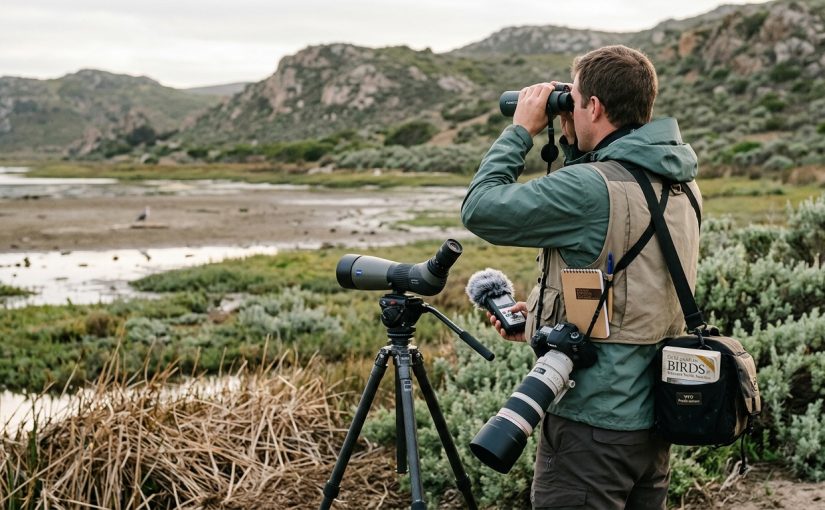
You’re standing in a marsh at dawn, binoculars raised, when a flash of color catches your eye. Is that a vagrant warbler, thousands of miles off course? Your heart races, but your gear needs to perform flawlessly to confirm the sighting and capture proof. The difference between a triumphant rarity report and a frustrating “one that got away” story often comes down to having the right equipment at the ready.
Serious birders pursuing rare species need specialized birding gear essentials including alpha-quality binoculars with excellent low-light performance, spotting scopes for distant identification, comprehensive field guides covering vagrant patterns, camera systems capable of documenting evidence, weather-resistant clothing, and digital tools for real-time alerts. Strategic investment in proven equipment dramatically increases your success rate when chasing rarities and contributes valuable documentation to the ornithological community.
Optics That Perform When It Counts
Your binoculars are your primary identification tool, and rarities don’t wait for perfect lighting conditions. Premium optics separate themselves from budget models in three critical areas: low-light transmission, color fidelity, and edge-to-edge sharpness.
Look for binoculars with ED (extra-low dispersion) or HD glass. These coatings eliminate chromatic aberration, the color fringing that obscures field marks on distant birds. When you’re trying to confirm whether that shorebird has a straight or slightly decurved bill, crystal-clear optics make the call possible.
The 8×42 configuration remains the gold standard for all-around birding. The 8x magnification provides a stable image without tripod support, while the 42mm objective lens gathers enough light for dawn and dusk sessions when many rarities are most active.
For serious rarity chasers, a spotting scope is non-negotiable. Distant waterfowl, pelagic species from shore, and shorebirds on mudflats often require 20x to 60x magnification for positive identification. Choose a scope with a fluorite or ED objective lens in the 80mm to 85mm range. Larger objectives gather more light but add significant weight for field carry.
Pair your scope with a fluid head tripod designed for digiscoping. Carbon fiber models reduce fatigue during long stakeouts while maintaining the stability needed for high-magnification viewing.
Field Guides and Reference Materials
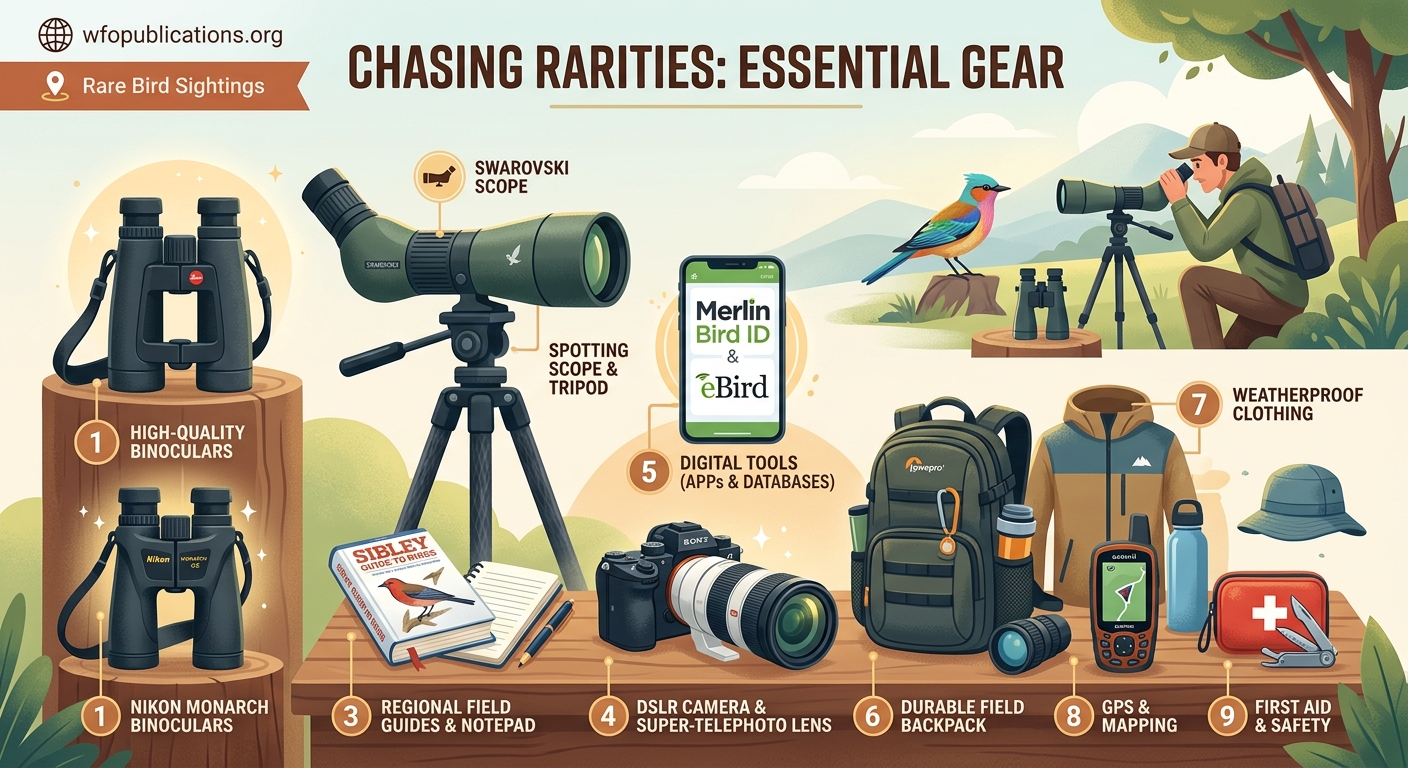
Digital resources have transformed rarity identification, but physical field guides still belong in every birder’s kit. The tactile experience of flipping through plates while comparing field marks reinforces identification skills that become instinctive over time.
Your core library should include:
- A comprehensive North American field guide with range maps showing vagrant patterns
- Regional specialty guides for your primary birding areas
- Age and molt references for challenging identification scenarios
- Waterproof pocket guides for harsh weather conditions
The Sibley Guide to Birds remains unmatched for showing plumage variation across age and sex. Crossley ID Guides use composite photographs showing birds in natural poses and lighting, training your eye for real-world identification rather than idealized illustrations.
For vagrant identification, study guides covering European and Asian species. Many North American rarities originate from these regions, and familiarity with their field marks gives you a decisive advantage when an unusual bird appears.
Keep a waterproof notepad and pencil for field sketches. Drawing forces you to observe details you might otherwise overlook. Your sketches become invaluable when reviewing sightings later or consulting with other birders about identification.
Camera Systems for Documentation
Photographing rarities serves two purposes: personal satisfaction and contributing to scientific records. State and regional bird records committees increasingly require photographic or audio documentation for rare species acceptance.
Full-frame mirrorless cameras with fast autofocus tracking have revolutionized bird photography. Look for bodies with at least 20 frames per second burst rates and eye-detection autofocus that works on birds. These features dramatically increase your keeper rate when photographing active subjects.
Lens selection depends on your target species and typical viewing distances. A 100-400mm zoom provides versatility for various situations, while prime telephotos in the 500mm to 600mm range offer superior sharpness and low-light performance for distant subjects.
Consider this comparison of common telephoto approaches:
| Lens Type | Advantages | Limitations | Best For |
|---|---|---|---|
| 100-400mm zoom | Versatile framing, lighter weight | Smaller maximum aperture | General birding, variable distances |
| 500mm prime | Superior sharpness, f/4 aperture | Heavy, fixed focal length | Shorebirds, waterfowl, distant perched birds |
| 600mm prime | Maximum reach, excellent bokeh | Very heavy, expensive | Serious rarity documentation, pelagic trips |
| 150-600mm superzoom | Extreme versatility, budget-friendly | Slower autofocus, variable sharpness | Birders prioritizing reach over ultimate quality |
Modern image stabilization allows handheld shooting at surprisingly slow shutter speeds, but a monopod or tripod with a gimbal head provides the stability needed for critically sharp images. Gitzo and Really Right Stuff make bombproof support systems that last decades.
Weather Protection and Field Clothing
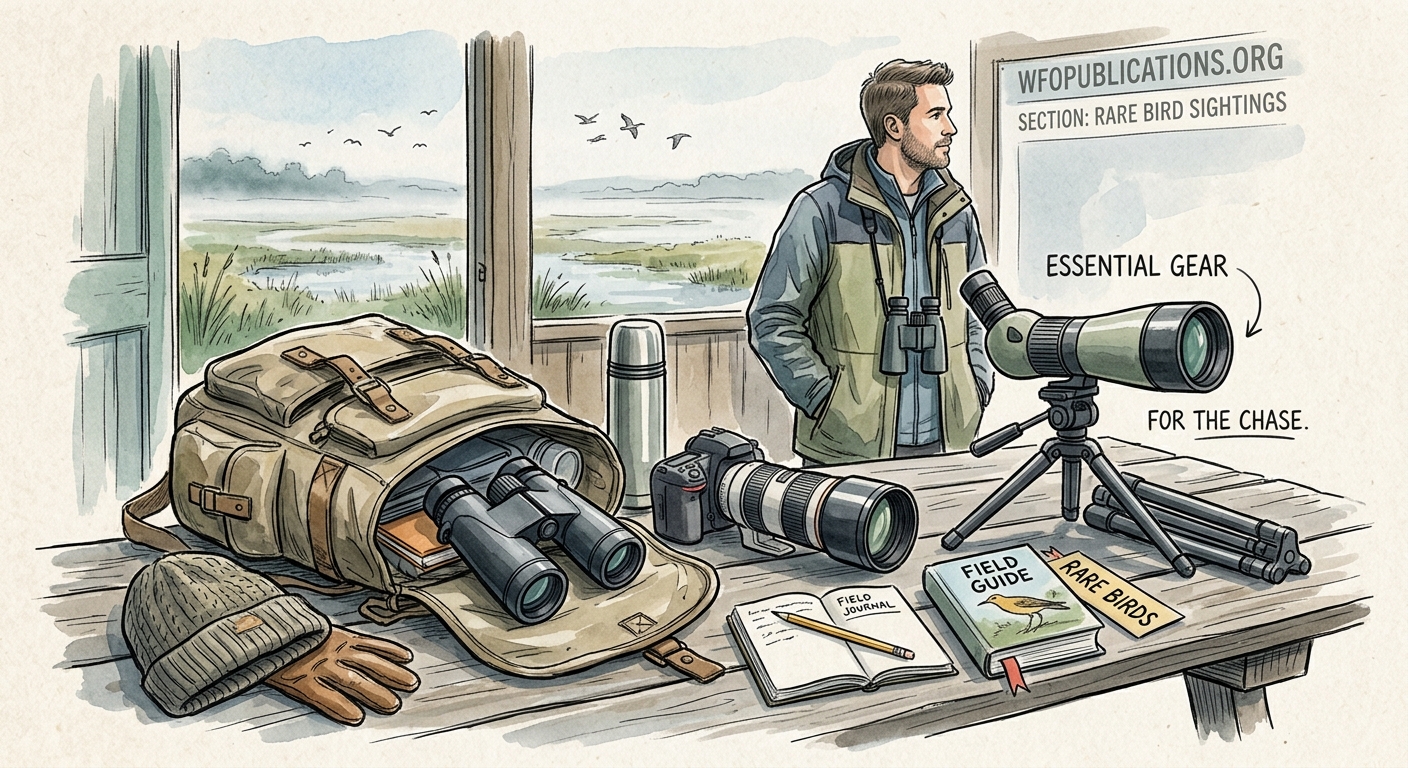
Rarities appear regardless of conditions, and your gear needs protection from the elements. A quality rain cover for your camera and lens prevents moisture damage during sudden downpours. Op/Tech and LensCoat make models that deploy in seconds when weather turns.
Your personal comfort directly affects how long you can stay in the field. Layered clothing systems using moisture-wicking base layers, insulating mid-layers, and waterproof-breathable shells keep you functional in varied conditions.
Footwear deserves careful consideration. Waterproof hiking boots work for general birding, but chest waders open access to marshes and mudflats where rare shorebirds and rails appear. Muck Boots and LaCrosse make models that balance waterproofing with all-day comfort.
“I’ve found more county rarities in the first hour after a storm passes than during entire calm-weather weekends. Most birders wait for perfect conditions. The dedicated few who venture out in marginal weather get rewarded.” — Regional compiler with 30+ years of rare bird documentation
Digital Tools and Alert Systems
Real-time information has become essential for rarity chasing. eBird alerts notify you immediately when someone reports a rare species in your area. Configure alerts for target species and review your settings seasonally as migration patterns shift.
The BirdCast migration forecast maps predict heavy migration nights based on weather patterns. Checking these forecasts helps you prioritize field time when fallouts are likely, increasing your chances of finding vagrants.
Smartphone apps have replaced standalone GPS units for most birders. Offline map downloads ensure navigation capability in areas without cell coverage. Mark productive locations as waypoints for future reference.
Battery management becomes critical during all-day outings. Carry a high-capacity power bank (20,000mAh minimum) to recharge your phone and camera batteries. Anker and RAVPower make reliable models that survive field conditions.
Building Your Kit Strategically
Assembling complete birding gear essentials requires significant investment. Prioritize purchases based on your current limitations and target species.
Follow this sequence for maximum impact:
- Upgrade binoculars first, as you’ll use them constantly regardless of conditions
- Add a spotting scope once you’re regularly encountering distant identification challenges
- Invest in camera gear when you’re finding rarities but lacking documentation capability
- Expand your field guide library as you encounter identification scenarios your current references don’t cover
- Refine clothing and accessories based on specific discomforts you experience in the field
Buy used gear from reputable dealers to stretch your budget. Binoculars and scopes from premium manufacturers retain excellent optical performance even after years of use. Camera bodies depreciate faster than lenses, making used glass a smarter investment than the latest body.
Join local birding clubs to access loaner equipment programs. Testing gear in real field conditions before purchasing prevents expensive mistakes.
Maintenance Habits That Extend Equipment Life
Premium birding gear represents a substantial investment that rewards proper care. Clean your optics after every outing using a lens pen for dust and a microfiber cloth for fingerprints. Avoid touching glass surfaces directly, as skin oils attract dirt and degrade coatings over time.
Store binoculars and scopes with desiccant packets in sealed containers to prevent internal fogging. Fungus growth on internal lens elements ruins optical performance and requires expensive professional cleaning.
Camera sensors accumulate dust despite weather sealing. Learn proper sensor cleaning techniques or budget for professional cleaning twice yearly if you shoot frequently in dusty environments.
Check tripod and monopod leg locks regularly. Sand and grit cause premature wear on locking mechanisms. Disassemble and clean legs annually, applying appropriate lubricants to maintain smooth operation.
Common Mistakes That Cost Sightings
Even experienced birders make equipment choices that limit their success. Avoid these pitfalls:
- Choosing binoculars based on maximum magnification rather than optical quality and field of view
- Skipping the spotting scope because binoculars “seem good enough” for current needs
- Relying exclusively on digital resources instead of building field guide familiarity
- Using camera gear that’s too heavy to carry comfortably for extended periods
- Neglecting weather protection until expensive equipment suffers damage
- Failing to practice with equipment before critical situations arise
That last point deserves emphasis. Fumbling with unfamiliar camera settings while a rarity preens in perfect light guarantees frustration. Spend time learning your gear’s capabilities in low-pressure situations so operation becomes instinctive.
Accessories That Multiply Your Effectiveness
Beyond core equipment, several accessories dramatically improve field efficiency. A comfortable harness system distributes binocular weight across your shoulders rather than your neck. Badlands and Rick Young Harnesses make models that allow instant access while preventing bounce during hiking.
Lens hoods seem optional until you’re trying to photograph a backlit bird against bright sky. Quality hoods block flare and protect your front element from rain and accidental impacts.
A right-angle viewfinder attachment for your camera makes low-angle photography comfortable. Photographing shorebirds from prone positions produces more engaging perspectives than standing shots.
Microfiber towels serve multiple purposes: wiping rain from optics, cleaning muddy boots, and providing a clean surface for equipment during lens changes. Pack several in waterproof stuff sacks.
Specialized Gear for Target Habitats
Your local birding environment influences equipment priorities. Pelagic birders need different tools than forest specialists.
Seabirds require exceptional optical stabilization because boat motion magnifies every hand tremor. Image-stabilized binoculars from Canon or Zeiss make identification possible in conditions where standard optics fail. The added weight and expense only make sense if you regularly bird from boats.
Forest birding demands wide fields of view to track movement through dense vegetation. Prioritize binoculars with 60-degree or wider apparent fields. The Swarovski EL and Zeiss Victory SF excel in this application.
Shorebird identification often happens at extreme distances across mudflats. Invest in the best spotting scope your budget allows, as subtle plumage details become visible only through premium glass.
Gear That Grows With Your Skills
Beginning birders often ask whether they should buy entry-level equipment and upgrade later or invest in premium gear immediately. The answer depends on your commitment level and budget constraints.
Mid-tier optics from Vortex, Nikon, and Celestron offer excellent value for birders still developing identification skills. These brands provide solid warranties and performance that satisfies most users.
Premium optics from Swarovski, Leica, and Zeiss deliver measurably better performance, but the improvement matters most to experienced birders who recognize subtle field marks. If you’re certain birding will remain a long-term passion, buying quality once avoids the expense of upgrading later.
Camera gear follows similar logic. Entry-level bodies paired with quality lenses produce excellent results. Bodies become obsolete as technology advances, but quality lenses retain value and performance for decades.
Equipment Choices That Support Conservation
Your gear purchases can support conservation initiatives. Several manufacturers donate portions of sales to habitat protection and ornithological research. Zeiss and Swarovski maintain active conservation programs funded by equipment sales.
Buying used equipment extends product lifecycles and reduces manufacturing environmental impact. Reputable used dealers like B&H Photo and KEH Camera thoroughly test and grade equipment, providing confidence in used purchases.
Proper maintenance maximizes equipment lifespan, keeping functional gear out of landfills. Quality birding optics regularly provide 20+ years of service when properly maintained.
Your Equipment Is Only As Good As Your Knowledge
The finest birding gear essentials in the world won’t help you identify birds you haven’t studied. Dedicate time to learning field marks, vocalizations, and behavior patterns. Equipment amplifies your knowledge but can’t replace it.
Join local bird clubs and participate in field trips led by experienced birders. Observing how skilled identifiers use their equipment and approach challenging identifications accelerates your learning curve more effectively than any gear purchase.
Review your photos critically, comparing them to reference materials to understand where your identification went right or wrong. This feedback loop builds skills that make every future outing more productive.
Making Every Outing Count
You’ve invested in quality equipment. Now use it strategically to maximize your rarity-finding potential. Check weather forecasts and migration predictions before planning outings. Position yourself in productive habitat during peak movement windows.
Arrive early and stay late. The first and last hours of daylight produce disproportionate numbers of sightings compared to midday hours. Your gear’s low-light performance pays dividends during these magic hours.
Keep detailed notes about conditions, locations, and species encountered. Patterns emerge over time, revealing productive spots and timing that you can exploit in future seasons.
Share your sightings through eBird and local birding networks. The birding community thrives on shared information, and your reports help others experience rarities while contributing to scientific understanding of distribution and migration patterns.
Your equipment is ready. Your knowledge continues growing. The next rarity is out there waiting. Get outside and find it.