Every autumn, birdwatchers across California, Oregon, and Washington report something unexpected: a flash of yellow and black that doesn’t belong. Eastern warblers, those small songbirds that should be heading south through the Mississippi Flyway, suddenly appear thousands of miles off course in coastal scrub and urban parks. These aren’t lost birds. They’re overshoots, and understanding why they happen transforms a casual birding walk into a treasure hunt for some of North America’s most beautiful migrants.
Eastern warblers appear in western states during fall migration due to weather systems, juvenile navigation errors, and reverse migration patterns. Species like Blackpoll Warbler, Black-and-white Warbler, and Magnolia Warbler show up most frequently along the Pacific Coast from late August through October. Successful identification requires understanding field marks, habitat preferences, and timing patterns that differ from their eastern counterparts.
Why Eastern Warblers End Up Out West
Fall migration creates chaos in the warbler world. Young birds making their first journey south rely on genetic programming and celestial cues, but these systems aren’t perfect.
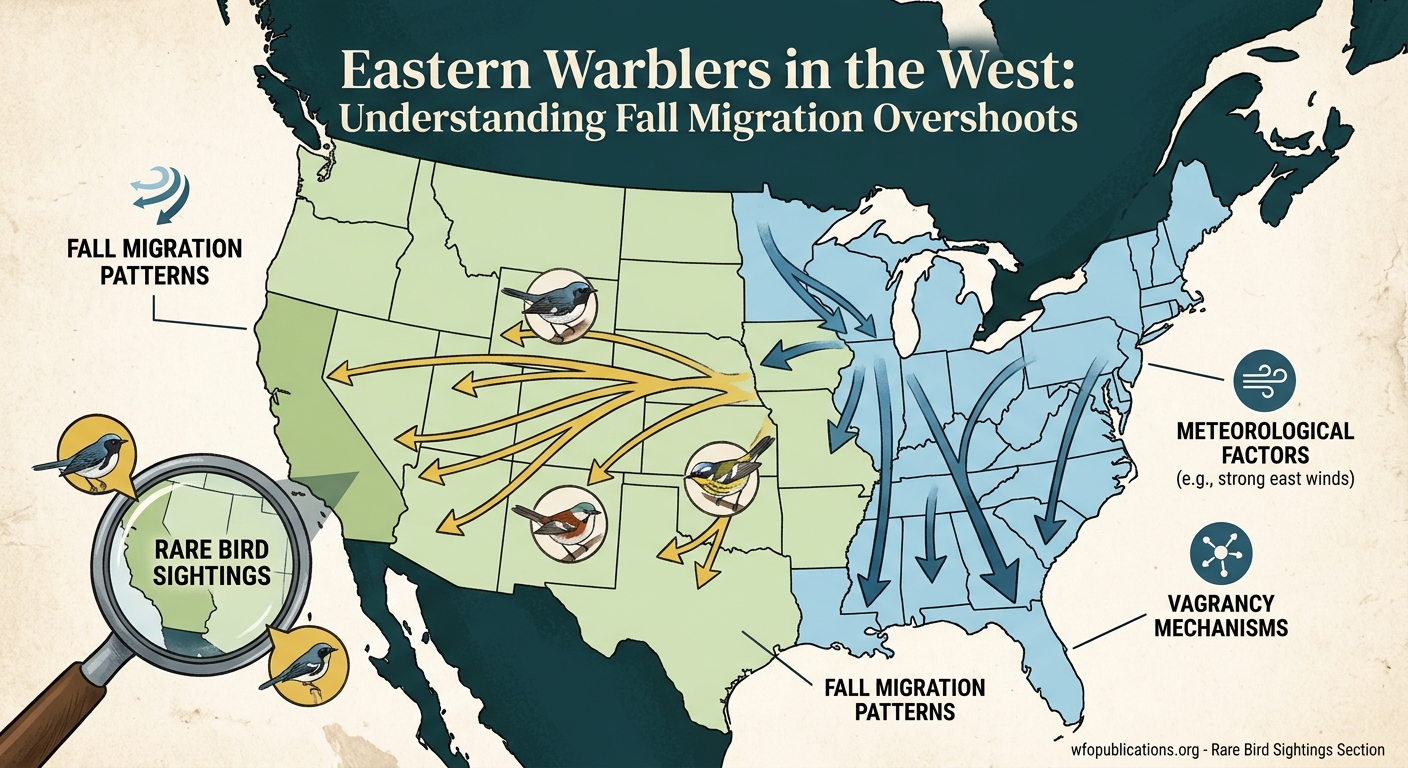
Strong weather fronts push birds westward. A low-pressure system moving across the Great Plains can deflect thousands of migrants toward the Rockies. Once over the mountains, exhausted birds drop into the first suitable habitat they find.
Reverse migration plays a bigger role than most birders realize. After cold fronts pass through the Midwest in September, birds sometimes orient themselves 180 degrees in the wrong direction. Instead of heading south, they fly north and west, ending up in places like Montana, Idaho, and British Columbia.
Coastal convergence zones concentrate these wayward travelers. The Pacific Coast acts like a funnel. Birds that drift west eventually hit the ocean and follow the coastline south, creating hotspots at places like Point Reyes, Morro Bay, and the Columbia River estuary.
Most Common Eastern Warblers Found in the West
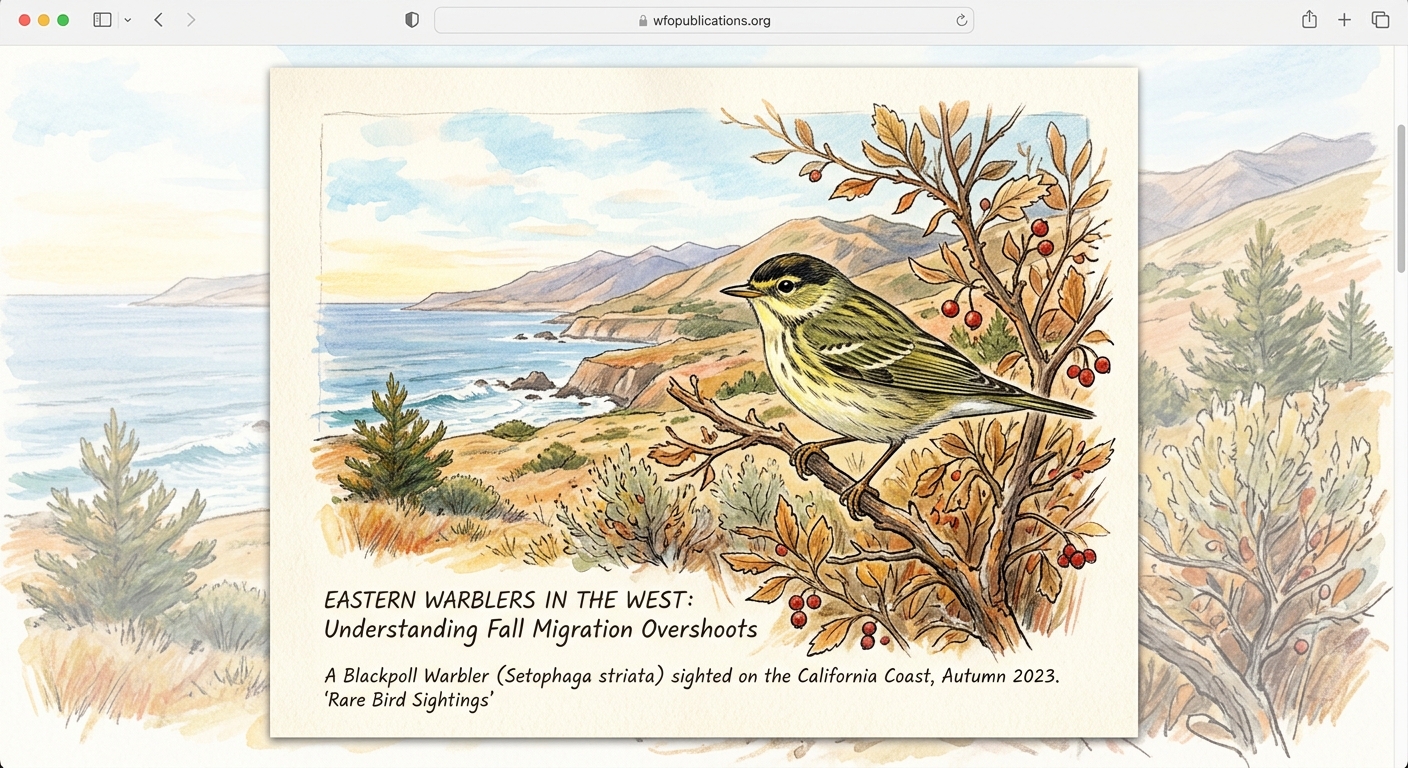
Not all eastern species show up with equal frequency. Some make the journey almost annually, while others remain genuine rarities.
Regular Annual Visitors:
- Blackpoll Warbler (most frequent overshoots)
- Black-and-white Warbler
- Magnolia Warbler
- American Redstart
- Northern Parula
- Cape May Warbler
Occasional Appearances:
- Black-throated Blue Warbler
- Black-throated Green Warbler
- Bay-breasted Warbler
- Chestnut-sided Warbler
- Ovenbird
- Northern Waterthrush
The Blackpoll Warbler deserves special attention. This species migrates farther than any other warbler, and its tendency to overshoot brings dozens to California each fall. Look for streaky gray birds with white wing bars and pale legs in coastal willows and ornamental trees.
Timing Your Search for Maximum Success
Knowing when to look matters as much as knowing where. Eastern warblers don’t arrive randomly. They follow predictable patterns tied to weather and season.
Peak season runs from late August through mid-October. The first week of September typically brings the highest diversity, with multiple species appearing simultaneously along the coast.
Weather watching improves your odds dramatically. Check for these conditions:
- Strong easterly winds in the preceding 48 hours
- Cold fronts passing through the Great Basin
- Fog or marine layer along the coast (grounds migrants)
- High-pressure systems over the Pacific Northwest
Morning hours between 7 AM and 11 AM produce the most sightings. Warblers actively forage after dawn, making them easier to spot and identify before they settle into dense cover for midday rest.
Late October stragglers represent a different phenomenon. These birds often show signs of stress, appearing thin and desperate for food. They concentrate around reliable water sources and insect-rich microclimates.
Where to Find Eastern Warblers in Western Habitats
Eastern warblers don’t use western landscapes the way resident species do. They seek familiar structure and resources, even if the plant species differ completely.
Riparian corridors attract the highest numbers. Cottonwoods, willows, and alders along creeks provide the vertical structure and insect abundance these birds need. Check every patch of deciduous trees within 50 miles of the coast.
Urban parks outperform wild areas surprisingly often. Ornamental plantings create oases that concentrate migrants. Look for:
- Flowering gardens with aphids and small caterpillars
- Mature shade trees with peeling bark
- Water features like fountains or ponds
- Mixed plantings that include eastern species
Coastal scrub and chaparral seem wrong for woodland warblers, but desperate birds use whatever cover exists. I’ve found Magnolia Warblers in pure coyote brush and Black-throated Blues in manzanita.
Vagrant traps are specific locations that consistently produce rarities. These spots combine geography, habitat, and microclimate in ways that attract and hold lost migrants. Examples include sewage ponds, desert oases, and coastal promontories.
Identification Challenges and Solutions
Eastern warblers in fall plumage test even experienced birders. Breeding males with bold patterns transform into drab, confusing juveniles and females.
| Species | Key Field Mark | Common Mistake | Solution |
|---|---|---|---|
| Blackpoll Warbler | Pale legs, streaky overall | Confused with Pine Siskin | Check for thin, pointed bill |
| Bay-breasted Warbler | Buffy undertail coverts | Confused with Blackpoll | Look for clean flanks, dark legs |
| Black-throated Blue | White pocket on wing | Female overlooked entirely | Study facial pattern, posture |
| Cape May Warbler | Yellow neck spot | Confused with Yellow-rumped | Note fine streaking, thin bill |
Behavior provides critical clues. Eastern warblers often forage differently than western species. Black-and-white Warblers creep along branches like nuthatches. American Redstarts fan their tails constantly. Ovenbirds walk on the ground with a distinctive bobbing gait.
Vocalizations help, but fall migrants rarely sing. Listen instead for chip notes. Each species has a distinctive call, though learning them requires practice and good recordings for comparison.
“The key to finding eastern warblers out west is checking every warbler you see, no matter how common it looks at first glance. That ‘Yellow-rumped’ might have the wrong face pattern. That ‘Orange-crowned’ might show wing bars. Assume nothing during fall migration.” — Field notes from coastal California surveys
Photography and Documentation Standards
Rare bird committees require solid documentation. Your phone photo might seem clear to you, but it needs to show diagnostic features that rule out similar species.
Capture these angles for any suspected eastern warbler:
- Side profile showing complete wing pattern
- Head-on view revealing facial markings
- Undertail coverts and leg color
- Overall body proportions and posture
Lighting matters more than camera quality. A well-lit phone photo beats a shadowy DSLR image. Position yourself so the sun illuminates the bird’s side, not its back.
Take notes immediately. Memory fades within hours. Record the date, exact location, habitat type, weather conditions, and behavior. Describe the bird in your own words before consulting field guides.
Submit reports to eBird with detailed comments. Include your photos and describe how you ruled out similar species. Regional reviewers appreciate thorough documentation and often provide helpful feedback.
Building Your Eastern Warbler Skills
Becoming proficient at finding and identifying these birds requires deliberate practice. Start with common species and work toward the rarities.
Study eastern warbler field marks during summer when resources are abundant. Use online photo databases to familiarize yourself with fall plumage variations. Pay special attention to first-year birds, which represent most western records.
Join local rare bird alert networks. Facebook groups, email lists, and apps like BirdLog provide real-time reports. Responding to alerts lets you study birds that others have already identified, accelerating your learning.
Practice with western warbler species first. If you can confidently separate Townsend’s from Hermit Warbler, you’ve developed the attention to detail needed for eastern vagrants.
Create a target list of most-wanted species. Research their peak timing, preferred habitats, and key field marks. Focused preparation beats random searching.
Citizen Science and Conservation Value
Every eastern warbler sighting in western states contributes to scientific understanding. These records help ornithologists track migration patterns, climate change impacts, and population trends.
Report all observations to eBird, even common species. Negative data matters. Knowing where and when birders looked but found nothing helps researchers understand true occurrence patterns.
Participate in migration counts and bird banding stations. Organizations along the Pacific Coast run monitoring programs that capture, band, and release migrants. Volunteer opportunities exist for all skill levels.
Support habitat conservation at known vagrant traps. These small patches of green space punch above their weight for migrant birds. Local land trusts and parks departments often welcome input from birders about management priorities.
Making the Most of Every Fall Season
Eastern warblers in western states represent one of birding’s great seasonal phenomena. Each autumn brings new possibilities and the chance to find something genuinely rare.
Success comes from preparation meeting opportunity. Know your local hotspots. Understand the weather patterns that bring migrants your way. Study field marks until you can identify warblers in poor light and awkward angles. Then get outside and look.
The Magnolia Warbler you find in a city park, the Blackpoll gleaning insects from coastal willows, the Black-and-white creeping up an oak trunk—these birds traveled thousands of miles off course. Finding them connects you to continental-scale natural processes and reminds you that nature still holds surprises, even in familiar places. Keep your binoculars ready and your field guide handy. The next warbler you see might be something special.