The Greater Sage-Grouse performs one of North America’s most spectacular mating rituals, and you can witness it without trekking into the backcountry. Every March through May, male sage grouse gather at traditional breeding grounds called leks, where they inflate bright yellow air sacs, fan their tail feathers, and produce otherworldly popping sounds to attract females. These displays happen at dawn, and knowing exactly where to position yourself makes all the difference between a memorable morning and an empty field.
Greater Sage-Grouse leks are concentrated in Nevada, eastern Oregon, and northeastern California, with peak activity from late March through early May. The best viewing happens 30 minutes before sunrise, when males perform elaborate courtship displays. Public viewing areas exist near Ely, Nevada and in Oregon’s Malheur National Wildlife Refuge, though many leks require advance coordination with land managers or guided tours to access responsibly.
Prime Locations Across the Great Basin
Nevada holds the largest sage grouse population in the lower 48 states, with active leks scattered across the northern and central counties. White Pine County offers some of the most accessible viewing opportunities, particularly around the Ely area where Bureau of Land Management staff occasionally organize guided lek tours during peak season.
The Ruby Valley in Elko County supports multiple active leks, though access varies by land ownership. Some sit on private ranch land, while others occupy public parcels managed by BLM or the U.S. Forest Service. Contact the Elko District BLM office in February to inquire about current lek locations and access permissions for the upcoming season.
Eastern Oregon’s high desert provides excellent sage grouse habitat, with Malheur National Wildlife Refuge serving as a reliable viewing destination. The refuge hosts several leks within its boundaries, and staff can direct visitors to appropriate observation points that minimize disturbance to breeding birds. Harney County contains additional leks on mixed public and private lands.
Northeastern California’s Modoc Plateau supports smaller populations, but dedicated birders can find active leks in Modoc and Lassen counties. The Modoc National Wildlife Refuge occasionally permits lek viewing under staff supervision, though opportunities are more limited than in Nevada or Oregon.
Understanding Lek Timing and Behavior
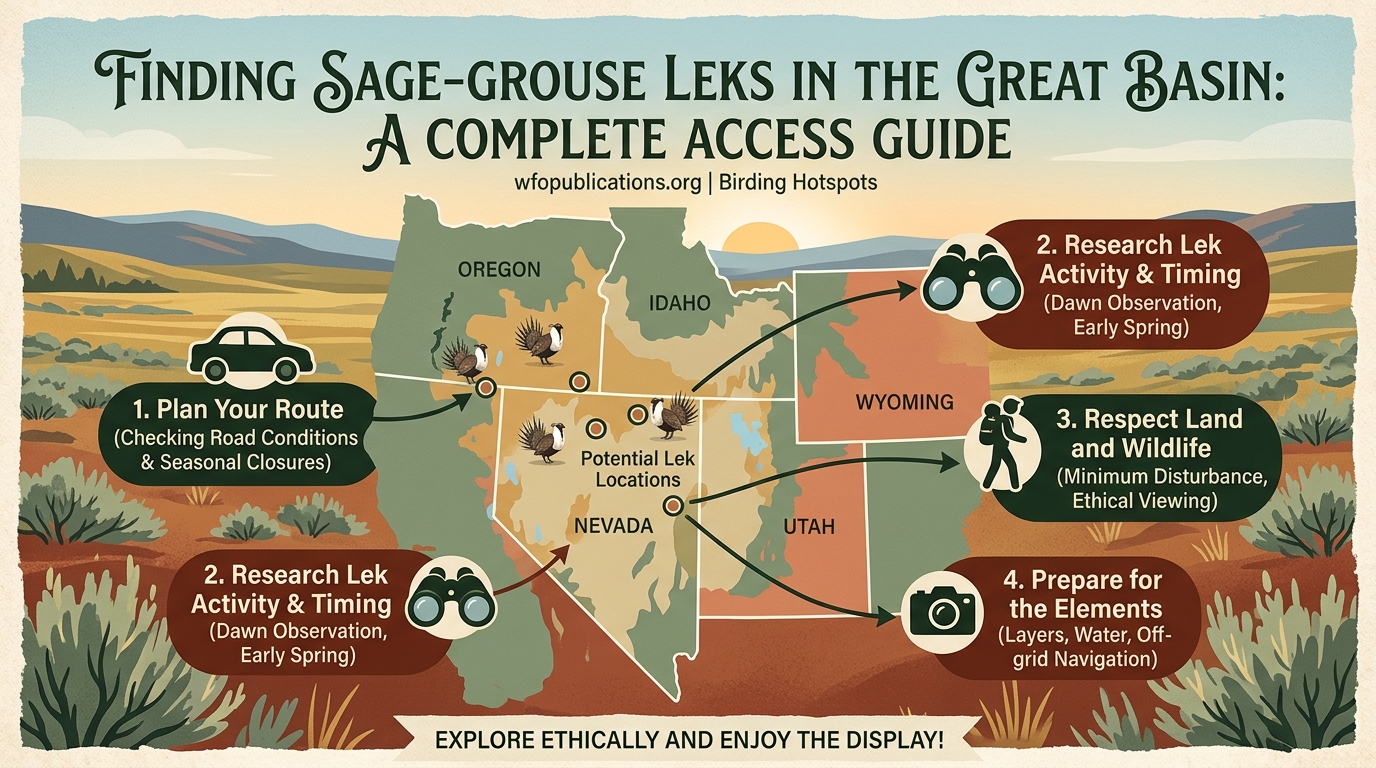
Sage grouse leks operate on a precise schedule dictated by daylight and temperature. Males arrive at leks in darkness, typically 45 to 60 minutes before sunrise. The most intense displays occur during the 90 minutes surrounding dawn, with activity tapering off as the sun climbs higher.
Peak breeding season runs from mid-March through early May across most of the Great Basin, though timing shifts slightly with elevation and latitude. Lower elevation sites in Nevada may see activity start in early March, while higher elevation Oregon leks might not reach peak activity until mid-April.
Weather significantly impacts daily lek attendance. Males display most vigorously on calm, clear mornings. Heavy wind, rain, or snow can reduce or eliminate activity entirely. Plan multiple viewing attempts if possible, as conditions change rapidly in the high desert.
Female attendance peaks in early to mid-April across most regions. Mornings when hens visit the lek produce the most dramatic male displays, with increased vocalizations, strutting, and occasional physical confrontations between competing males.
Accessing Leks Responsibly
Most productive leks sit on a patchwork of public and private land, requiring careful navigation of access rules. Here’s how to approach lek viewing legally and ethically:
-
Contact the relevant land management agency at least three weeks before your planned visit. For BLM lands, reach out to the local district office. For national wildlife refuges, call the refuge headquarters directly.
-
Ask specifically about current lek locations, access routes, and any seasonal closures or restrictions. Lek locations can shift between years as habitat conditions change.
-
Request information about viewing blinds or designated observation areas. Some agencies maintain permanent blinds near active leks, while others require you to bring portable concealment.
-
Confirm whether you need a Special Use Permit for photography or whether general public access suffices. Commercial photography typically requires additional permits and fees.
-
Verify parking coordinates and approach routes. Many leks require walking 200 to 400 yards from vehicle parking to minimize disturbance.
Viewing Blind Setup and Etiquette
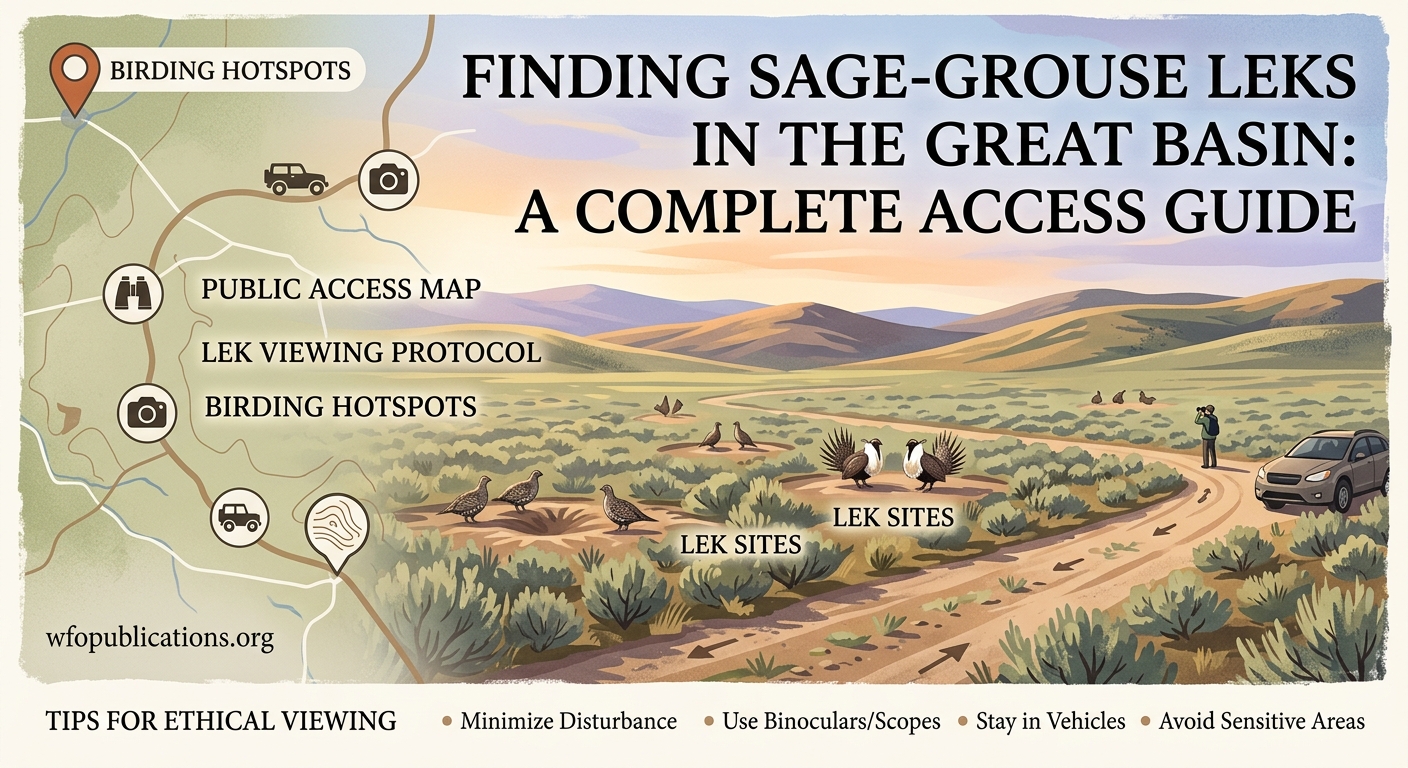
Proper blind placement protects both the birds and your viewing experience. Sage grouse have excellent vision and will abandon a lek if they detect human presence at dawn.
Set up your blind in complete darkness, arriving at least 90 minutes before sunrise. Use a headlamp with a red filter to preserve night vision while assembling equipment. Position the blind 75 to 100 yards from the lek’s center, where the highest concentration of males typically displays.
Ground blinds work better than elevated setups in flat sagebrush habitat. Choose a design with multiple viewing windows to track bird movement without repositioning. Dark earth-tone fabrics blend better than camouflage patterns in the sparse vegetation surrounding most leks.
Once inside the blind, remain motionless and silent until birds depart naturally, usually between 8:00 and 9:00 AM. Exiting early disrupts breeding behavior and can cause temporary or permanent lek abandonment. Bring water, snacks, and layers, as mornings start cold but warm rapidly after sunrise.
“The single biggest mistake I see is people arriving too late or leaving too early. Sage grouse are extremely sensitive to disturbance during the breeding season. If you’re not in position before first light, you’ve already missed the window. And if you pack up while birds are still displaying, you’ve potentially damaged that lek for the entire season.” – Field biologist with 15 years of sage grouse monitoring experience
Photography Considerations
Photographing sage grouse displays requires specialized equipment and technique. The low light at dawn demands fast lenses and high ISO capability. A 500mm or 600mm focal length provides adequate reach from ethical viewing distances.
Tripods or ground pods stabilize long lenses during the extended wait in the blind. Gimbal heads allow smooth tracking as males move across the lek. Bring lens cloths, as morning dew condenses on front elements in the cold air.
Shutter noise matters more than you might expect. Even modern mirrorless cameras with electronic shutters can spook birds at close range. Muffle your camera body with foam or neoprene wraps, and avoid rapid burst shooting during particularly sensitive moments, such as when females approach.
Focus on male display behaviors rather than just portraits. The wing-dragging strut, air sac inflation sequence, and tail fan displays tell the story better than static poses. Anticipate the popping vocalization by watching for the telltale crouch and air sac expansion that precedes each sound.
Seasonal Timing Strategy
Matching your visit to peak activity requires understanding how the season progresses. Here’s a month-by-month breakdown for the Great Basin:
| Month | Activity Level | Best For | Considerations |
|---|---|---|---|
| Early March | Low to Moderate | Scouting locations | Unpredictable weather, fewer males |
| Late March | Moderate to High | First-time visitors | Good male attendance, fewer hens |
| Early April | High | Photography | Peak male displays, increasing hen visits |
| Mid-April | Highest | Observing mating | Maximum hen attendance, competitive males |
| Late April | High to Moderate | Repeat visits | Activity remains strong but declining |
| Early May | Moderate | Late season opportunities | Reduced attendance, nesting underway |
Plan your trip for the two-week window centered on April 10th for the highest probability of witnessing complete breeding behaviors. This timing works across most of the Great Basin, though sites above 6,000 feet may peak a week later.
Common Mistakes and How to Avoid Them
New sage grouse observers make predictable errors that reduce their chances of success. Understanding these pitfalls improves your odds significantly.
Underestimating travel time to remote lek sites ranks as the most common problem. Many leks sit 30 to 60 miles from paved roads, with the final approach on rough two-track roads that limit speed to 15 mph. Add an extra hour to your estimated drive time, and scout the route in daylight the day before your dawn visit.
Inadequate cold weather preparation catches people off guard. April mornings in the high desert regularly drop below freezing, with wind chill making it feel even colder. Dress in layers you can shed as the sun rises, and bring insulated boots rated for temperatures 10 degrees colder than the forecast.
Failing to confirm current lek activity before traveling long distances wastes time and money. Leks can go dormant due to predation pressure, habitat changes, or population shifts. Always verify activity within one week of your planned visit by contacting local biologists or recent visitors.
Attempting to approach leks without blinds or concealment guarantees failure. Sage grouse flush at distances exceeding 200 yards when they detect human forms. Even sitting motionless in camouflage clothing rarely works, as your silhouette breaks the flat horizon line that characterizes lek habitat.
Guided Tour Options
Several outfitters and conservation organizations offer guided sage grouse lek tours, handling logistics, access permissions, and blind setup. These tours cost between $200 and $500 per person for a single morning, but they eliminate the research and coordination burden.
Nevada’s Great Basin Bird Observatory occasionally runs public lek tours as fundraisers, with proceeds supporting sage grouse conservation research. These trips typically visit leks near Ely or in the Ruby Valley, with experienced guides providing natural history interpretation.
Oregon’s Malheur National Wildlife Refuge partners with local tour operators during peak season, offering small group experiences with guaranteed lek access. These tours book months in advance, so reserve your spot by January if you’re planning an April visit.
Private ranches in northern Nevada sometimes grant lek access to small groups through advance arrangement. Contact White Pine County tourism offices for current lists of ranches offering this service. Expect to pay access fees ranging from $50 to $150 per person, with some ranches providing blinds and others requiring you to bring your own.
Alternative Viewing Strategies
If organized tours don’t fit your schedule or budget, independent lek finding remains possible with persistence and research. Start by studying eBird reports from March and April in your target region. Observers sometimes report lek locations with enough detail to narrow your search area.
Connect with local Audubon chapters in Elko, Ely, or Burns, Oregon. Members often know lek locations and can provide current access information. Attend chapter meetings or contact officers through their websites in the months leading up to breeding season.
State wildlife agencies maintain lek databases, though they rarely share precise coordinates publicly to prevent disturbance. However, biologists may provide general areas and suggest public land parcels worth investigating. Nevada Department of Wildlife and Oregon Department of Fish and Wildlife both employ sage grouse specialists who respond to respectful inquiries.
Hiring a local birding guide for a private half-day tour offers flexibility that group tours can’t match. Guides charge $300 to $600 for personalized lek visits, but you control timing, pace, and photographic priorities. Search for guides through the American Birding Association’s directory or regional birding festivals.
What to Bring for a Successful Morning
Packing appropriately separates comfortable, productive lek visits from miserable predawn ordeals. Essential items include:
- Insulated, waterproof boots rated to 20°F
- Multiple clothing layers, including down jacket
- Headlamp with red light mode
- Binoculars (8×42 or 10×42)
- Spotting scope and tripod for distant observation
- Portable blind if not provided
- Cushioned seat or pad for ground sitting
- Thermos with hot coffee or tea
- High-energy snacks
- Fully charged camera batteries and memory cards
- Lens cleaning supplies
- Field notebook and pen
Leave these items at home or in your vehicle:
- Dogs, even well-trained ones
- Scented personal care products
- Brightly colored clothing or gear
- Noisy snack wrappers
- Cell phones with audible notifications
Weather and Backup Planning
Great Basin weather in spring swings wildly, with sunny 60-degree afternoons following freezing, windy mornings. Check detailed forecasts for your specific lek location, not just the nearest town. Mountain weather stations provide more accurate predictions for high desert sites.
Wind speeds above 15 mph significantly reduce lek activity. If forecasts show sustained winds over 20 mph, consider rescheduling. Rain or snow doesn’t always stop displays, but heavy precipitation keeps males off the lek entirely.
Build flexibility into your itinerary by planning three or four potential viewing mornings during your trip. This buffer lets you skip poor weather days and target optimal conditions. Sage grouse display seven days per week, so there’s no advantage to weekend versus weekday visits.
Have alternative birding destinations identified for days when lek viewing gets canceled. The Great Basin offers excellent raptor watching, waterbird concentrations at refuges, and songbird migration during April. Your time won’t be wasted even if sage grouse don’t cooperate.
Making the Most of Your Lek Experience
Witnessing sage grouse displays ranks among North America’s premier wildlife spectacles, but the experience extends beyond the birds themselves. The high desert landscape at dawn, with its vast horizons and crystalline air, creates an atmosphere you won’t find anywhere else.
Arrive early enough to watch stars fade and listen to the soundscape shift from nocturnal to diurnal species. Coyotes often howl in the darkness before sunrise. Horned Larks begin singing as the first light touches the eastern horizon. These contextual elements enrich the overall experience.
Take time between photo bursts to simply watch and absorb the scene. The males’ dedication to their display, repeated morning after morning throughout the season, represents millions of years of evolutionary refinement. Females evaluate dozens of subtle cues invisible to human observers, making mate choices that will determine the next generation’s genetics.
Consider the conservation challenges facing these birds. Sage grouse populations have declined by 80% since the 1960s due to habitat loss, energy development, and invasive plants. The lek you’re watching may have hosted these displays for centuries, but its future depends on continued protection and restoration efforts.
Turning Observation Into Conservation
Your lek visit can contribute to sage grouse conservation beyond personal enjoyment. Document your observations through eBird, providing scientists with valuable data on lek attendance, timing, and activity levels. Include counts of displaying males and visiting females when possible.
Support organizations working on sage grouse habitat protection. Groups like the Sage Grouse Initiative, Great Basin Bird Observatory, and local land trusts use donations to fund conservation easements, habitat restoration, and research projects.
Share your experience responsibly on social media and with fellow birders. Describe the spectacle and encourage others to witness it, but avoid posting precise lek coordinates publicly. Direct interested parties to land management agencies or tour operators who can facilitate appropriate access.
Respect private landowners who allow lek access. Thank ranchers personally if you cross their property, and follow all gates and road instructions exactly. The goodwill of private landowners is critical to maintaining viewing opportunities, as many of the best leks sit on working ranches.
Your Dawn in the Sagebrush
Standing in a blind as darkness fades and the first male sage grouse materializes from the shadows creates a connection to wild places that few experiences can match. The popping calls, the shuffle of feet on bare ground, and the occasional rush of wings as a female arrives all combine into something both ancient and urgent. You’ve found one of the West’s most remarkable wildlife events, and you’ve done it in a way that respects both the birds and the landscape they depend on. The alarm will ring early tomorrow, but you’ll be ready, because you know exactly where the sage grouse will be waiting.