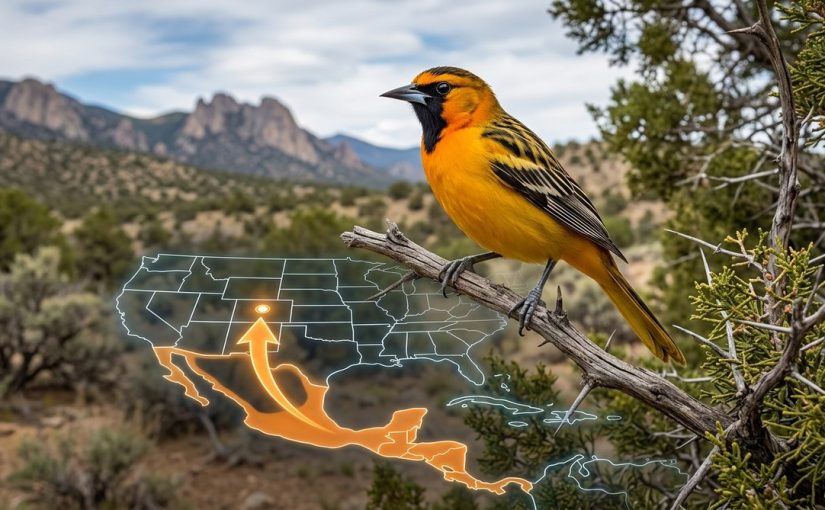
A bird with a black mask and a fiery orange chest showed up in a Colorado backyard last spring. It was not supposed to be there. The Streak-backed Oriole, a species native to Mexico and Central America, had never been officially recorded in Colorado before. When the sighting was confirmed, it did more than excite local birders. It forced a quiet but significant update to the official vagrant bird map used by ornithologists across North America. This single bird rewrote what we thought we knew about how far these orioles can wander.
A verified Streak-backed Oriole sighting in Colorado in 2026 has expanded the known vagrant range of this species by over 600 miles. The event shows how climate patterns and changing habitats are pushing tropical birds farther north. For birders, it means updating field guides and staying alert for more unexpected visitors from the south.
The Sighting That Started It All
It happened in a suburban neighborhood near Denver. A homeowner noticed a flash of orange and black at her sunflower feeder. She snapped a few photos and posted them to a local birding group. Within hours, experienced birders were debating the identification. The bird had the bold head stripes and streaked back of an adult male Streak-backed Oriole, but it was hundreds of miles outside its known range.
The Colorado Bird Records Committee reviewed the evidence. Photos were clear. The bird stayed for three days, giving multiple observers a chance to see it. The committee voted to accept the sighting as a first confirmed state record. That decision triggered a larger conversation among ornithologists. If this bird could reach Colorado, the existing vagrant bird maps were incomplete.
What Is a Vagrant Bird Map?
A vagrant bird map tracks sightings of species that appear outside their normal range. These are not migrating birds following regular flyways. They are individuals that have wandered off course. Vagrant maps help scientists understand dispersal patterns, weather effects, and population pressures.
Most vagrant maps are built from decades of eBird data. They show expected boundaries for rare species. When a bird like the Streak-backed Oriole appears far beyond those boundaries, the map must be updated. The Colorado sighting pushed the northern limit of this species by a significant margin.
What the Old Map Showed
Before this sighting, the Streak-backed Oriole vagrant range looked like this:
| Location | Status | Distance from Core Range |
|---|---|---|
| Southern Arizona | Rare but regular vagrant | 100-200 miles north |
| West Texas | Occasional vagrant | 150 miles north |
| New Mexico | Very rare vagrant | 200 miles north |
| Colorado | No confirmed records | 600+ miles north |
The Colorado sighting added an entirely new state to the map. It also suggested that the species may be expanding its vagrant tendencies.
Why Did This Bird End Up in Colorado?
Ornithologists have several theories. None are proven yet, but the evidence points to a mix of factors.
- Weather systems. Strong spring storms in the Gulf of Mexico can push tropical birds northward. The week before this sighting, a series of low-pressure systems moved from the Yucatan Peninsula up through the Plains.
- Population pressure. The Streak-backed Oriole has a healthy population in its core range. When numbers are high, young birds may wander farther to find new territory.
- Climate shifts. Warmer temperatures in the southern Rockies may make the area more hospitable for tropical species. This could encourage vagrants to linger instead of turning back.
- Misorientation. Young birds making their first migration can get confused by artificial light, storms, or magnetic anomalies. This bird may simply have taken a wrong turn.
“One bird does not make a trend, but it does open our eyes to what is possible. We need to pay closer attention to the signals coming from the south.” – Dr. Lisa Carmody, Colorado Field Ornithologist
How the Map Changed
After the Colorado record was accepted, the team at the American Birding Association updated their vagrant distribution notes. The change was not dramatic on a continental scale, but it was meaningful for the Rocky Mountain region. The new map now shows a dashed line extending from northern New Mexico into central Colorado. This line represents a “potential vagrant zone” for the species.
The update also included a note about habitat. Streak-backed Orioles prefer open woodlands and suburban areas with large trees. Colorado’s Front Range offers similar habitat to their native range. This means future sightings are possible, not just a one-time fluke.
What This Means for Birders in the West
If you live in Colorado, Wyoming, or even Nebraska, you should pay attention. The Streak-backed Oriole is now on the radar as a potential vagrant in your area. Here are a few things you can do to prepare.
- Learn the field marks. Look for a black hood, white eyebrow, and heavily streaked back. The belly is bright orange. Females are duller but have the same pattern.
- Check your feeders. These orioles love fruit, jelly, and nectar. They will visit backyard feeders during spring migration.
- Report anything unusual. Even a grainy photo can help confirm a rare sighting. Use eBird or your local bird records committee.
Common Mistakes When Identifying Streak-backed Orioles
| Mistake | Why It Happens | How to Avoid It |
|---|---|---|
| Confusing with Bullock’s Oriole | Both have orange and black | Check for heavy back streaking and white eyebrow |
| Calling it a Hooded Oriole | Hooded Oriole has a longer bill | Streak-backed has a shorter, thicker bill |
| Assuming it is a female Orchard Oriole | Similar color tones | Streak-backed has distinct head pattern, not solid |
| Ignoring the back pattern | Many orioles have plain backs | The streaking is the key field mark |
How to Document a Rare Sighting Like This One
If you spot a potential Streak-backed Oriole in Colorado or another unexpected location, follow these steps. Proper documentation is what turns a rumor into a state record.
- Take multiple photos from different angles. Focus on the head, back, and tail. A clear shot of the streaking on the back is gold.
- Note the date, time, and exact location. GPS coordinates are best. Describe the habitat and what the bird was doing.
- Watch for at least 10 minutes. Look for behaviors like feeding, singing, or interacting with other birds. These details help confirm the species.
- Post your sighting to eBird immediately. Include your photos if possible. Tag the record as a “rare species” so reviewers see it.
- Contact your state bird records committee. Send them your documentation directly. They will guide you through the review process.
For a deeper look at this process, read our guide on how to document and report your rare bird sighting like a pro.
Other Vagrant Species to Watch For in Colorado
The Streak-backed Oriole is not the only tropical bird that has surprised Colorado birders. Several other species have shown up in recent years. These sightings suggest that the Front Range is becoming a vagrant hotspot.
- Sinaloa Wren. A Mexican species seen once in Colorado in 2024.
- Rufous-capped Warbler. Two records in the past five years.
- Flammulated Flycatcher. A rare visitor from Central America.
- Blue Bunting. One confirmed sighting in 2025.
Each of these birds pushed the vagrant map in a new direction. The Streak-backed Oriole is just the latest example. If you want to learn about other surprising visitors, check out our list of 5 unexpected vagrant species that showed up in California this year.
What Makes a Bird “Rare” in Western North America?
The definition of a rare bird changes depending on where you stand. In southern Arizona, a Streak-backed Oriole is a rare but expected visitor. In Colorado, it is a first state record. The difference comes down to distance from the core range and the number of previous records.
Rarity can also be seasonal. A bird that is common in Mexico during winter may be rare in the United States during spring. Vagrants often appear during migration windows when birds are most likely to drift off course.
For a full breakdown of how ornithologists classify rarity, see our article on what makes a bird “rare” in western North America.
The Gear That Helped Confirm This Sighting
The birder who first spotted the Streak-backed Oriole used a standard setup. A mid-range camera with a 300mm lens captured the photos that convinced the records committee. She also used a field guide app on her phone to check the initial identification.
If you want to be ready for rare birds, consider carrying these items in the field.
- A camera with good zoom. Even a bridge camera with 600mm equivalent can work.
- Binoculars with good color fidelity. Look for models with ED glass.
- A smartphone with eBird installed. Offline mode helps in remote areas.
- A notebook and pen for quick notes.
For a full list of recommended gear, read our guide on chasing rarities: essential gear every serious birder needs.
What the Future Holds for Vagrant Maps
The Streak-backed Oriole sighting in Colorado is a reminder that bird ranges are not static. They shift with climate, habitat, and weather. Vagrant maps are living documents. Every new record adds a dot that may become a permanent part of the range.
Some ornithologists predict that more tropical species will appear in the Rocky Mountain region over the next decade. Warmer winters and earlier springs create conditions that favor southern birds. If that happens, the vagrant map will need regular updates.
For now, the Streak-backed Oriole stands as a symbol of possibility. It tells us that even well-studied species can surprise us. It also tells us that backyard birders play a critical role in documenting these changes.
How You Can Help Track Vagrant Birds
Citizen science is the backbone of vagrant bird tracking. Most records come from people like you who notice something unusual and take the time to report it. The Streak-backed Oriole in Colorado would have been lost to history if the observer had not shared her photos.
Here is how you can contribute.
- Subscribe to rare bird alerts in your area. Apps like eBird and BirdCast send notifications for unusual sightings.
- Learn the common species in your region first. Knowing what is normal helps you spot what is not.
- Join a local birding group. Experienced birders can help you confirm IDs and submit records.
- Upload your sightings to eBird. Every record adds to the data pool that scientists use to update maps.
For the best tools to stay informed, see our review of rare bird alerts: which apps and resources actually work best.
A New Chapter for Colorado Birding
The Streak-backed Oriole has rewritten the vagrant bird map for one simple reason. It proved that a species can travel farther than anyone expected. That changes how we think about dispersal, habitat connectivity, and the resilience of tropical birds in a changing climate.
Colorado now holds a place on the map for this species. Future birders will look for it with hope instead of disbelief. That shift in expectation is the real legacy of this sighting. It opens the door for more discoveries and reminds us that the bird world is always full of surprises.
If you live in the West, keep your binoculars handy. The next vagrant might be closer than you think. And when it appears, you will know exactly what to do.