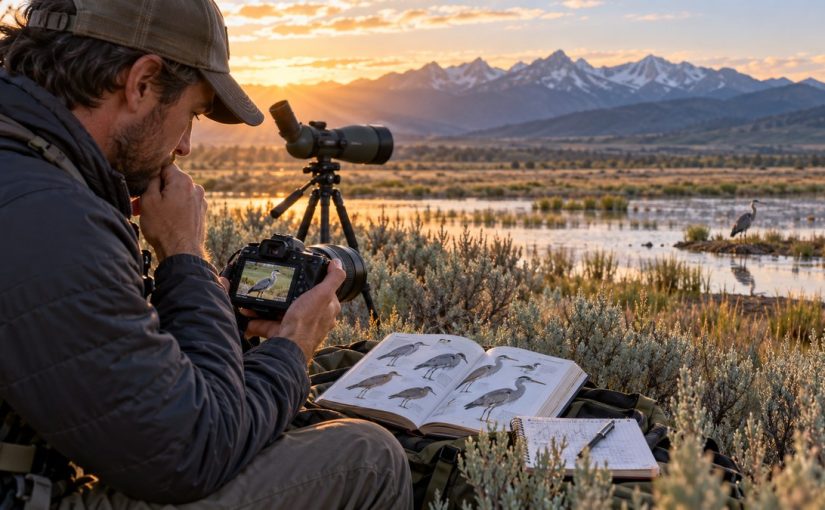
You open your phone to a rare bird alert. A Fork-tailed Flycatcher was spotted at a sewage pond just 90 minutes from your house. Your heart rate jumps. You grab your bins and your keys. But then you stop. You have been burned before. The “Slaty-backed Gull” turned out to be a young Herring Gull. The “Blue-footed Booby” was a cleverly edited photo. You know that a false alarm costs you time, gas, and a bruised ego. Learning how to verify a rare bird sighting is the single most important skill for any serious chaser in 2026.
To verify a rare bird sighting, you must cross-check multiple sources, demand photographic or audio evidence, and evaluate the observer’s credibility. Use eBird’s review system, local rare bird committees, and social media vetting groups. Never rely on a single text alert. A three-step verification process saves you from chasing misidentified common species and wasting precious weekend hours.
The Cost of a Bad Report
A single unverified report can send dozens of birders on a wild goose chase. In 2025, a report of a Streak-backed Oriole in Colorado caused a massive twitch before experts realized the photos showed a juvenile Hooded Oriole with unusual lighting. The observer had good intentions, but the lack of verification cost people hundreds of dollars in travel.
You need a system. You need to separate the signal from the noise. Here is how to verify a rare bird sighting before you put a single mile on your car.
The Three-Step Verification Process
Use this numbered list as your standard operating procedure. Do not skip steps.
-
Check the source. Who reported the bird? Is it a known local expert with a history of accurate IDs? Or is it a brand new eBirder with only ten lists to their name? Look at their previous reports. If they regularly misidentify common species, treat their report with extreme caution.
-
Demand documentation. A rare bird report without a photo, video, or audio recording is just a rumor. Ask for a link to the evidence. If the report is on a listserv or a Facebook group, scroll through the comments. Often, the original poster will upload a photo within minutes. If no image appears after an hour, the sighting is likely weak.
-
Cross-reference the data. Does the report appear on eBird with a “reviewed” status? Has the local rare bird committee flagged it? Check the ABA Rare Bird Alert page. If the report only exists in one place and has not been corroborated, it is not worth the drive.
Key Signs of a Reliable Report
When scanning a report, look for these positive indicators. The more boxes it checks, the safer the chase.
- The observer provides specific field marks (e.g., “pale supercilium, dark malar stripe, tail pattern”).
- The observer mentions the behavior (e.g., “hover-gleaning like a kinglet”).
- The report includes a GPS coordinate or a very specific location.
- Multiple observers have already confirmed the sighting.
- The report is listed on eBird as “Approved” or “Reviewed.”
- The observer is a known local birder with a solid track record.
Common Red Flags and How to Spot Them
Not all misreports are malicious. Most are honest mistakes. But the result is the same: a wasted trip. Here is a table of common errors and how to catch them.
| Red Flag | What It Looks Like | How to Verify |
|---|---|---|
| Lighting trick | A bird in harsh backlight looks darker or has a false color wash. | Ask for a photo taken from a different angle. Check for shadows. |
| Size illusion | A small bird seen without scale looks like a larger rarity. | Ask the observer what they compared it to (e.g., “next to a Robin”). |
| Juvenile confusion | A young bird lacks adult plumage and looks like a different species. | Check a field guide for juvenile plumages of common local species. |
| Vocalization error | The observer heard a song that sounds like a rarity but is a mimic. | Listen to the recording yourself. Compare on a spectrogram app. |
| Single-observer report | Only one person saw the bird, and it was a brief look. | Wait for a second observer. Do not chase a singleton report. |
The Tools You Need in 2026
You do not need to be a detective. You just need the right digital toolkit.
-
eBird Alerts: Set up custom alerts for your county. When a report comes in, check the “Review Status” badge. A green badge means a reviewer has looked at it. A yellow badge means it is pending. A red badge means it was flagged as unlikely. Learn more about how to use eBird alerts effectively in our guide on how to use eBird alerts to catch rare birds before they disappear.
-
Local Rare Bird Committees: Most states have a committee that vets unusual reports. Join their mailing list or follow their social media feed. If they have not posted about the bird, it is not verified.
-
Facebook Groups and Discord Servers: The best groups have a culture of “show the photo or it did not happen.” Look for groups that require photo evidence for rarity posts. The “California Rare Bird Alert” group is a good example of a high standard community.
-
Weather Radar: This is a pro move. If the report involves a seabird or a pelagic species, check the local weather radar for the previous 24 hours. A major storm can push birds inland. If there was no storm, the report is less likely. Our article on how to decode weather radar for predicting the next mega rare bird arrival in the West covers this in detail.
When to Trust a Report Without a Photo
Sometimes a photo is impossible. A bird flushed before the camera came out. A bird was seen at dawn in poor light. A bird was a flyover that never landed. In these cases, you rely on the observer’s credibility.
“I trust a report from a birder with 20 years of local experience more than a blurry photo from a tourist. Experience matters. A good birder can identify a bird from a silhouette, a wing flick, or a single call note.” – John C., California Bird Records Committee
If the observer is a known expert, and they give a detailed description of the field marks, you can usually trust the report. But still wait for a second observer if you can. Patience is free.
What to Do When the Report Is a Hoax
Hoaxes are rare, but they happen. In 2024, a fake report of a Brown Booby in Oregon caused a small stampede before the perpetrator admitted it was a prank. If you suspect a hoax, do not engage the poster publicly. Instead, report the sighting to the platform (eBird, Facebook, etc.) and let the local committee know. They will handle it.
Do not let one bad apple ruin your trust in the community. The vast majority of birders are honest and careful.
Building Your Personal Vetting Network
The best way to verify a rare bird sighting is to have a network of trusted friends. Text them. Call them. Ask, “Did you see the report? Do you know the observer?” A quick text to a friend in the county can save you hours.
Join a local birding club. Go on group field trips. Build relationships. When you have a network, you can verify a report in five minutes instead of an hour. This is the old school way, and it still works better than any app.
If you want to be the kind of birder others trust, learn how to document and report your rare bird sighting like a pro. Good documentation helps everyone.
Your Personal Verification Checklist
Print this list. Keep it in your car or your birding bag.
- [ ] Is the observer known and credible?
- [ ] Is there a photo or audio recording?
- [ ] Has the report been reviewed on eBird?
- [ ] Has a local rare bird committee acknowledged it?
- [ ] Have at least two other birders confirmed it?
- [ ] Does the habitat and season make sense for this species?
- [ ] Is the weather consistent with a vagrant event?
If you cannot check at least four of these boxes, stay home. Wait for more evidence. The bird will either be refound, or it will not. Either way, you save yourself a headache.
Trust Your Gut, But Verify With Data
You have been birding long enough to know when something feels off. Trust that feeling. But do not stop there. Use the tools and the community to back it up. A verified report is a joy to chase. A false report is a lesson in patience.
The next time your phone buzzes with a rare bird alert, take a breath. Run the checklist. Make the call. You will be a happier, smarter, and more successful birder for it. And when you do finally lay eyes on that Fork-tailed Flycatcher or that Slaty-backed Gull, you will know the chase was worth it.