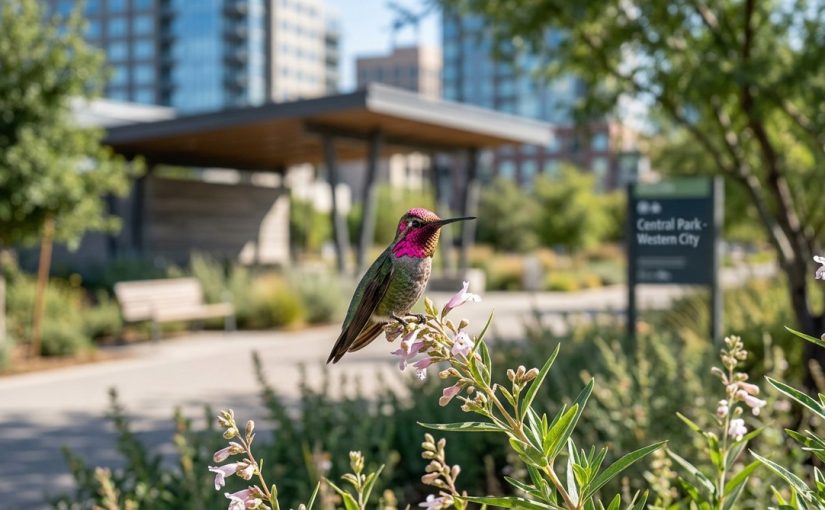
A snowy owl perched on a soccer field in a Denver city park. A Eurasian wigeon swimming in a pond in downtown Seattle. A varied bunting singing from a mesquite tree in a Phoenix community garden. These are not fantasies from a birder’s daydream. They are real sightings from 2025 and 2026 that have lit up rare bird alerts across the West. Urban parks have always been good for spotting common backyard birds, but something is shifting. Species that belong in mountain forests, Arctic tundra, or Asian coastlines are suddenly showing up in places where people walk their dogs and kids play tag. Why? The answer involves a mix of climate shifts, habitat changes, and the surprising resilience of urban green spaces.
Rare birds in urban parks are appearing more often across the West due to climate-driven range shifts, drought, and habitat loss that push birds into cities. These parks act as green islands offering food, water, and shelter. Birders can use eBird alerts, local rarity groups, and sharp identification skills to catch these unexpected visitors. Ethical reporting and responsible birding help everyone enjoy the phenomenon.
The Changing West: Why Parks Are Becoming Unlikely Havens
The West is drying out. Wildfires, drought, and development have squeezed many bird species out of their traditional homes. A Townsend’s warbler that usually spends winter in the Sierra foothills might fly into a Sacramento park because the creek it depended on has run dry. A snowy owl that would hunt voles on the Arctic tundra may venture south and end up on a football field in Kansas City because a lack of snow cover made hunting harder. Urban parks provide three things that desperate birds need: water, food, and safety from predators.
Trees planted decades ago now host insects that rare warblers eat. Ornamental berries feed thrushes and tanagers. Artificial ponds and fountains offer drinking and bathing spots. These parks are not perfect substitutes for wilderness, but they are better than nothing. For a lost or vagrant bird, a city park can be a lifesaving rest stop.
What Science Says About the Surge in Rare Bird Sightings
Ornithologists have been tracking this trend for years. The Cornell Lab of Ornithology uses eBird data to map shifts in bird distributions. Their research shows that species are moving northward and to higher elevations. When they run out of space, they spill into cities. A study published in 2025 found that rare bird reports in western urban parks increased by 34% over the previous decade. The biggest jumps were in Portland, Salt Lake City, and Albuquerque.
Part of this is what birders call a “vagrant event.” A vagrant is a bird that shows up far outside its normal range. Weather patterns like strong Pacific storms can blow seabirds inland. Heat domes can push desert species into cooler coastal parks. Then there are irruptions: years when food shortages in the north force species like redpolls or crossbills to flood south. Urban parks become visible dots on the map for these wanderers.
To understand the difference between a true rarity and a common bird having a bad day, check out what makes a bird ‘rare’ in western North America. It helps to know the baseline before you get excited about a “new” species in your local park.
How to Identify a Rare Bird When You See One
Spotting a rare bird is one thing, but confirming its identity is another. Many rarities look similar to common species. A little practice in observation makes a huge difference.
Here are a few common look-alike pairs that trip up even experienced birders:
| Common Species (Often Misidentified) | Rare Species (The Real Prize) | Key Difference |
|---|---|---|
| American Goldfinch (nonbreeding) | Pine Warbler | Goldfinch has wing bars, plain olive; Pine Warbler has yellow throat, streaked sides |
| Western Wood-Pewee | Pacific-slope Flycatcher | Pewee has longer wings, no eye ring; Flycatcher has teardrop eye ring |
| Herring Gull (immature) | Glaucous Gull | Herring has dark primaries; Glaucous has all white wingtips |
| House Finch | Purple Finch | House finch has blurry streaks; Purple finch has thick, raspberry wash on head |
Always carry a field guide or use a good app like Merlin. Take photos from multiple angles. Note the bird’s behavior: what it eats, how it moves, what calls it makes. Compare your notes with eBird checklists for that park.
Five Steps to Confirm and Report Your Sighting
Getting a rare bird sighting accepted by the local birding community takes care and accuracy. Follow these steps to make your report reliable:
- Stay calm and photograph or record audio. A blurry photo is better than nothing. If the bird is singing, use your phone to capture the sound. Audio is often more diagnostic than a bad picture.
- Note the exact location and time. Pin the spot on a mapping app. Include the habitat type (lawn, pond, oak grove). This helps others relocate the bird.
- Fill out an eBird checklist right away. eBird’s algorithm will flag the rarity. Your checklist becomes part of a global dataset that tracks bird movements. Use the “rare species” filter to submit details.
- Share the sighting with local rare bird alert groups. Many states have WhatsApp or Facebook groups dedicated to rarities. Post your photo and ask for confirmation. Be open to corrections.
- Follow ethical birding practices. Do not play recordings to lure the bird closer. Keep a respectful distance. If the bird is resting or feeding, let it be. Stress can kill a bird that is already exhausted from travel.
For a full guide on how to properly document your find, see how to document and report your rare bird sighting like a pro.
Where to Look: Top Urban Parks for Rare Birds in the West
Not all parks are created equal when it comes to attracting rarities. The best spots have:
- A body of water (pond, lake, river)
- Dense shrubbery or reeds for cover
- Native trees that produce berries or seeds
- Minimal pesticide use (more insects)
- Proximity to migration routes
Here are some parks that consistently turn up rare birds:
- Golden Gate Park, San Francisco – Has hosted a Siberian accentor, a common rosefinch, and multiple rare warblers.
- Discovery Park, Seattle – Over 200 species recorded, including a little bunting and a red-flanked bluetail.
- Cheesman Park, Denver – A snowy owl spent two weeks here in January 2026. Also good for Townsend’s solitaire in winter.
- Chaparral Park, Scottsdale – Rare desert species like the varied bunting and the bright-rumped yellowthroat appear during spring.
- Tanner Park, Salt Lake City – Excellent for fall vagrants; has hosted a black-throated blue warbler and a Connecticut warbler.
You can find more hidden gems in top urban birding locations in western cities you can visit today.
Rare Bird Alerts: Your Best Tools for Staying Current
You cannot chase a bird if you do not know it is there. Modern technology makes it easier than ever to get real time updates.
The best resources include:
- eBird Rare Bird Alert – Customizable by region and species. It sends email or push notifications for any rarity reported within your chosen radius.
- ABA Birding News – A national forum where rare bird sightings are posted and discussed. Good for planning longer trips.
- Local Facebook Groups – Many states have active rarity groups where birders share photos and locations. Just be aware that some groups have strict rules about sharing sensitive nesting sites.
- Twitter / X – Follow accounts like @ABABirdAlert for national news, or state specific accounts like @WABirdAlert for Washington.
“Always cross check rare bird reports with local experts before chasing. Sometimes the bird is just a common species acting strange. I have seen people drive three hours for a color variant of a house finch.”
– Dr. Maria Lopez, ornithologist at the Western Birding Institute
For a complete comparison of these tools, read rare bird alerts: which apps and resources actually work best.
Common Mistakes Birders Make When Identifying Rarities
Even seasoned birders get fooled. The most common errors are easy to avoid once you know what to watch for.
| Mistake | Why It Happens | How to Fix It |
|---|---|---|
| Relying on color alone | Lighting and age can alter colors | Look at structural features: bill shape, wing length, tail pattern |
| Ignoring overall size | Without a reference, size is deceptive | Compare to a known species (sparrow-sized, robin-sized) |
| Forgetting about molt | Many birds look different in fall | Learn basic molt cycles; use Sibley’s age guides |
| Not listening for calls | Many rarities sound like common species | Use a sound ID app like Merlin Sound ID |
These pitfalls can be avoided with practice. Pair your fieldwork with essential gear every serious birder needs to stay prepared.
What These Sightings Mean for Conservation
The appearance of rare birds in urban parks is not just a thrill for birders. It is a signal about the health of the West’s wild landscapes. When birds that belong in remote forests or high deserts start showing up in city squares, it tells us that those natural habitats are under stress. Conservation groups are using these sightings to prioritize habitat restoration in critical areas.
At the same time, urban parks are becoming more important as refuges. Cities like Austin, Denver, and Portland are investing in native plant landscaping, removing invasive species, and creating bird safe corridors. Birders can help by participating in local Christmas Bird Counts, submitting data to eBird, and volunteering with park stewardship programs.
Every time you spot a rare bird in a park, you are witnessing a small piece of a larger story. The West is changing, and birds are adapting in ways we are only beginning to understand.
So grab your binoculars, check the latest alerts, and head to your nearest urban park. You never know what might be waiting under the next cottonwood tree. A lifer could be just a few steps away.